Govt Issues Maritime Alert After Tanker Strike Kills Three Indian Seafarers
Maritime Security Tightened After Tanker Strike Claims Three Indian Lives
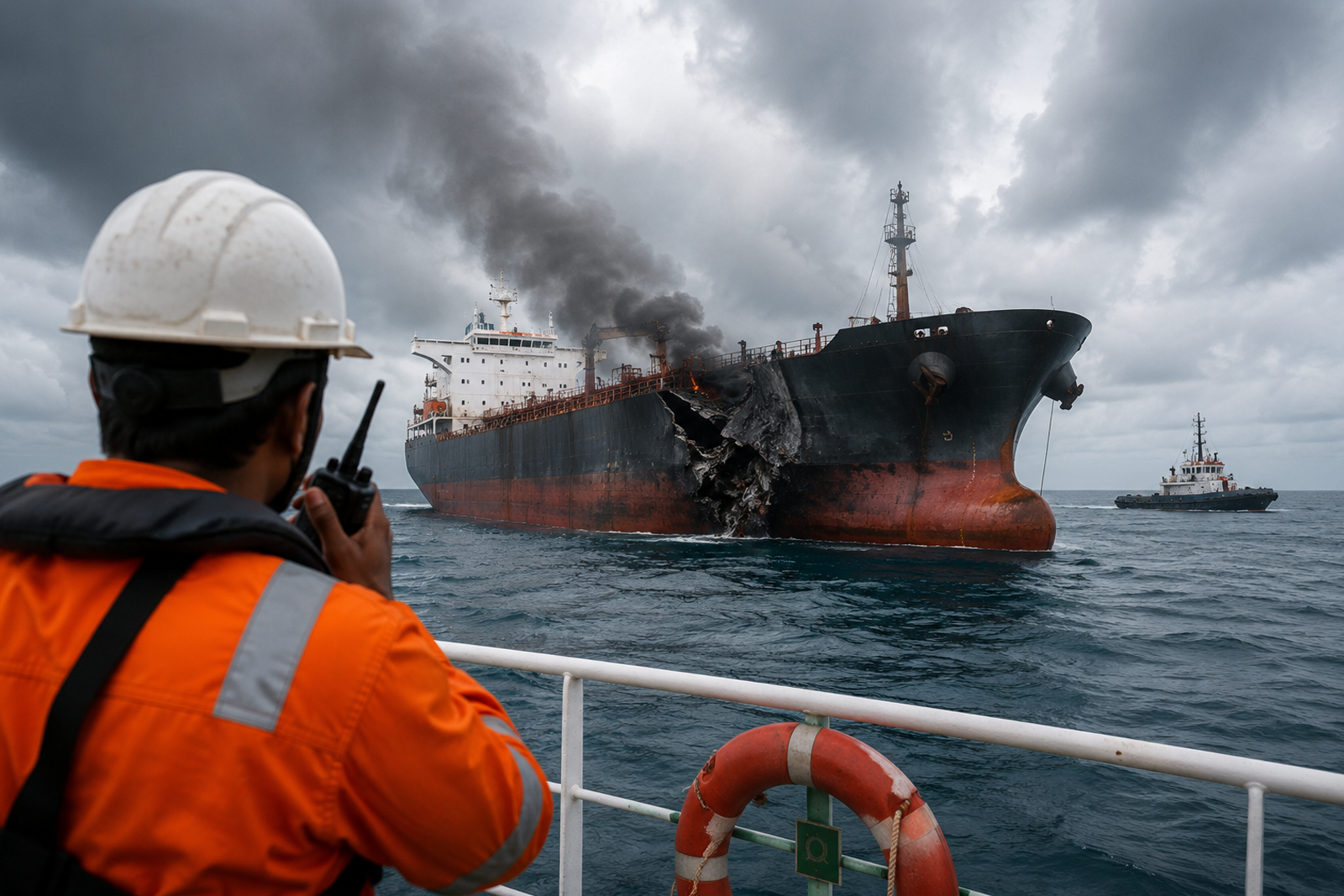
India has stepped up maritime security measures following a deadly missile strike on a commercial tanker that resulted in the deaths of three Indian crew members. The incident has raised fresh concerns about the safety of international shipping routes passing through regions affected by ongoing geopolitical tensions. In response, the government has issued advisories to maritime stakeholders, urging heightened vigilance and stricter safety protocols for vessels operating in high-risk waters.
Growing Concerns Over Maritime Safety
The attack highlights the increasing risks faced by merchant ships navigating through strategically important sea lanes. Global trade depends heavily on uninterrupted maritime transport, and any threat to commercial vessels can have far-reaching consequences for international supply chains. The loss of Indian sailors has also drawn attention to the dangers encountered by seafarers working in conflict-prone regions.
Shipping companies have been advised to continuously monitor security developments and maintain close communication with maritime authorities. Vessel operators are being encouraged to review emergency response plans and ensure crews are prepared for potential threats.
Government Issues Advisory
Following the incident, Indian authorities alerted shipping firms, port operators, maritime agencies, and vessel owners about the evolving security environment. The advisory emphasizes the importance of risk assessments before entering sensitive zones and recommends adherence to internationally recognized maritime security guidelines.
Officials are also coordinating with international partners and maritime organizations to gather information and assess potential risks to Indian-linked vessels operating overseas. The government's primary objective is to safeguard Indian seafarers and ensure the uninterrupted movement of commercial shipping.
Impact on Global Shipping
The attack has once again demonstrated how regional conflicts can disrupt maritime commerce. Rising security concerns often lead to increased insurance costs, route diversions, and operational challenges for shipping companies. Industry experts warn that prolonged instability in critical waterways could affect trade efficiency and increase transportation expenses worldwide.
Many shipping operators are now reassessing voyage plans and strengthening onboard security measures. Enhanced surveillance, regular communication checks, and updated threat assessments have become essential tools for navigating uncertain maritime conditions.
The tragic loss of three Indian seafarers serves as a reminder of the challenges facing the global shipping industry. As maritime security threats continue to evolve, governments, shipping companies, and international organizations must work together to protect crews and maintain safe navigation. India's latest alert reflects a proactive effort to enhance preparedness and reduce risks in an increasingly complex maritime environment.

India Strengthens Maritime Vigilance After Deadly Tanker Missile Strike
The death of three Indian seafarers in a missile strike on a commercial tanker has triggered fresh concerns about maritime security and the safety of global shipping routes. In response, the Indian government has issued a comprehensive alert to maritime stakeholders, including shipping companies, port authorities, vessel operators, and logistics agencies. The advisory comes at a time when tensions in several strategic maritime regions continue to pose risks to commercial vessels and international trade.
The incident has not only highlighted the vulnerability of merchant ships operating near conflict zones but has also renewed discussions about the protection of civilian maritime assets and crew members. With thousands of Indian sailors serving aboard international vessels, ensuring their safety remains a priority for the government and the shipping industry.
Missile Strike Raises Serious Security Concerns
The attack on the tanker underscores the growing threat faced by commercial shipping in volatile waters. Modern merchant vessels are increasingly exposed to risks stemming from regional conflicts, military confrontations, and attacks on critical maritime infrastructure.
While naval forces often focus on military objectives, commercial ships can become unintended victims of escalating hostilities. The tanker strike serves as a stark reminder that maritime security challenges are no longer limited to piracy but now include missile attacks, drone threats, and geopolitical conflicts.
The loss of Indian crew members has added a human dimension to the tragedy, drawing attention to the sacrifices made by seafarers who keep global trade moving under difficult and sometimes dangerous conditions.
Government Responds With Maritime Alert
Following the incident, Indian authorities moved swiftly to alert stakeholders across the maritime sector.
Key Objectives of the Advisory:
-
Enhance awareness of emerging security threats.
-
Improve preparedness among shipping operators.
-
Protect Indian seafarers working on international vessels.
-
Ensure uninterrupted maritime trade operations.
-
Encourage strict adherence to international safety protocols.
The advisory urges vessel operators to remain informed about developments in sensitive regions and to maintain regular communication with maritime security agencies.
Officials have also emphasized the importance of route planning, threat monitoring, and emergency preparedness for ships operating near conflict-prone waters.
Importance of Maritime Routes for India
India's economy relies heavily on maritime trade. A significant portion of the country's imports and exports moves through international sea lanes.
Why Maritime Security Matters:
-
Supports global trade and commerce.
-
Facilitates energy imports, including crude oil and natural gas.
-
Enables export of manufactured goods and agricultural products.
-
Maintains supply chain stability.
-
Protects economic growth and business continuity.
Any disruption to major shipping routes can have economic consequences that extend beyond national borders.
The recent attack has therefore raised concerns not only for crew safety but also for the stability of international trade networks.
Indian Seafarers Play a Critical Role
India is one of the world's leading suppliers of skilled maritime professionals. Thousands of Indian sailors serve aboard cargo ships, tankers, container vessels, and specialized maritime platforms across the globe.
Contributions of Indian Seafarers:
-
Supporting international trade operations.
-
Managing navigation and vessel safety.
-
Operating engineering systems onboard ships.
-
Facilitating global supply chains.
-
Representing India's strong maritime workforce.
The deaths of three Indian crew members have generated widespread concern within the maritime community and reinforced calls for stronger protection measures.
Industry organizations have expressed solidarity with the families affected by the tragedy and stressed the need for greater international cooperation to safeguard civilian vessels.
Impact on Global Shipping Industry
Maritime incidents of this nature often create ripple effects throughout the global shipping sector.
Potential Consequences:
1. Higher Insurance Costs
Shipping companies may face increased insurance premiums when operating in high-risk zones.
2. Route Diversions
Vessels may choose alternative routes to avoid conflict areas, leading to longer transit times.
3. Increased Operating Expenses
Additional security measures can raise operational costs for shipowners.
4. Supply Chain Delays
Trade flows may be affected if vessels alter schedules or encounter restrictions.
5. Market Uncertainty
Businesses dependent on timely shipments may experience disruptions.
These factors can influence global commerce and create challenges for industries reliant on maritime transportation.
Enhanced Security Measures Expected
In light of the latest developments, shipping operators are expected to strengthen onboard security procedures.
Recommended Measures Include:
-
Continuous monitoring of maritime threat intelligence.
-
Regular communication with naval and coast guard authorities.
-
Enhanced crew training programs.
-
Emergency response drills.
-
Updated voyage risk assessments.
-
Increased surveillance and monitoring systems.
-
Strict compliance with international maritime security guidelines.
Many shipping companies are already reviewing their operational strategies to address evolving threats.
International Cooperation Becomes Essential
Modern maritime security requires coordination among multiple nations and organizations.
Areas of Cooperation:
-
Intelligence sharing.
-
Joint maritime patrols.
-
Emergency response coordination.
-
Search and rescue operations.
-
Protection of strategic shipping lanes.
-
Monitoring of conflict zones.
International maritime organizations continue to encourage collaboration between governments, naval forces, and commercial shipping operators to reduce risks and improve response capabilities.
The recent tanker strike is likely to strengthen discussions on collective efforts to safeguard global shipping.
Human Cost Behind Maritime Conflicts
While discussions often focus on trade and security, incidents involving commercial vessels have significant human consequences.
Seafarers spend months away from their families to ensure the movement of goods across continents. They work under challenging weather conditions, long schedules, and increasingly complex security environments.
The loss of three Indian sailors serves as a reminder that maritime workers frequently find themselves at the frontline of global crises despite being civilian professionals.
Their contribution remains vital to the functioning of the international economy, making their safety a matter of global concern.
Future Challenges for Maritime Security
Experts believe maritime threats will continue to evolve in the coming years.
Emerging Risks Include:
-
Missile attacks on commercial vessels.
-
Drone-based threats.
-
Cyberattacks targeting shipping systems.
-
Disruptions near strategic waterways.
-
Escalating regional conflicts.
-
Risks to energy transportation networks.
Addressing these challenges will require investments in technology, intelligence gathering, crew training, and international cooperation.
Governments and industry stakeholders are expected to place greater emphasis on preventive measures rather than reactive responses.
Conclusion
The missile strike that claimed the lives of three Indian seafarers has highlighted the growing security challenges facing global maritime operations. India's decision to alert maritime stakeholders reflects a proactive effort to strengthen vigilance, protect seafarers, and safeguard commercial shipping interests.
As geopolitical tensions continue to affect important sea routes, collaboration between governments, naval forces, shipping companies, and international organizations will be crucial. Ensuring safe navigation and protecting civilian crews must remain a priority for the global maritime community.
The tragedy serves as both a warning and a call to action, emphasizing the need for stronger maritime security frameworks in an increasingly uncertain world.

Soojin DasJournalist
Soojin Das is a dedicated journalist with a strong focus on public affairs, governance, and grassroots reporting. With a passion for uncovering stories that matter, she brings clarity, accuracy, and depth to complex issues shaping communities across India. Her reporting spans politics, social development, education, and local civic concerns, giving readers a balanced and well-researched perspective.
Known for her sharp news sense and ethical approach to journalism, Anita combines on-ground reporting with data-driven analysis and compelling storytelling. She has covered major policy announcements, elections, disaster response efforts, and community-led initiatives, ensuring that audiences receive timely and trustworthy information.
Anita believes journalism plays a vital role in strengthening democracy and amplifying under-represented voices. Through interviews, investigative pieces, and human-interest stories, she aims to inform, engage, and empower readers.
When not in the field, she closely follows media innovation and digital storytelling trends, continually refining her craft to meet the evolving needs of modern newsrooms.