- Loading...
- Loading...



For decades, success at work was measured by degrees, designations, and how neatly your résumé fit the system. But that system is cracking. The modern job market — fast, digital, and unpredictable — is rewriting its rules.
Today’s employers aren’t just hiring for qualifications; they’re hiring for creativity — the ability to think differently, adapt quickly, and innovate under pressure.
It’s no longer about what you know, but how you apply it. In a post-AI, post-pandemic world, creativity has become the ultimate competitive edge — the trait that separates the irreplaceable from the automated.
Once upon a time, a degree was the golden ticket. It promised stability, respect, and opportunity. But that promise is fading.
India produces over 1.5 million engineering graduates every year — but fewer than 20% are employable in their core field. Globally, a similar pattern unfolds: employers report record skill shortages even as education levels rise.
Degrees once symbolized mastery. Now, they often symbolize uniformity — proof that you learned the same things in the same way as millions of others.
The workplace has evolved faster than academia. While universities teach decades-old theories, industries demand agility, digital literacy, and innovation. Employers now seek problem-solvers, not just paper-holders.
When companies like Google, Apple, and IBM removed degree requirements from many job listings, it sent a clear message: Talent > Transcript. What matters is whether you can create, not what your certificate says.
The result? A shift from credential-based hiring to capability-based hiring.
Creativity isn’t just about painting or designing — it’s the ability to see patterns, connect dots, and invent solutions where none exist.
In the workplace, creativity takes many forms:
A marketer crafting an unexpected campaign.
A coder building an elegant algorithm.
A manager motivating a team through empathy and imagination.
The modern creative professional doesn’t just think outside the box — they redesign the box entirely.
AI-proofing: Machines can replicate logic, not imagination.
Innovation driver: Every major business breakthrough — from Tesla to Airbnb — began as a creative leap.
Adaptability: Creative thinkers pivot easily when conditions change.
Human connection: In an era of automation, storytelling, empathy, and design thinking keep brands human.
As automation rises, creativity has become currency — and those who can innovate are the ones leading the new economy.
This isn’t just philosophy — it’s measurable.
According to a LinkedIn Global Talent Trends report (2024), creativity ranked as the #1 most in-demand soft skill worldwide.
A World Economic Forum study predicts that by 2030, creative problem-solving and critical thinking will top the list of skills required for 85% of new jobs.
IBM’s 2023 CEO Survey found that 60% of leaders believe creativity is the most important leadership quality — above integrity or discipline.
The message is clear: creativity isn’t a “nice-to-have” — it’s the new literacy.
Employers are redesigning hiring systems from the ground up. Instead of filtering by degrees, they’re testing for skills, portfolios, and potential.
Platforms like HackerRank, Behance, and GitHub now showcase real creative output. Recruiters assess how you think, not just what you’ve studied.
Courses from Coursera, Skillshare, and Google Career Certificates have democratized education. You can master UX design, digital marketing, or AI — without ever stepping into a university.
A resume lists; a portfolio proves. Employers now prefer candidates who can show real projects, designs, code, campaigns, or case studies — evidence of creativity in motion.
The future résumé is not a degree sheet. It’s a digital footprint of curiosity and creation.
Paradoxically, AI — the very force automating jobs — is also amplifying the value of human creativity.
Chatbots can write essays, algorithms can compose music, but they lack intuition, emotion, and originality. AI can mimic creativity — but it can’t feel it.
Creative professionals are learning to collaborate with AI. Designers use Midjourney for idea visualization; writers use GPT for drafts and brainstorming. The magic lies not in using AI — but in using it imaginatively.
The creative edge, therefore, isn’t about replacing humans — it’s about enhancing what only humans can do: interpret, imagine, and inspire.
Zoho, a global SaaS giant from India, hires students from rural areas — many without formal degrees. What they look for: curiosity, problem-solving, and a hunger to learn. The result? A diverse, creative workforce challenging global tech norms.
Pixar’s creative process values storytelling above hierarchy. Every employee, from intern to director, can pitch ideas — ensuring that innovation isn’t gated by seniority, but powered by imagination.
Elon Musk famously hires people who can “solve problems creatively,” regardless of credentials. His teams are built around thinkers who question assumptions — a mindset traditional education rarely teaches.
From Byju’s to Zomato, Indian entrepreneurs are redefining hiring by prioritizing creative hustle over college prestige. The founders of OYO, PhysicsWallah, and boAt all broke conventional paths — proving that innovation beats instruction.
As the job market evolves, education systems are catching up.
Universities are integrating design thinking, project-based learning, and hackathons into curricula — bridging theory with creativity.
Fields like “Tech + Art” and “Science + Storytelling” are thriving. Employers value candidates who combine logic with imagination, such as data visualizers, UX researchers, and creative technologists.
The shelf life of a skill is now under five years. Continuous learning, curiosity, and creative adaptability are the new degrees — earned not once, but constantly.
Education is no longer a stage of life; it’s a lifelong habit.
The most employable person in 2025 is not the one with the highest marks — but the one who can think, adapt, and reinvent.
Curiosity: Constantly asks “why” and “what if.”
Empathy: Designs solutions that solve human pain points.
Flexibility: Comfortable with ambiguity and change.
Communication: Can tell stories that move people.
Courage: Challenges convention with confidence.
Employers now measure creativity not by how flashy your ideas are — but by how effectively you turn imagination into impact.
Here’s the beautiful irony — creativity is freeing.
It levels the playing field between those with privilege and those with passion.
You don’t need a Harvard degree to start a podcast, design an app, or build a following. The digital era rewards creators over conformists. Platforms like YouTube, Instagram, and Substack have turned ordinary thinkers into global brands.
What used to require credentials now only needs courage and consistency.
Creativity has become the new social mobility — a way for talent to rise without permission.
By 2035, experts predict that over 40% of current jobs will be automated. But creative roles — in storytelling, design, branding, and innovation — will only expand.
Future professionals will blend human creativity with AI precision — “co-creating” rather than competing.
Creative freelancers, from designers to strategists, will dominate digital platforms, turning imagination into income.
CEOs of tomorrow won’t just manage — they’ll imagine. Businesses will seek visionary leaders who can forecast trends, design experiences, and inspire innovation.
In short: the degree opens a door.
Creativity builds the entire house.
The workplace has evolved from “qualified” to “creative.”
Degrees still matter — they prove discipline and knowledge — but they’re no longer the final word. The world now belongs to those who can connect ideas, tell stories, and craft solutions from chaos.
Employers aren’t asking, “What did you study?” anymore. They’re asking, “What can you create?”
Because in the end, as automation spreads and algorithms take over, there’s one thing technology can never replicate — the uniquely human spark of imagination.

In today’s world of endless choices and digital noise, marketing is no longer just about promoting products — it’s about creating meaningful connections. Successful brands focus on building relationships rather than chasing transactions. Marketing that connects transforms audiences into loyal communities by earning their trust, understanding their needs, and delivering genuine value. When businesses prioritize people over promotions, marketing becomes more than strategy — it becomes a relationship built to last.
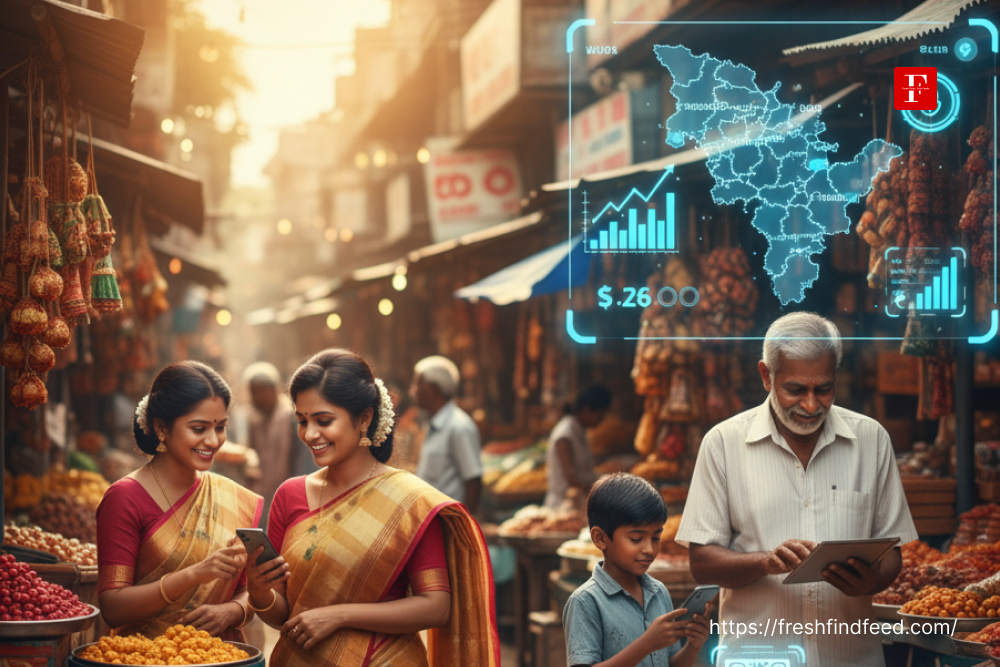
Odisha’s small businesses are entering a new era — where mobile apps, online payments, and e-commerce aren’t luxuries, but lifelines for growth and survival.

As India enters the second phase of its digital revolution, artificial intelligence and automation are not just transforming industries—they’re redefining what it means to work, earn, and adapt.

The conference brought together officials from ten central districts, including district collectors, tehsildars, registrars, and welfare officers, either virtually or in person.

We glorified sleepless nights, burnout, and exhaustion as signs of ambition. But when did working yourself to the edge become the definition of success?

Not everyone who thrives in tech writes code. Some design the very experiences that make technology human.







Leave Comments