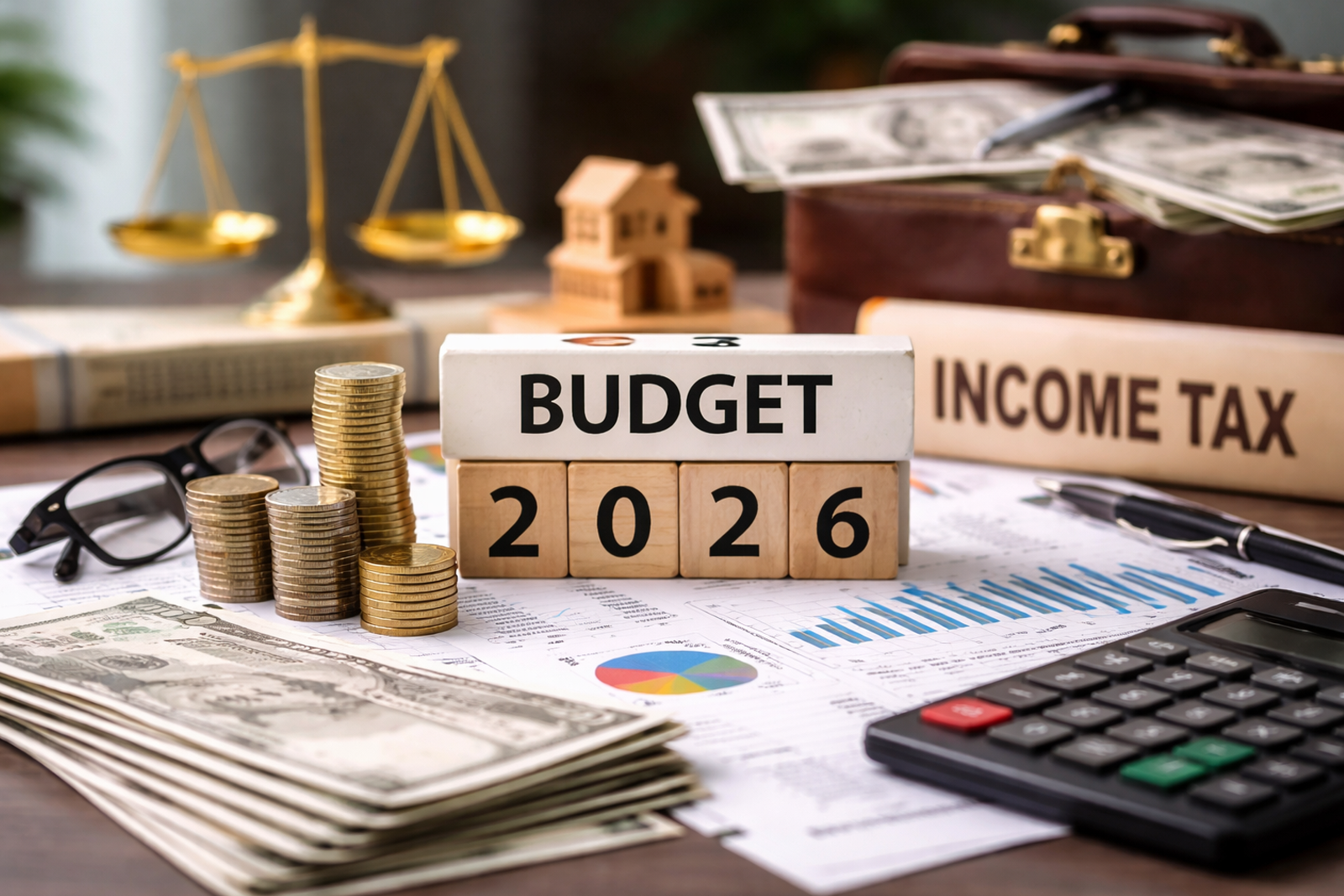
📊 Budget 2026 and Income Tax: Did Taxpayers Get Any Relief?
The Union Budget 2026 was closely watched by salaried professionals, middle-class families, and self-employed individuals, all hoping for meaningful changes in income-tax slabs. Rising living costs and inflationary pressures had made personal tax relief one of the most anticipated announcements. However, the final proposals focused more on stability and long-term reforms than on headline-grabbing rate cuts.
🔍 Status of Income Tax Slabs
In Budget 2026, the government chose to retain the existing structure of income-tax slabs under both the old and new tax regimes. This means taxpayers will continue to calculate liabilities based on the same thresholds and progressive rates as before. While many had expected an upward revision in exemption limits, the authorities opted for continuity, signalling confidence in the current framework.
💼 What Continues to Benefit Taxpayers
Although slab rates were not altered, several provisions that reduce effective tax outgo remain in place. Standard deductions for salaried employees, rebates for lower-income earners, and popular savings-linked benefits under the old regime continue to offer relief. These measures ensure that individuals at the bottom and middle of the income pyramid still receive some protection against rising expenses.
🧾 Focus on Simpler Compliance
Beyond rates and slabs, Budget 2026 placed emphasis on simplifying tax administration. The government reiterated its intent to streamline return filing, improve digital systems, and reduce disputes through clearer rules. These structural reforms are aimed at making compliance easier rather than merely lowering taxes.
📌 The Big Picture
For taxpayers, Budget 2026 turned out to be more about stability than surprise cuts. While there were no sweeping changes to income-tax slabs, the continuation of existing benefits and the promise of simpler laws suggest a gradual, reform-oriented approach rather than immediate relief.
📊 Budget 2026 Income Tax Announcements: What Changed, What Stayed the Same, and What It Means for You
The Union Budget 2026 generated intense interest among individual taxpayers, particularly salaried employees, professionals, pensioners, and small business owners who hoped for significant income-tax relief. With household expenses rising and inflation still a concern, expectations were high that the government might tweak tax slabs or raise exemption limits. Instead, Budget 2026 delivered a message of continuity—keeping the existing tax structure largely intact while highlighting reforms aimed at simplifying compliance and improving long-term efficiency.
Below is a detailed breakdown of what Budget 2026 offered to taxpayers.
🔍 No Major Changes to Income Tax Slabs
One of the biggest takeaways from the Budget is that income-tax slabs under both the old and new regimes remain unchanged for the coming financial year. This means:
-
Taxpayers will continue to be taxed according to the same income brackets as before.
-
Progressive rates apply, with higher income attracting higher tax.
-
Individuals can still choose between the old regime with deductions or the new regime with lower rates but fewer exemptions.
While some had hoped for a revision in basic exemption limits or an expansion of lower-tax brackets, the government chose stability over immediate restructuring.
💼 Continued Relief Through Existing Provisions
Although no fresh slab reductions were announced, several existing benefits that reduce overall tax liability continue.
✅ Standard Deduction
Salaried individuals and pensioners will still be able to claim the standard deduction, which lowers taxable income directly before applying slab rates.
✅ Rebates for Lower-Income Earners
Taxpayers in lower income brackets continue to benefit from rebates that effectively reduce or eliminate tax payable up to a certain income level under the new regime.
✅ Deductions Under the Old Regime
Those opting for the old tax structure can still claim popular deductions and exemptions such as:
-
Investments under long-term savings instruments
-
Insurance premiums
-
Housing loan interest and principal repayments
-
Allowances linked to employment benefits
These features ensure that individuals who plan finances carefully can continue to manage their tax outgo.
🧾 Emphasis on Simpler Tax Laws
Rather than focusing solely on rates, Budget 2026 placed strong emphasis on modernising and simplifying tax administration.
🔹 Streamlined Filing Systems
The government reiterated its commitment to improving digital tax portals, making return filing quicker and more intuitive for individuals and small businesses.
🔹 Faster Refunds
Efforts to shorten refund timelines and reduce verification delays were highlighted, aiming to improve the overall taxpayer experience.
🔹 Fewer Disputes
Clearer rules, better data matching, and alternative dispute-resolution mechanisms are expected to reduce litigation and long-pending tax cases.
🏛️ A Long-Term Reform Approach
Finance officials stressed that the goal is to create a predictable and transparent tax environment rather than frequent year-to-year changes. By keeping slabs steady, the government signalled its intention to provide certainty to households and investors while focusing on:
-
Expanding the tax base
-
Encouraging voluntary compliance
-
Using technology to curb evasion
-
Reducing complexity in the law
This approach, according to policymakers, helps both individuals and businesses plan finances more effectively.
📈 Impact on Different Categories of Taxpayers
👩💼 Salaried Employees
For most salaried individuals, take-home pay will not change significantly due to slab stability. However, continued deductions and rebates mean existing tax-planning strategies remain relevant.
👴 Senior Citizens
Senior citizens continue to enjoy higher exemption thresholds under the old regime, as well as benefits on certain forms of income, providing steady support for retirees.
🧑💼 Self-Employed Professionals and Small Businesses
Freelancers and small entrepreneurs will see no change in slab rates but may benefit from simplified compliance systems and digital improvements over time.
📌 Key Takeaways at a Glance
-
No revision in income-tax slabsunder either regime.
-
Existing deductions, rebates, and standard benefits continue.
-
Greater focus on compliance reformsrather than tax cuts.
-
Stability and predictabilitywere prioritised over sweeping changes.
-
Digital and legal simplificationremain central to the government’s tax strategy.
🔮 What Taxpayers Should Do Next
With the tax framework unchanged, financial experts suggest that individuals:
-
Review whether the old or new regime is more beneficial based on income and investments.
-
Continue disciplined tax-saving investments where applicable.
-
Keep documentation ready for smooth filing.
-
Track upcoming legal or procedural reforms that may affect compliance in the future.
📝 Conclusion
Budget 2026 may not have delivered headline-grabbing income-tax cuts, but it reinforced the government’s preference for consistency and structural improvement. By maintaining slab rates while promising simpler laws and digital processes, the Budget seeks to balance revenue needs with taxpayer convenience. For most individuals, the message is clear: tax planning strategies that worked earlier remain relevant, while administrative reforms may gradually make the process of paying taxes easier and less time-consuming.