







India-U.S. Trade Talks: Tariff Cuts Announced as Trump Signals Shift on Russian Oil
India–U.S. Trade Talks Enter a Crucial Phase
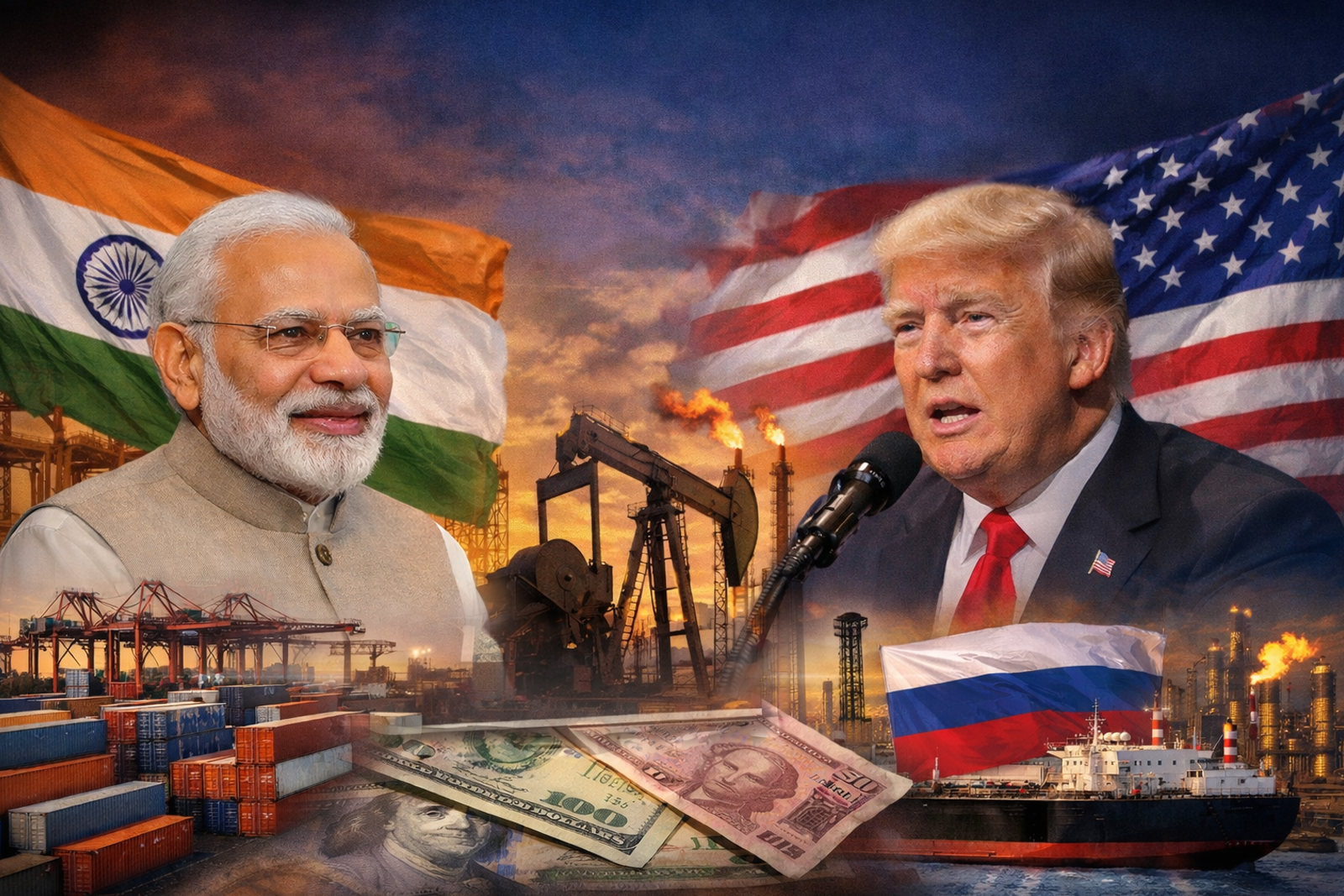
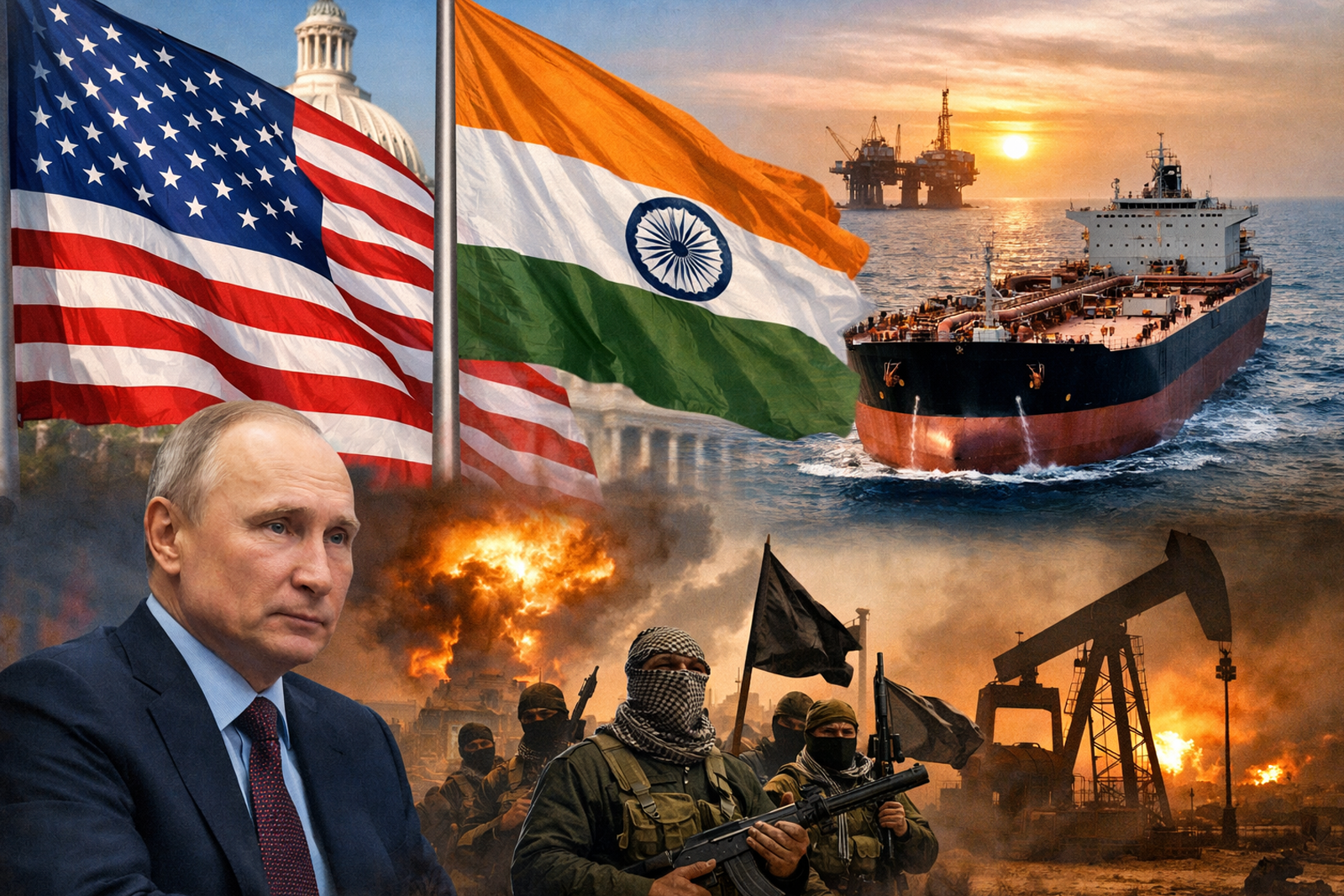
Negotiations between India and the United States took a dramatic turn after former U.S. President Donald Trump announced tariff cuts on Indian goods and claimed that Prime Minister Narendra Modi would reduce or halt purchases of Russian oil. The remarks, made during ongoing trade discussions, quickly drew international attention for linking economic concessions with geopolitical strategy.
Tariff Relief Signals Economic Thaw
Lower duties on Indian exports could benefit sectors such as pharmaceuticals, textiles, engineering goods, and information technology services, which have long sought easier access to the American market. The proposed reductions are being seen as a goodwill gesture aimed at narrowing trade gaps and strengthening supply-chain cooperation between the two democracies.
Russian Oil Claim Adds Diplomatic Layer
Trump’s assertion regarding India’s future oil sourcing introduced a sensitive element into the talks. India has consistently maintained that its energy purchases are driven by national interest and price stability, especially amid global market volatility. Any shift away from Russian crude would carry economic implications at home while also resonating across diplomatic corridors abroad.
Strategic Stakes for Both Nations
For Washington, the trade deal represents a chance to deepen strategic alignment in the Indo-Pacific and counter growing influence from rival powers. For New Delhi, tariff relief and expanded market access could boost exports while preserving its policy autonomy in energy and foreign relations.
What Comes Next
Officials from both sides are expected to continue technical-level negotiations to clarify the scope of tariff reductions and address sensitive political issues separately. Analysts say the outcome will depend on whether economic priorities can be balanced with broader geopolitical concerns.
As discussions progress, the proposed trade deal underscores how commerce, diplomacy, and energy security are increasingly intertwined in shaping the future of India–U.S. relations.
India–U.S. Trade Deal Talks Intensify After Tariff Announcement
India–U.S. trade negotiations entered a high-stakes phase after former U.S. President Donald Trump declared that Washington would reduce tariffs on Indian exports and suggested that Prime Minister Narendra Modi would curtail purchases of Russian crude oil. The comments injected fresh momentum—and controversy—into discussions that aim to reset economic ties between the world’s two largest democracies while navigating a complex geopolitical landscape.
Background: Why the Talks Matter
Trade between India and the United States has grown steadily over the past decade, spanning technology services, pharmaceuticals, agriculture, defence manufacturing, and clean energy equipment. However, both sides have periodically raised concerns about market access, regulatory barriers, and customs duties.
Washington has sought broader entry for American farm and industrial goods, while New Delhi has pushed for lower tariffs on labour-intensive exports and greater mobility for skilled professionals. The latest round of negotiations is widely viewed as an attempt to modernise trade rules and build resilient supply chains amid global economic uncertainty.
Tariff Cuts: A Boost for Indian Exporters
Trump’s statement on reducing duties immediately drew attention from Indian manufacturing and export bodies.
Potential beneficiaries include:
-
Pharmaceutical firms, which rely heavily on the U.S. market for generic drug sales.
-
Textile and apparel exporters, who face stiff competition from other Asian producers.
-
Engineering and auto-component makers, looking to expand their footprint in North America.
-
IT and digital service providers, seeking smoother cross-border operations.
Lower tariffs could make Indian products more competitive in U.S. retail and industrial markets, potentially encouraging new investment and job creation at home. Trade experts note that tariff relief is often used as a confidence-building measure, signalling political willingness to move toward a comprehensive agreement.
Russian Oil Comment Complicates the Narrative
Alongside the tariff announcement, Trump’s claim that India would stop buying Russian oil added a sensitive geopolitical dimension to the talks.
India has repeatedly said that its energy strategy is guided by affordability, availability, and national interest rather than political alignments. Discounted Russian crude has helped cushion domestic fuel prices during periods of global volatility, making it a significant component of India’s import basket.
Any major shift away from those supplies would involve:
-
renegotiating contracts with alternative producers,
-
managing price impacts on consumers and industry,
-
ensuring logistical readiness for new shipping routes, and
-
maintaining diplomatic balance with multiple partners.
Analysts caution that while energy discussions often run parallel to trade negotiations, formally linking them can complicate outcomes and lengthen timelines.
Strategic Calculations in Washington
For the United States, a stronger trade framework with India fits into broader Indo-Pacific strategy.
Key motivations include:
-
Diversifying supply chains away from over-reliance on single manufacturing hubs.
-
Expanding defence and technology cooperation, including semiconductors and advanced manufacturing.
-
Strengthening political alignment with a major regional power.
Tariff concessions could be used to accelerate cooperation in emerging sectors such as renewable energy equipment, electric vehicles, and digital infrastructure, where both governments see long-term growth potential.
New Delhi’s Balancing Act
India approaches the negotiations with multiple priorities:
-
securing wider market access for its exporters,
-
protecting sensitive domestic industries,
-
attracting U.S. investment into manufacturing and startups, and
-
preserving strategic autonomy in foreign policy and energy sourcing.
Officials have historically stressed that trade agreements must be mutually beneficial and sensitive to development needs. The Russian oil issue, therefore, touches a nerve, as India seeks to avoid being seen as making policy shifts solely in response to external pressure.
Domestic Reactions and Industry Expectations
Business groups in India have welcomed talk of tariff reductions but remain cautious until official details are released. Exporters are particularly keen to see:
-
product-specific duty schedules,
-
timelines for implementation,
-
safeguards for dispute resolution, and
-
clarity on regulatory standards.
In the U.S., farming lobbies, manufacturing associations, and technology firms are watching closely for reciprocal concessions that might improve access to India’s fast-growing consumer market.
The Road Ahead: Negotiations Continue
Despite the headline-grabbing remarks, officials from both sides are expected to continue technical-level discussions behind closed doors. These talks typically cover:
-
customs procedures and digital trade rules,
-
intellectual property protections,
-
sustainability standards,
-
labour provisions, and
-
mechanisms for monitoring compliance.
Diplomats often stress that public statements do not always reflect the full complexity of negotiations, and that final outcomes depend on months of drafting, consultations, and political approvals.
A Deal Shaped by Economics and Geopolitics
The evolving India–U.S. trade dialogue highlights how modern economic agreements extend far beyond tariffs alone. Energy security, technology transfer, supply-chain resilience, and regional strategy are now deeply intertwined.
Whether the talks culminate in a sweeping bilateral deal or a series of sector-specific agreements, the latest developments underline the growing importance both countries attach to their partnership. As negotiators seek common ground, the coming weeks will reveal whether economic pragmatism can coexist with the geopolitical pressures shaping today’s global order.

About The Author
Soojin Das is a dedicated journalist with a strong focus on public affairs, governance, and grassroots reporting. With a passion for uncovering stories that matter, she brings clarity, accuracy, and depth to complex issues shaping communities across India. Her reporting spans politics, social development, education, and local civic concerns, giving readers a balanced and well-researched perspective. Known for her sharp news sense and ethical approach to journalism, Anita combines on-ground reporting with data-driven analysis and compelling storytelling. She has covered major policy announcements, elections, disaster response efforts, and community-led initiatives, ensuring that audiences receive timely and trustworthy information. Anita believes journalism plays a vital role in strengthening democracy and amplifying under-represented voices. Through interviews, investigative pieces, and human-interest stories, she aims to inform, engage, and empower readers. When not in the field, she closely follows media innovation and digital storytelling trends, continually refining her craft to meet the evolving needs of modern newsrooms.
Soojin Das | Journalist

You Might Also Like
-
Iran Grants India Access to Strait of Hormuz Amid Rising Tensions In a significant geopolitical development, Iran has decided to allow India an...
-
U.S. Grants 30-Day Waiver for India to Continue Russian Oil Purchases Temporary Relief Amid Global Supply Concerns The United States has is...
Suggested Video