Modi Government Hails ‘Give-and-Take’ Tariff Pact, Defends Opening India’s Economy to U.S
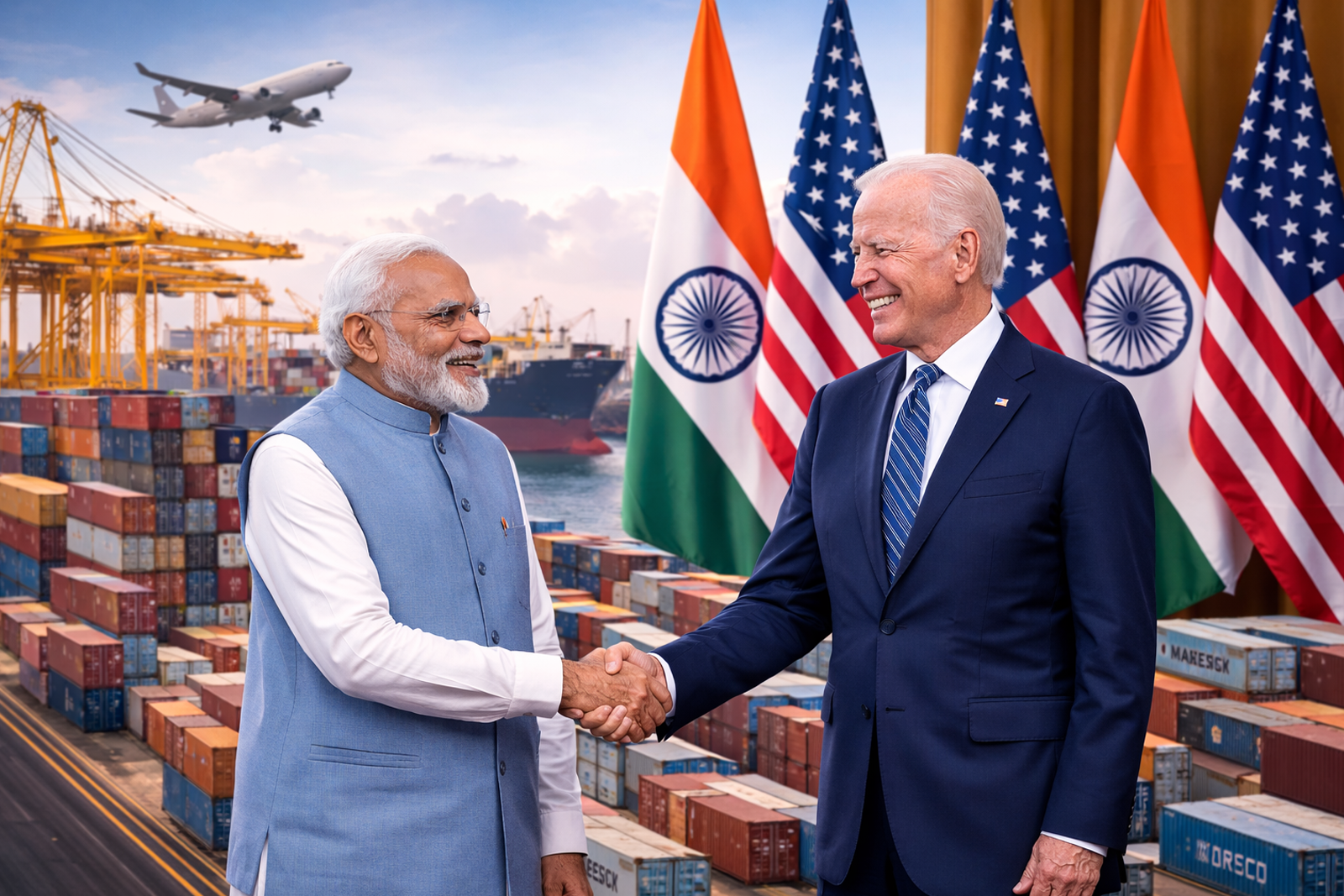
Modi Government Defends U.S. Tariff Talks as Strategic Economic Engagement
The Modi government has stepped forward to clarify its position on ongoing tariff negotiations with the United States, describing the discussions as a pragmatic exercise in mutual accommodation rather than a one-sided opening of India’s markets. Officials argue that the proposed framework reflects India’s long-term economic priorities while protecting sensitive domestic sectors.
A Calculated Approach to Market Access
According to senior policymakers, the “give-and-take” formula being discussed focuses on reducing trade barriers selectively, not indiscriminately. India is seeking greater access for pharmaceuticals, information technology services, textiles and agricultural exports, while considering limited concessions in areas that could attract investment and advanced technology. The government maintains that every tariff adjustment is being weighed against its impact on local producers, employment and revenue.
Boosting Exports and Investment
The Centre has stressed that closer trade ties with Washington are intended to strengthen India’s export capacity and draw high-value manufacturing into the country. With global supply chains shifting, officials believe that stable trade rules and predictable tariff structures could encourage American firms to expand operations in India, supporting the “Make in India” push and creating skilled jobs.
Addressing Political and Industry Concerns
Opposition parties and certain industry groups have raised questions about whether greater openness could expose Indian businesses to unfair competition. In response, the government has highlighted existing safeguard mechanisms, anti-dumping duties and regulatory standards that can be deployed if imports surge unexpectedly. It has also pointed out that consultations with domestic stakeholders are ongoing before any final commitments are made.
Looking at the Bigger Picture
Framing the negotiations within a broader strategic partnership, the Modi administration says the tariff talks are part of an effort to deepen economic cooperation, diversify trade partners and enhance India’s standing in global commerce. Officials insist that the ultimate goal is not concession for its own sake, but a carefully balanced agreement that advances national growth and resilience.

India–U.S. Tariff Talks: Why the Modi Government Calls It a Balanced Economic Strategy
The Modi government has mounted a strong defence of its evolving tariff negotiations with the United States, portraying the proposed deal as a calibrated exchange that aligns with India’s development goals rather than a wholesale opening of its markets. With political debate intensifying and industry groups watching closely, the Centre insists that the talks are grounded in reciprocity, protection of core domestic interests and a longer-term vision for India’s place in the global economy.
Below is a detailed look at the government’s rationale, the potential economic impact and the concerns being raised at home.
A “Give-and-Take” Framework, Not Unilateral Concessions
Officials have repeatedly underlined that the discussions are structured around mutual benefit. According to government sources, India is seeking meaningful tariff relief for its export-heavy sectors—such as pharmaceuticals, textiles, engineering goods, auto components and information technology services—while exploring limited reductions in duties on select American products.
The Centre argues that this approach mirrors trade diplomacy pursued by major economies worldwide: opening certain doors in exchange for better access abroad. Any proposed cuts, it says, are being negotiated line by line, product by product, with a clear focus on preventing sudden shocks to domestic industries.
Protecting Sensitive Domestic Sectors
A key plank of the government’s defence is that not all sectors are on the table. Agriculture, small-scale manufacturing and strategically important industries are being treated with caution, officials claim. Existing tools such as safeguard duties, anti-dumping measures and quality-control regulations are being kept ready to respond if imports rise sharply.
The Centre has also pointed to India’s experience in managing trade liberalisation over the past three decades, noting that phased tariff changes and targeted protections have allowed domestic firms to adapt and grow rather than be overwhelmed by foreign competition.
Linking Trade Talks to Investment and Technology
Beyond tariff numbers, the Modi administration frames the negotiations as part of a larger push to attract capital and cutting-edge technology. By offering predictable trade conditions, the government hopes to encourage U.S. companies to expand manufacturing bases in India, especially in electronics, renewable energy equipment, defence production and advanced materials.
Officials connect this strategy to flagship initiatives such as “Make in India” and production-linked incentive schemes, arguing that deeper commercial engagement could integrate Indian factories more firmly into global supply chains and generate higher-value jobs.
Expanding Export Opportunities for Indian Firms
The Centre maintains that improved access to the U.S. market is central to the talks. Lower duties and smoother regulatory pathways, it says, could give Indian exporters a competitive edge in one of the world’s largest consumer markets.
Pharmaceutical formulations, speciality chemicals, garments, processed foods and digital services are frequently cited as areas where Indian companies could scale up quickly if barriers are reduced. The government believes that a successful deal could help narrow the bilateral trade gap while supporting small and medium enterprises that depend heavily on overseas demand.
Addressing Domestic Political Criticism
Opposition leaders have questioned whether easing tariffs could undercut local producers or reduce government revenue. Some industry associations, particularly in import-sensitive segments, have also urged caution.
In response, ministers have stressed that negotiations are being conducted transparently, with consultations involving exporters, manufacturers, farmers’ groups and state governments. The Centre argues that feedback from these stakeholders is shaping its negotiating stance and that no agreement will be finalised without a broad assessment of economic and social consequences.
Revenue, Consumers and Inflation Concerns
Another issue being debated is the potential impact on customs revenue and domestic prices. The government’s position is that any short-term loss in tariff income could be offset by higher trade volumes, stronger investment inflows and faster economic growth.
Officials also note that selective tariff reductions may benefit Indian consumers and manufacturers who rely on imported inputs, by lowering costs and easing inflationary pressures. Cheaper components and raw materials, they argue, could make Indian exports more competitive globally.
The Geopolitical and Strategic Dimension
The tariff talks are also being presented within a broader geopolitical context. India and the U.S. have been deepening ties across defence, technology and energy, and closer economic integration is seen by the government as reinforcing that partnership.
Diversifying trade relationships, reducing dependence on a narrow set of suppliers and positioning India as a reliable destination for global investment are cited as strategic objectives that go beyond immediate commercial gains.
What Happens Next
Negotiations are expected to continue as both sides seek consensus on product lists, timelines and safeguard clauses. The Modi government has indicated that any final arrangement would be phased in gradually, allowing domestic industries time to adjust and policymakers room to intervene if disruptions occur.
For now, the Centre’s message is consistent: the proposed tariff deal is not about opening India’s economy indiscriminately, but about striking a calculated balance between protecting domestic interests and tapping new growth opportunities abroad.
By framing the talks as part of a long-term economic and strategic roadmap, the government hopes to reassure critics while building support for a trade policy that, in its view, could reshape India–U.S. commercial ties for years to come.

Shivani NayakJournalist
Shivani Nayak is an emerging journalist committed to delivering accurate, timely, and impactful stories for a fast-growing digital news platform. With a keen interest in politics, public policy, and community reporting, she focuses on issues that directly affect everyday life. Her work reflects a strong belief in responsible journalism, transparency, and fact-based reporting.
She brings a modern, digital-first approach to news coverage, blending field reporting with multimedia storytelling to reach audiences across platforms. From breaking developments to in-depth explainers and human-interest features, Anita strives to present news in a clear, accessible manner while maintaining editorial integrity.
Driven by curiosity and a deep sense of social responsibility, she actively engages with sources at the grassroots level, ensuring diverse voices are represented. She is particularly interested in governance, education reform, infrastructure development, and civic affairs.
Through her reporting, Anita aims to build trust with readers and contribute to a culture of informed public dialogue. As part of a new portal, she looks forward to growing alongside the publication and helping shape its journalistic identity in the digital age.