Piyush Goyal Says India Firmly Pushed Farm Interests in US Trade Talks
India Presses Farm Priorities in US Trade Talks, Says Piyush Goyal
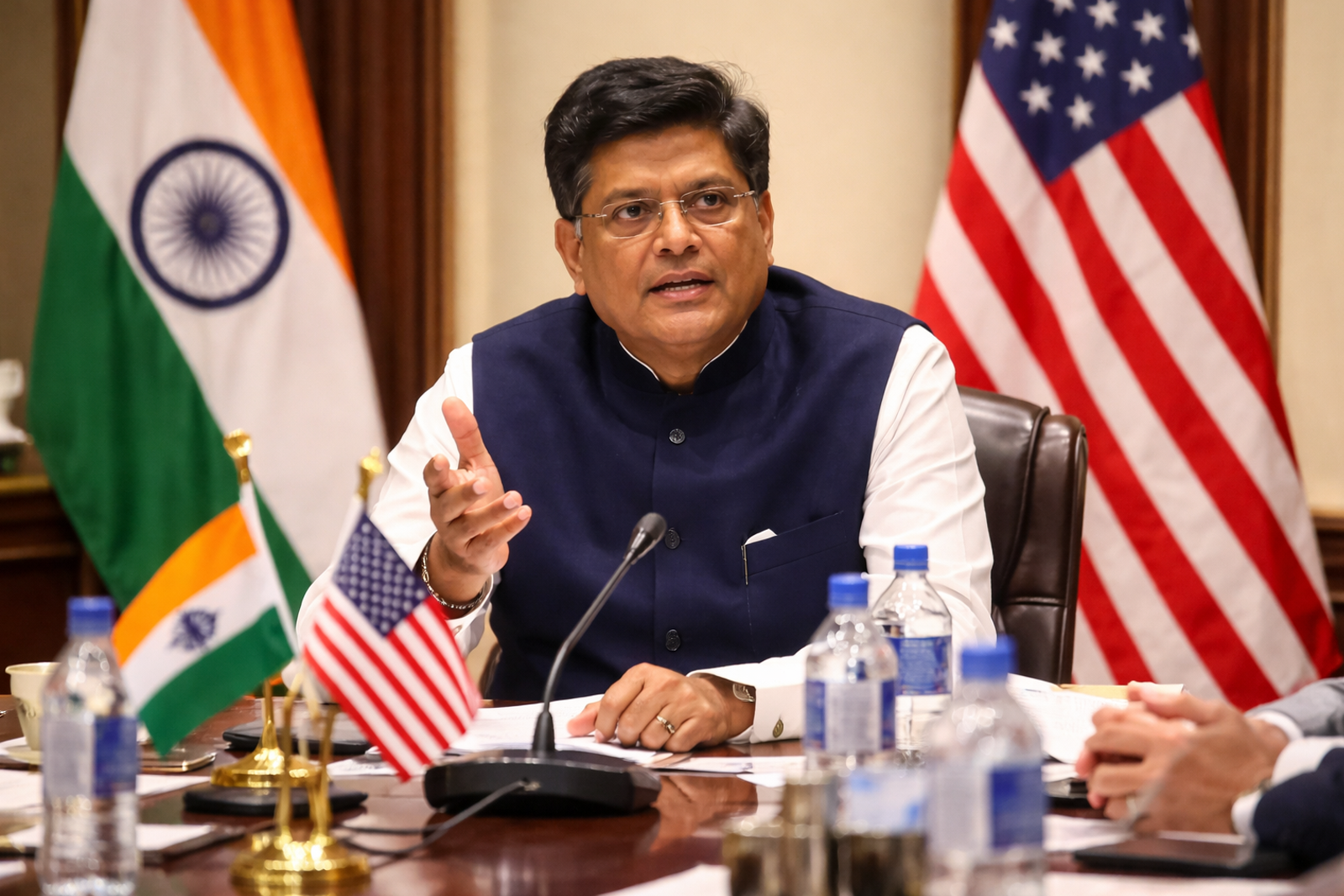
Union Commerce and Industry Minister Piyush Goyal has said that India adopted a firm and proactive posture while negotiating with the United States on a proposed trade agreement, especially when it came to protecting the country’s agricultural sector. According to him, New Delhi made it clear that farmer welfare and food security could not be compromised for short-term commercial gains.
Agriculture at the Centre of Negotiations
Goyal explained that agriculture remains a sensitive and strategically important area for India, employing millions and forming the backbone of rural economies. During discussions with US counterparts, Indian negotiators repeatedly highlighted the need to maintain policy flexibility on subsidies, market access and domestic support mechanisms. The government, he added, sought to ensure that any commitments made under the deal would align with long-term national priorities rather than external pressures.
Balancing Trade and Domestic Needs
While India remains open to expanding trade ties with major global partners, Goyal stressed that agreements must deliver reciprocal benefits. He noted that India is pushing for greater access for its manufactured goods and services in return for opening certain sectors. The minister underlined that trade diplomacy today is less about sweeping concessions and more about carefully calibrated steps that protect vulnerable communities while encouraging growth.
Strategic Approach to Global Partnerships
The comments come at a time when India is pursuing multiple bilateral and regional trade arrangements to strengthen supply chains and attract investment. Goyal said the government’s strategy is to engage confidently with the world while safeguarding critical domestic sectors such as farming, small enterprises and food processing.
Farmers Remain a Core Priority
Reiterating the government’s stance, Goyal said that any final understanding with Washington would be evaluated through the lens of farmer welfare and rural sustainability. He added that India would continue to negotiate assertively to ensure that agricultural interests remain secure as trade talks progress.
India Drives Hard Bargain on Farm Sector in US Trade Negotiations, Says Piyush Goyal
Union Commerce and Industry Minister Piyush Goyal has indicated that India took a robust and carefully calibrated position on agricultural issues during negotiations with the United States over a potential trade agreement. Emphasising the political, economic and social importance of farming in India, Goyal said the government made it clear that safeguarding domestic producers and ensuring food security were central to New Delhi’s approach.
At a time when global trade talks are becoming increasingly complex, India’s stance reflects its broader strategy of engaging with major economies without conceding ground in sensitive sectors. Goyal’s remarks underline how agriculture continues to shape the country’s external economic policy.
Why Agriculture Remains a Red-Line Issue for India
Agriculture supports a significant share of India’s population and plays a critical role in stabilising rural incomes, controlling inflation and ensuring food availability. According to Goyal, these realities shaped India’s negotiating posture with Washington.
-
Protection of Small Farmers: India highlighted the vulnerability of marginal and small cultivators who depend on price stability and government support systems.
-
Food Security Concerns: Officials stressed that policy flexibility is essential to maintain public food distribution and buffer stocks.
-
Domestic Support Mechanisms: India resisted pressures that could restrict subsidies or procurement programmes crucial to rural livelihoods.
By foregrounding these concerns, New Delhi sought to prevent trade commitments from undermining its long-term agricultural framework.
Pushing for Reciprocity in Market Access
Goyal noted that India’s firm stance on agriculture was accompanied by demands for balanced outcomes across other sectors. Trade negotiations, he said, must deliver tangible gains for both sides rather than one-sided openings.
Key areas where India is seeking improved access include:
-
Manufactured Goods: Indian exporters are looking for smoother entry into US markets for engineering products, textiles and pharmaceuticals.
-
Services Sector: Greater mobility for professionals and fewer regulatory hurdles for IT and consulting firms remain important goals.
-
Value-Added Agriculture: India is also pitching for expanded opportunities for processed foods, spices and organic products.
This push for reciprocity reflects New Delhi’s broader effort to link agricultural sensitivities with wider economic opportunities.
Negotiating from a Position of Confidence
The commerce minister’s comments suggest that India views itself as a more assertive player in global trade than in previous decades. Instead of accepting broad templates proposed by larger economies, Indian negotiators are focusing on bespoke arrangements that reflect domestic priorities.
-
Selective Liberalisation: India is open to phased tariff reductions rather than immediate, across-the-board cuts.
-
Safeguard Clauses: Officials are seeking provisions that would allow temporary protections if imports surge and threaten local producers.
-
Long-Term Review Mechanisms: Built-in evaluation periods are being proposed so commitments can be reassessed as market conditions change.
Such tools, Goyal argued, are essential for managing the uncertainties that come with deeper economic integration.
Geopolitics and the Changing Trade Landscape
India-US trade talks are unfolding against a backdrop of shifting global supply chains and strategic realignments. Both countries are exploring ways to diversify sourcing, boost resilience and reduce over-dependence on single markets.
Goyal said India’s objective is to emerge as a trusted manufacturing and investment destination while preserving policy autonomy in critical areas. Strengthening ties with Washington is part of this ambition, but not at the cost of domestic stability.
-
Supply Chain Security:Cooperation in electronics, defence manufacturing and critical minerals is being discussed.
-
Investment Flows:India wants trade agreements to translate into new factories, technology transfers and job creation.
-
Sustainability Standards:Environmental and labour clauses are also part of the evolving conversation, requiring careful alignment with local realities.
Farmers at the Core of Trade Policy
Reiterating the government’s political messaging, Goyal said farmer welfare remains the lens through which any final deal would be judged. He pointed out that agriculture is not merely an economic sector but a social foundation for millions of households.
-
Rural Development Goals:Trade policy is being aligned with efforts to modernise irrigation, storage and logistics.
-
Export Promotion:India is encouraging farmers to tap global markets through quality certification and branding initiatives.
-
Price Stability Measures:Authorities want to ensure that import competition does not lead to sudden collapses in farmgate prices.
According to the minister, these priorities will continue to guide India’s negotiating teams as discussions progress.
What Lies Ahead in the Talks
While no timeline has been indicated for concluding the agreement, Goyal’s remarks suggest that negotiations remain detailed and complex. Multiple rounds of technical consultations are expected before any political sign-off.
Observers note that agriculture is likely to remain one of the toughest chapters to resolve, alongside digital trade, intellectual property and regulatory standards. Yet both sides appear keen to keep channels open, reflecting the strategic value each attaches to the partnership.
For India, the message from the commerce minister is clear: engagement with the United States will continue, but not at the expense of its farming community. As global trade becomes more competitive and politically sensitive, New Delhi appears determined to project itself as a confident negotiator—one that seeks growth abroad while guarding stability at home.














Suggested Video