- Loading...
- Loading...


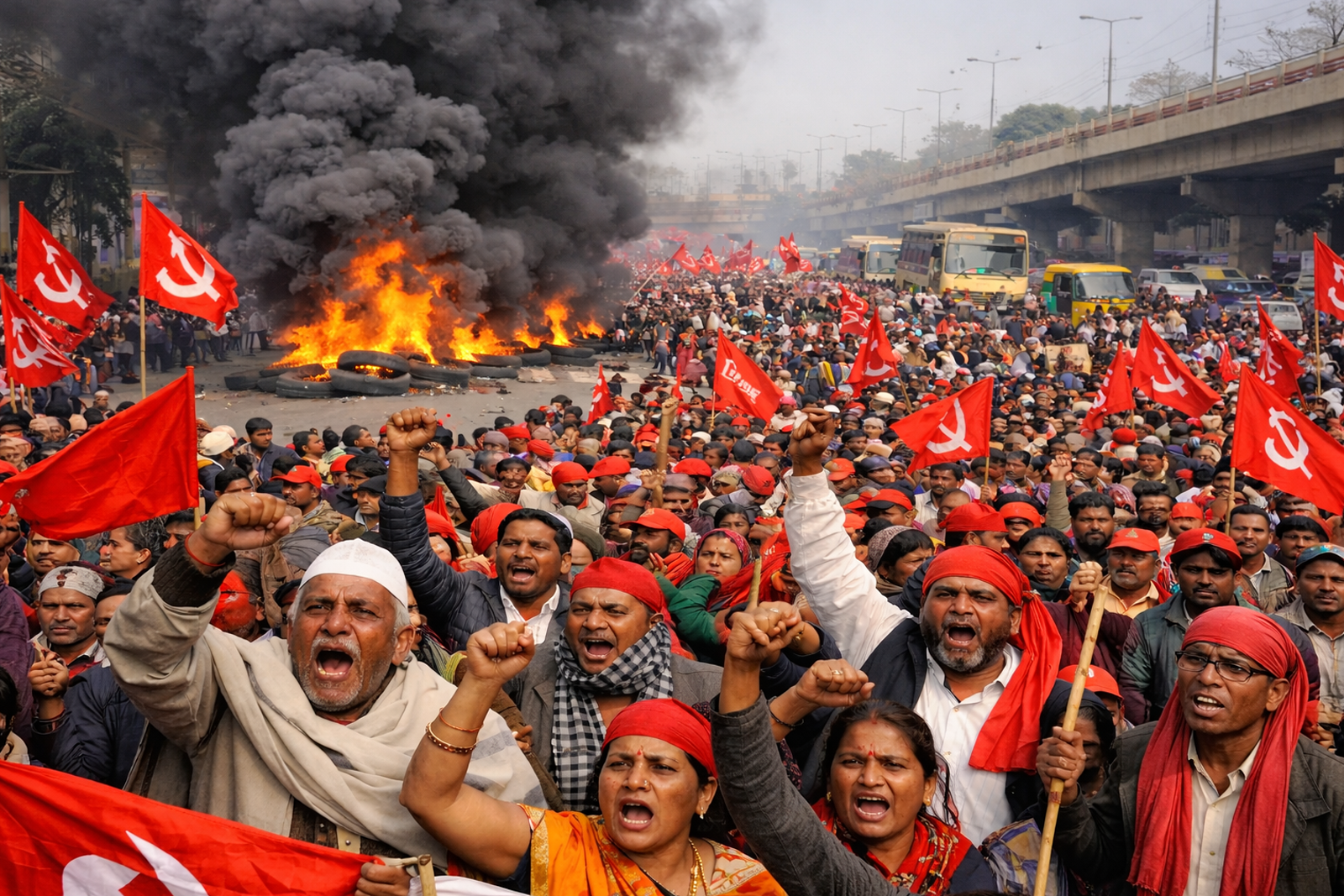
India is likely to witness widespread industrial action on February 12 as a joint forum of central trade unions has called for a nationwide Bharat Bandh, projecting participation from nearly 30 crore workers across public and private sectors. The organisers say the strike is aimed at highlighting concerns over labour reforms, rising prices, job security, and social welfare provisions.
Union leaders have stated that workers from banking, insurance, coal mining, transport, construction, and manufacturing sectors are expected to take part. Farmer groups and rural labour organisations have also extended support, which could amplify the scale of the shutdown in several states. While emergency services are generally kept outside the ambit of such protests, commuters in major cities may face disruptions in public transport, and banking operations could see partial slowdowns.
According to union representatives, the bandh is being organised after repeated appeals for dialogue with the government failed to produce satisfactory outcomes. They argue that recent policy changes have weakened worker protections and collective bargaining rights, while rising living costs have put additional pressure on households dependent on wage labour.
Government officials, however, have maintained that labour reforms are intended to improve ease of doing business, attract investment, and generate employment. Authorities are expected to review security arrangements and contingency plans to ensure that essential services continue with minimal disturbance during the protest.
Political reactions to the bandh have begun to surface, with opposition parties expressing solidarity with the workers’ demands, while some industry bodies have urged restraint, warning that large-scale shutdowns could disrupt economic activity and supply chains.
As February 12 approaches, state administrations, transport authorities, and businesses are preparing for possible operational challenges. Citizens are being advised to stay updated through official announcements regarding travel, banking services, and office schedules, as the extent of the bandh’s impact will depend largely on regional participation and local enforcement.
India is preparing for a major day of protest on February 12 after a coalition of central trade unions announced a nationwide Bharat Bandh, claiming that close to 30 crore workers are expected to participate. The call for a strike has triggered preparations across states, with administrations reviewing law-and-order measures and citizens bracing for possible disruptions to daily routines.
The organisers say the bandh is rooted in long-standing grievances related to labour laws, employment conditions, inflation, and social security. With support coming from farmer organisations and rural worker groups, the protest could extend beyond industrial centres into semi-urban and agrarian regions.
Below is a detailed look at the strike, its background, key demands, and the likely impact.
The Bharat Bandh is a nationwide shutdown call issued by trade unions and allied groups to press their demands before the government. Such actions typically involve work stoppages, demonstrations, rallies, and sit-ins across major cities, industrial hubs, and district headquarters.
Union leaders have said that the February 12 protest is intended to be peaceful but large-scale, with coordinated mobilisation in transport depots, factory gates, marketplaces, and public-sector offices.
The bandh has been announced by a joint platform of central trade unions representing workers from diverse political and ideological backgrounds. These unions collectively claim membership running into crores, particularly in organised sectors such as:
Banking and insurance
Coal mining and power utilities
Steel and heavy engineering
Port and dock services
Road transport corporations
Construction and contract labour
Several farmer bodies and rural labour associations have also pledged solidarity, which organisers say will broaden the reach of the strike in agricultural belts.
Trade union representatives argue that the strike is aimed at drawing attention to what they describe as a deterioration in worker protections and living standards. Their principal concerns include:
Unions have opposed recent changes to labour regulations, claiming that they make hiring and firing easier for employers while weakening collective bargaining rights and inspection mechanisms.
High prices of essential commodities, fuel, and utilities have been cited as a major reason for worker discontent. Union leaders say stagnant wages have not kept pace with inflation, squeezing household budgets.
Contractual employment, outsourcing, and privatisation are recurring themes in union statements. They allege that permanent jobs are being replaced with short-term contracts, reducing stability for workers.
Expanding pension schemes, provident fund access, healthcare benefits, and insurance coverage for unorganised and gig workers form a central part of the unions’ demands.
Proposed or ongoing disinvestment in public-sector undertakings has drawn criticism, with unions warning that asset sales could lead to workforce reductions and loss of strategic control.
Officials have consistently defended labour reforms, stating that they are designed to simplify compliance, encourage formalisation, and attract domestic and foreign investment. The government has also highlighted welfare initiatives aimed at low-income workers, including housing schemes, health insurance coverage, and direct benefit transfers.
Authorities are expected to hold coordination meetings with state governments and law-enforcement agencies ahead of the bandh to ensure that essential services remain operational and that protests remain peaceful.
The scale of disruption will depend on regional participation, but past nationwide strikes have affected multiple sectors. On February 12, citizens could see:
Public Transport: Partial disruptions in buses, taxis, and auto-rickshaws in some states.
Banking Services: Reduced branch operations and delays in cheque clearing or customer services.
Industrial Production: Temporary shutdowns in factories and mining operations where unions have strong presence.
Schools and Offices: Some institutions may shift to online work or declare local holidays depending on conditions.
Markets and Supply Chains: Wholesale trade and logistics could slow in areas with heavy mobilisation.
Emergency services such as hospitals, ambulances, and fire brigades are usually kept outside the ambit of such calls, though authorities often advise citizens to plan travel in advance.
Opposition parties have begun voicing support for the bandh, framing it as a response to economic pressures on workers. On the other hand, business associations have urged unions to pursue dialogue, warning that repeated shutdowns can hurt investor sentiment and disrupt fragile supply chains.
Economists note that while strikes draw attention to labour issues, prolonged disruptions can have ripple effects on productivity and growth, making negotiations between stakeholders crucial.
State administrations are likely to deploy additional police personnel at sensitive locations, transport hubs, and industrial estates. Control rooms and helplines may be activated to respond to localised incidents, while district officials could issue advisories on school schedules, road closures, or public transport availability.
In some regions, government employees’ unions are expected to hold demonstrations outside offices rather than enforce complete shutdowns, which could moderate the overall impact.
With just days to go before the bandh, residents are advised to monitor official announcements from district administrations, transport corporations, and banks. Commuters may want to keep alternate travel options ready, while businesses could adjust staffing schedules or work-from-home policies if disruptions intensify.
The February 12 strike underscores continuing tensions between organised labour and policymakers over the direction of India’s economic reforms. Whether the bandh leads to renewed talks or policy recalibration will depend on the response from authorities in the days following the protest and the scale of participation on the ground.

In today’s world of endless choices and digital noise, marketing is no longer just about promoting products — it’s about creating meaningful connections. Successful brands focus on building relationships rather than chasing transactions. Marketing that connects transforms audiences into loyal communities by earning their trust, understanding their needs, and delivering genuine value. When businesses prioritize people over promotions, marketing becomes more than strategy — it becomes a relationship built to last.

Odisha’s small businesses are entering a new era — where mobile apps, online payments, and e-commerce aren’t luxuries, but lifelines for growth and survival.

As India enters the second phase of its digital revolution, artificial intelligence and automation are not just transforming industries—they’re redefining what it means to work, earn, and adapt.

The conference brought together officials from ten central districts, including district collectors, tehsildars, registrars, and welfare officers, either virtually or in person.

We glorified sleepless nights, burnout, and exhaustion as signs of ambition. But when did working yourself to the edge become the definition of success?

Not everyone who thrives in tech writes code. Some design the very experiences that make technology human.





Leave Comments