








Hasina’s Presence, Ganga Waters Agreement Set to Dominate BNP Policy Focus
BNP Sets Diplomatic Reset with India as Key Foreign Policy Focus
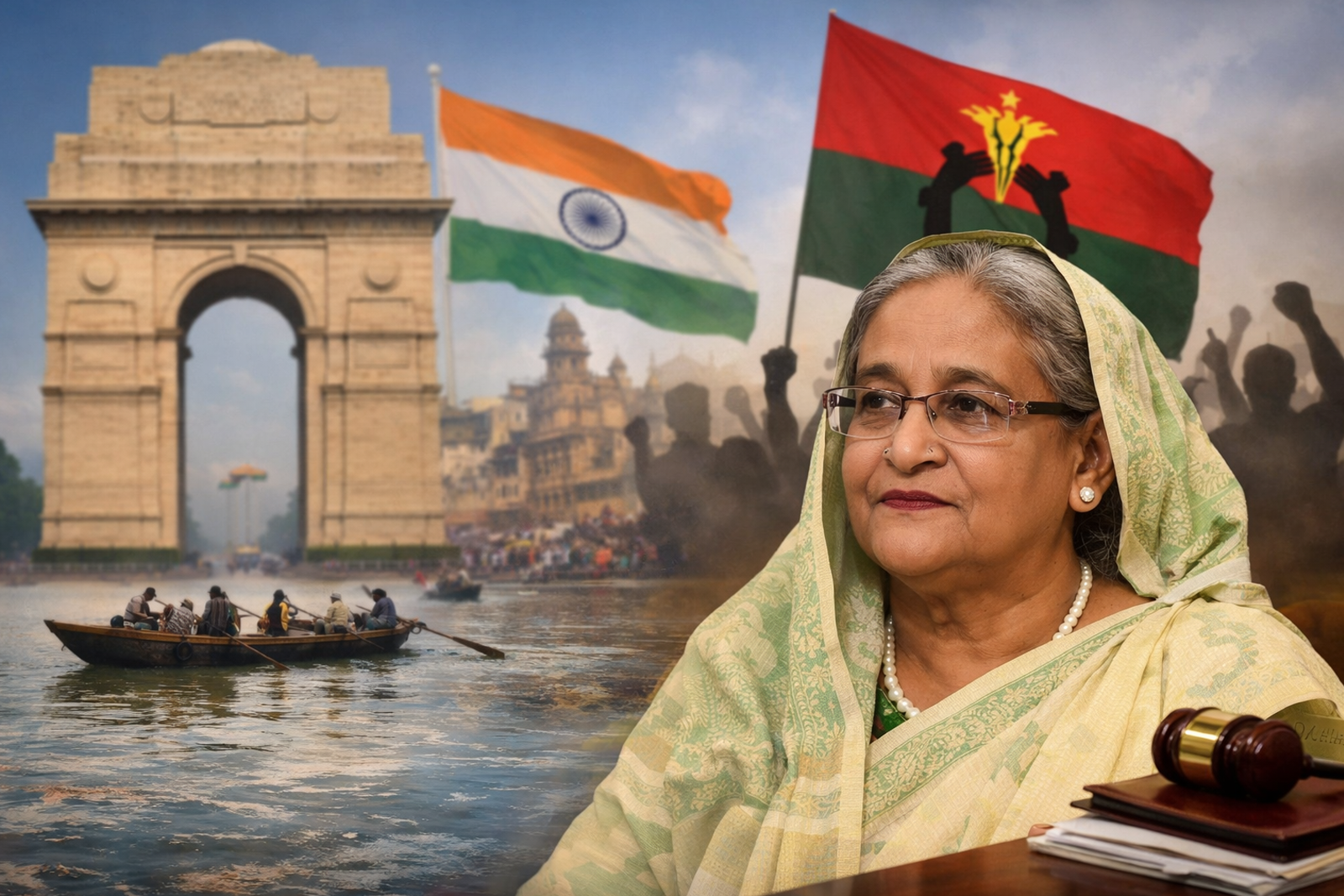
Sources indicate that the Bangladesh Nationalist Party (BNP), if it assumes power, is likely to initiate a significant recalibration of Dhaka’s foreign policy, with India occupying a central place in its strategic outlook. Two sensitive and closely watched issues—former Prime Minister **Sheikh Hasina’s presence in India and the long-standing Ganga water-sharing arrangement—are expected to dominate early diplomatic engagements.
According to officials familiar with internal deliberations, the BNP views Hasina’s stay in India as a politically and symbolically important matter. Party leaders believe the issue carries implications not only for domestic politics in Bangladesh but also for bilateral trust between the two neighbours. While no confrontational approach is being publicly signalled, the party is expected to seek greater transparency and formal communication channels on the matter.
Equally significant is the Ganga waters treaty, which has remained a recurring point of debate in Bangladesh’s political discourse. The BNP is understood to be assessing whether the current framework adequately addresses Bangladesh’s long-term water security, particularly during lean seasons. Party strategists argue that water-sharing agreements must evolve with changing climatic patterns, agricultural needs, and population pressures.
Sources stress that a BNP-led government would likely prefer negotiation over escalation. The emphasis, they say, would be on revisiting agreements through diplomatic dialogue rather than unilateral actions. This approach is intended to balance domestic expectations with the practical realities of maintaining stable ties with India, Bangladesh’s largest neighbour and a key regional partner.
Analysts note that these priorities reflect the BNP’s broader attempt to distinguish its foreign policy stance from previous administrations. By foregrounding issues tied to sovereignty, resource management, and political accountability, the party aims to project itself as firm yet pragmatic. How New Delhi responds to these potential policy shifts will be closely watched, as both sides navigate a relationship shaped by geography, history, and mutual dependence.
BNP Government’s India Policy: Hasina’s Status and Ganga Treaty Take Centre Stage
Sources suggest that if the Bangladesh Nationalist Party (BNP) forms the next government in Bangladesh, two issues are likely to dominate its early diplomatic engagement with India: the presence of former Prime Minister Sheikh Hasina in India and the future course of the Ganges Water Sharing Treaty. Party insiders indicate that these matters are being viewed not merely as political talking points, but as strategic priorities tied to sovereignty, governance, and long-term national interest.
Below is a detailed look at how these priorities may shape Dhaka’s foreign policy direction.
Reassessing Bilateral Political Sensitivities
BNP leaders are understood to believe that Sheikh Hasina’s continued presence in India carries political and symbolic weight. From the party’s perspective, the matter touches on domestic political accountability as well as bilateral trust.
Sources say a BNP administration may formally seek clarity regarding her status through diplomatic channels. However, party strategists are reportedly cautious about avoiding rhetoric that could escalate tensions. The aim would likely be to address the issue institutionally rather than emotionally, ensuring that dialogue remains structured and measured.
Legal and Diplomatic Framework on Hasina’s Presence
Any engagement on this issue would have to follow international legal standards and bilateral protocols. BNP insiders indicate that if discussions arise, they would focus on:
-
Established extradition procedures
-
Mutual legal assistance frameworks
-
Respect for sovereign legal systems
-
Maintaining diplomatic decorum
Observers note that such an approach would signal a preference for rule-based engagement rather than political confrontation.
Reviewing the Ganga Water Sharing Arrangement
The second major priority is the Ganga water-sharing framework signed in 1996. While the agreement has provided a structure for distributing dry-season flows, critics within Bangladesh have periodically raised concerns about adequacy and implementation.
A BNP government may push for:
-
Technical reassessment of water flow data
-
Transparent sharing of hydrological information
-
Review mechanisms responsive to climate variability
-
Safeguards for agricultural and ecological sustainability
With climate change altering river patterns, the party reportedly believes that long-term water security requires updated discussions.
Climate Change and Water Security Concerns
Bangladesh remains one of the countries most vulnerable to climate-related challenges. Reduced upstream flow during lean seasons affects irrigation, fisheries, and drinking water supply.
BNP policymakers are said to be evaluating whether existing water-sharing formulas sufficiently account for:
-
Changing rainfall patterns
-
Increased upstream consumption
-
Population growth in river-dependent districts
-
Ecological preservation
By framing the issue around sustainability rather than politics, the party may attempt to strengthen its negotiating position.
Balancing Firmness with Regional Stability
Despite signalling strong positions, sources emphasize that the BNP does not intend to undermine overall bilateral ties. India is Bangladesh’s largest neighbour and a significant economic partner. Trade, connectivity projects, and security cooperation remain critical to both nations.
Therefore, any recalibration would likely include:
-
Continued economic engagement
-
Protection of cross-border trade routes
-
Dialogue on energy cooperation
-
Joint border management initiatives
Analysts say this balanced posture could help prevent diplomatic friction while addressing domestic expectations.
Domestic Political Messaging
The issues of Sheikh Hasina’s status and the Ganga treaty resonate strongly in Bangladesh’s internal political landscape. By foregrounding these matters, the BNP may aim to demonstrate a commitment to sovereignty and institutional accountability.
Political observers suggest the party’s messaging could focus on:
-
National interest above partisan considerations
-
Transparent foreign policy decision-making
-
Equal and respectful partnership with India
-
Protection of strategic resources
Such positioning could consolidate support among constituencies concerned about water access and governance issues.
Economic Implications of Diplomatic Shifts
Any changes in diplomatic tone inevitably carry economic considerations. Bangladesh’s export sector, transit agreements, and infrastructure collaborations are closely tied to stable relations with India.
Experts caution that:
-
Prolonged uncertainty could affect investor confidence
-
Trade facilitation mechanisms must remain uninterrupted
-
Regional connectivity initiatives should be preserved
As a result, a BNP government would likely weigh economic stability heavily before adopting assertive diplomatic measures.
Regional and Geopolitical Context
South Asia’s geopolitical landscape is evolving, with regional connectivity and strategic competition influencing bilateral ties. Bangladesh’s location makes it an important partner in broader regional frameworks.
Sources indicate that the BNP may seek to:
-
Strengthen multi-vector diplomacy
-
Diversify international partnerships
-
Maintain balanced engagement with regional powers
-
Protect strategic autonomy
This approach could position Dhaka as an assertive yet pragmatic actor in regional affairs.
Possible Diplomatic Pathways Forward
If BNP forms the government, early diplomatic outreach may include:
-
High-level bilateral meetings
-
Technical committee reviews on water-sharing
-
Legal consultations regarding extradition frameworks
-
Confidence-building measures to reassure both sides
Diplomatic insiders say structured engagement, rather than public confrontation, would likely define initial steps.
Long-Term Vision for Bilateral Relations
Ultimately, BNP leaders appear to view both issues as part of a broader redefinition of Bangladesh-India relations. Rather than seeking rupture, the objective may be recalibration.
Key elements of a long-term approach could include:
-
Institutionalised review mechanisms for treaties
-
Clear communication channels during political transitions
-
Greater transparency in bilateral negotiations
-
Emphasis on mutual respect and equality
Analysts observe that while these priorities may introduce sensitive discussions, they do not necessarily imply deterioration in ties. Instead, they reflect the natural evolution of bilateral relations as domestic politics shift.
Conclusion
If the Bangladesh Nationalist Party assumes power, the presence of Sheikh Hasina in India and the Ganga water-sharing arrangement are poised to become focal points of early diplomatic engagement. While both issues carry political weight, sources suggest the party intends to pursue them through structured dialogue rather than confrontation.
The challenge for any incoming administration will be balancing domestic expectations with the realities of regional interdependence. How New Delhi and Dhaka navigate these discussions will shape not only immediate bilateral relations but also the broader trajectory of cooperation in South Asia.

About The Author
Soojin Das is a dedicated journalist with a strong focus on public affairs, governance, and grassroots reporting. With a passion for uncovering stories that matter, she brings clarity, accuracy, and depth to complex issues shaping communities across India. Her reporting spans politics, social development, education, and local civic concerns, giving readers a balanced and well-researched perspective. Known for her sharp news sense and ethical approach to journalism, Anita combines on-ground reporting with data-driven analysis and compelling storytelling. She has covered major policy announcements, elections, disaster response efforts, and community-led initiatives, ensuring that audiences receive timely and trustworthy information. Anita believes journalism plays a vital role in strengthening democracy and amplifying under-represented voices. Through interviews, investigative pieces, and human-interest stories, she aims to inform, engage, and empower readers. When not in the field, she closely follows media innovation and digital storytelling trends, continually refining her craft to meet the evolving needs of modern newsrooms.
Soojin Das | Journalist
You Might Also Like
-
Rising Tensions in the Gulf After Gas Field Strike A fresh wave of geopolitical tension has gripped the Middle East after Iran issued strong wa...
-
India and Canada Signal Fresh Start as Leaders Lay Groundwork for Stronger Ties In a significant diplomatic development, Prime Minister Narendr...

Suggested Video