- Loading...
- Loading...


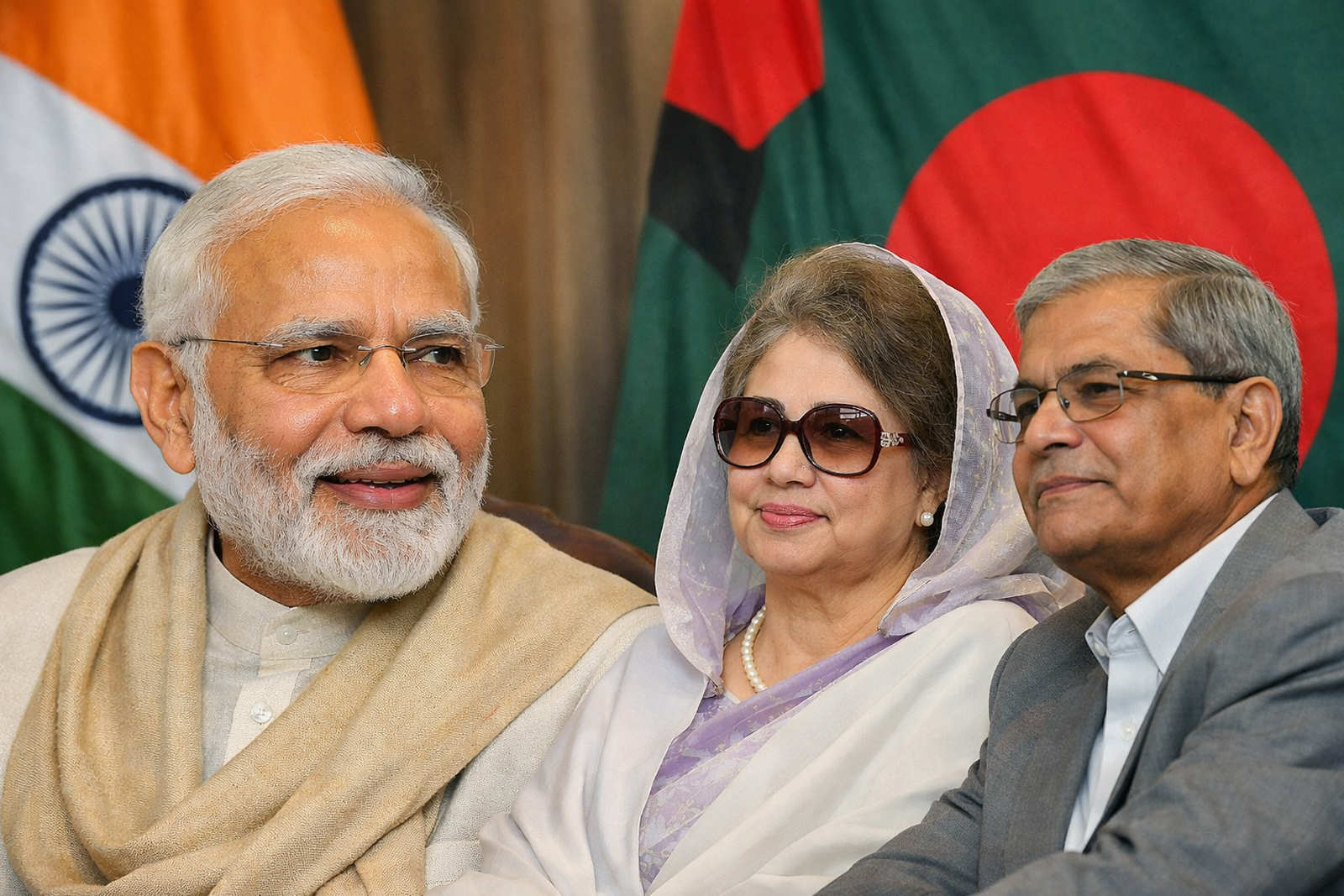
As Bangladesh prepares for a crucial electoral contest, the Bangladesh Nationalist Party (BNP) has sent a notable diplomatic message by indicating that Indian Prime Minister Narendra Modi would be invited to attend its swearing-in ceremony if the party forms the next government. The statement, attributed to BNP’s acting chairman Tarique Rahman, is being viewed as a calculated move to reassure New Delhi of continuity and cooperation in bilateral relations.
The gesture carries symbolic and strategic importance. Relations between Dhaka and New Delhi influence trade, border management, river water sharing, connectivity projects, and regional security. By extending an early olive branch, the BNP appears keen to present itself as a responsible political force committed to stable foreign policy engagement, regardless of domestic political rivalries.
Political observers note that such an invitation, if formalized, would mark an effort to build trust at a time when South Asia’s geopolitical environment is evolving rapidly. India remains one of Bangladesh’s largest trading partners and a key development collaborator in infrastructure and energy sectors. Strengthening ties with India could also help ensure smoother implementation of cross-border transport corridors and economic partnerships.
At the same time, the announcement has stirred debate within Bangladesh’s political landscape. Supporters see it as pragmatic diplomacy aimed at safeguarding national interests, while critics argue that foreign policy positioning should follow electoral mandates rather than precede them.
With election campaigning gathering pace, the BNP’s outreach suggests that foreign relations—particularly with India—may become a prominent talking point in the run-up to voting. Whether the symbolic invitation translates into tangible diplomatic recalibration will depend on the electoral outcome and subsequent policy decisions.
As Bangladesh approaches a decisive national election, the Bangladesh Nationalist Party (BNP) has introduced a significant diplomatic note into the political conversation. The party, led in exile by acting chairman Tarique Rahman, has indicated that Indian Prime Minister Narendra Modi would be invited to attend its swearing-in ceremony if it forms the next government. The announcement is being interpreted as both a symbolic outreach and a strategic positioning ahead of a potentially transformative political transition.
Below is a detailed look at the implications, motivations, and possible outcomes of this development.
The timing of the statement is noteworthy. Elections are often dominated by domestic issues such as governance, economy, employment, and civil liberties. However, by bringing foreign policy into the spotlight, the BNP appears intent on shaping perceptions about its international orientation.
The invitation signal suggests:
A desire to reassure India of policy continuity.
An attempt to counter narratives that question BNP’s approach toward New Delhi.
A broader message to regional and global stakeholders about stability.
Rather than waiting until after the election, the BNP is proactively communicating its diplomatic priorities.
Bilateral relations encompass several key areas:
Trade and Commerce: India is among Bangladesh’s largest trading partners, with cross-border commerce covering textiles, agricultural goods, machinery, and fuel.
Connectivity Projects: Road, rail, and inland waterway links have expanded significantly in recent years.
Energy Cooperation: Power-sharing arrangements and joint energy infrastructure projects play a crucial role in regional development.
Security Coordination: Both nations collaborate on counter-terrorism and border management.
By signaling openness toward India, the BNP is acknowledging the strategic importance of maintaining cooperative ties with its largest neighbor.
Inviting a foreign head of government to a swearing-in ceremony is not unusual in South Asia, but making such an announcement during an election campaign is politically loaded.
Domestically, the move may serve several purposes:
Demonstrating diplomatic maturity.
Appealing to business communities that favor stable India ties.
Addressing concerns of investors about policy shifts after a potential regime change.
At the same time, it opens the BNP to criticism from rivals who may argue that foreign policy decisions should follow electoral outcomes rather than precede them.
South Asia is undergoing shifts shaped by economic competition, infrastructure diplomacy, and strategic realignments. Bangladesh occupies a vital position in the Bay of Bengal region, making its foreign policy choices consequential.
An invitation to PM Modi could signal:
Continuity in regional connectivity frameworks.
Support for multilateral platforms in the neighborhood.
A balanced diplomatic approach amid global power competition.
Such gestures often serve as confidence-building measures during transitions of power.
While the proposed invitation is largely symbolic at this stage, symbolism in diplomacy carries weight. Swearing-in ceremonies attended by regional leaders often set the tone for early engagements between governments.
If the BNP forms the government and formalizes the invite:
It could lead to early bilateral talks.
It may help reset or reinforce policy alignment.
It would send a signal of goodwill before detailed negotiations on pending issues.
However, long-term outcomes will depend on substantive policy decisions, not ceremonial gestures alone.
Foreign policy is rarely the central theme in Bangladesh’s elections, but relations with India have periodically surfaced as a campaign issue. The BNP’s announcement could prompt debate on topics such as:
River water-sharing agreements.
Border trade mechanisms.
Infrastructure and transit arrangements.
Regional security collaboration.
By raising the India factor early, the BNP might be attempting to control the narrative rather than react to it.
Bangladesh’s economy relies heavily on exports, remittances, and infrastructure growth. Stable ties with India can influence:
Supply chains and cross-border logistics.
Access to regional markets.
Energy imports and electricity connectivity.
Investment flows into industrial zones.
Business groups often favor predictable diplomatic relations. The BNP’s message may be aimed at reassuring economic stakeholders that a change in leadership would not disrupt critical partnerships.
Every political transition brings questions about continuity. By publicly extending goodwill toward India, the BNP seems to be emphasizing stability rather than abrupt shifts.
Still, analysts caution that:
Diplomatic relations evolve based on mutual interests.
Domestic political mandates shape negotiation priorities.
Symbolic gestures must align with concrete policy frameworks.
The balance between continuity and recalibration will depend on the party’s broader foreign policy blueprint.
The announcement has sparked conversations among political observers and commentators. Supporters view it as pragmatic and forward-looking. Critics argue that diplomatic positioning should not overshadow domestic priorities.
The development underscores how:
Elections increasingly intersect with foreign policy narratives.
Regional diplomacy can influence voter perceptions.
Political parties use international messaging to strengthen credibility.
As the campaign intensifies, responses from other parties may further shape the debate.
If the BNP secures electoral victory and formalizes the invitation, the swearing-in ceremony could become a platform for resetting or reinforcing bilateral engagement. Initial meetings, joint statements, or policy commitments might follow.
However, much will depend on:
The final electoral outcome.
Post-election negotiations.
Broader geopolitical circumstances.
For now, the proposed invite remains a signal—one that blends diplomacy with electoral strategy.
The BNP’s indication that it would invite Indian Prime Minister Narendra Modi to its swearing-in ceremony marks a notable pre-election diplomatic gesture. Led by Tarique Rahman, the party appears keen to position itself as a stable and cooperative partner in regional affairs. While largely symbolic at this stage, the move highlights the increasing interplay between domestic politics and foreign policy in Bangladesh’s evolving political landscape

In today’s world of endless choices and digital noise, marketing is no longer just about promoting products — it’s about creating meaningful connections. Successful brands focus on building relationships rather than chasing transactions. Marketing that connects transforms audiences into loyal communities by earning their trust, understanding their needs, and delivering genuine value. When businesses prioritize people over promotions, marketing becomes more than strategy — it becomes a relationship built to last.

Odisha’s small businesses are entering a new era — where mobile apps, online payments, and e-commerce aren’t luxuries, but lifelines for growth and survival.

As India enters the second phase of its digital revolution, artificial intelligence and automation are not just transforming industries—they’re redefining what it means to work, earn, and adapt.

The conference brought together officials from ten central districts, including district collectors, tehsildars, registrars, and welfare officers, either virtually or in person.

We glorified sleepless nights, burnout, and exhaustion as signs of ambition. But when did working yourself to the edge become the definition of success?

Not everyone who thrives in tech writes code. Some design the very experiences that make technology human.





Leave Comments