UK Deputy PM Hails Delhi AI Impact Summit as Crucial Step to Unlock AI’s Full Potential
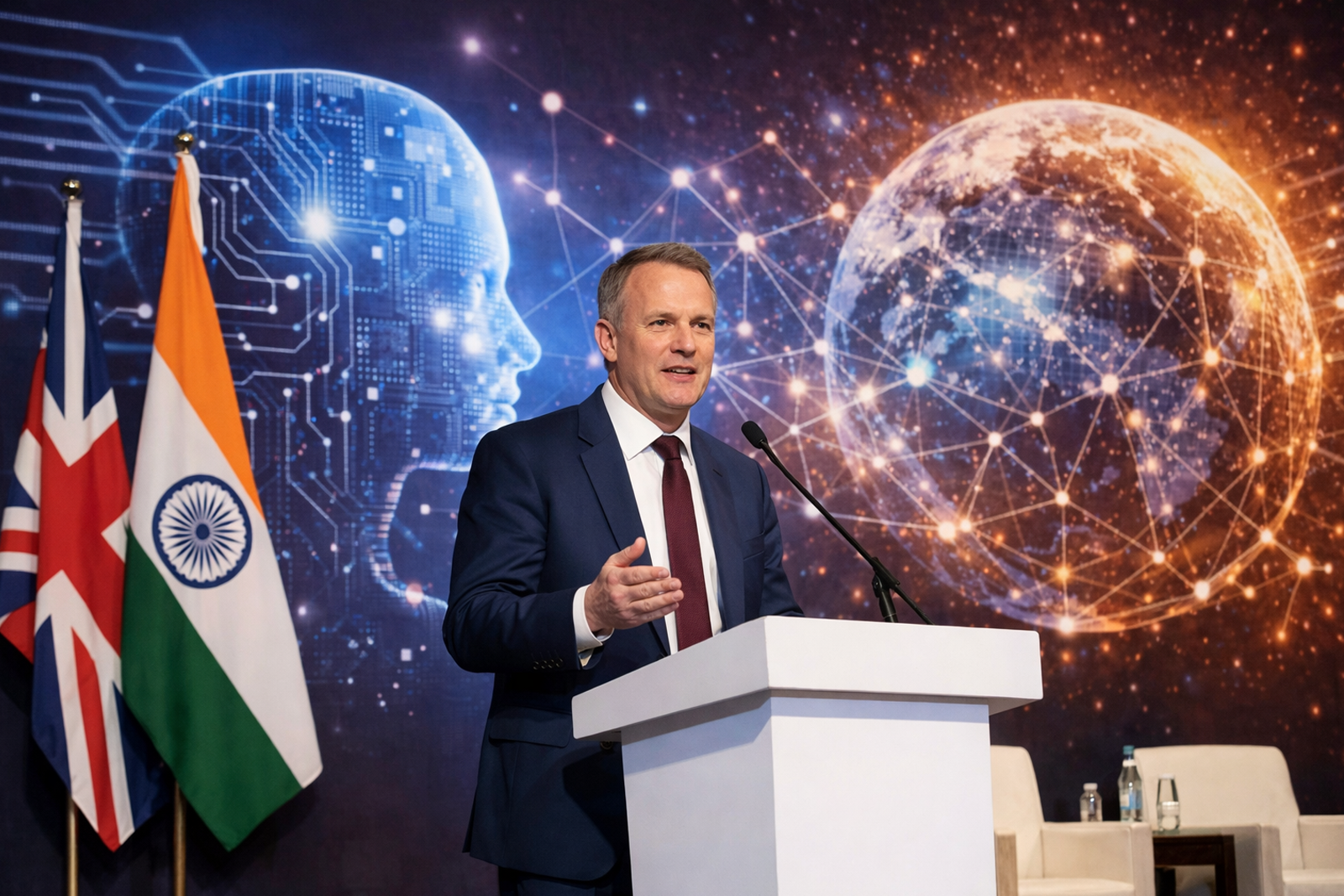
UK Deputy PM Calls Delhi AI Impact Summit a Defining Moment for Responsible Innovation
The AI Impact Summit held in New Delhi has emerged as a significant global platform for shaping the future of artificial intelligence. Addressing policymakers, technology leaders and researchers, the UK Deputy Prime Minister described the summit as an “important moment” to unlock the full benefits of AI while ensuring responsible governance and inclusive growth.
The summit brought together delegates from across continents to deliberate on innovation, regulation, and ethical deployment of AI systems. With artificial intelligence rapidly transforming sectors such as healthcare, education, finance and public administration, leaders emphasized the need for coordinated international frameworks. The UK Deputy PM underlined that AI’s potential can only be realized if governments work together to build trust, transparency and accountability into technological systems.
India’s growing digital ecosystem featured prominently in the discussions. As one of the world’s fastest-expanding technology markets, the country is positioning itself as a key player in AI development and deployment. The Delhi summit provided a forum to explore partnerships between the United Kingdom and India in research, data governance, startup ecosystems and digital infrastructure.
Another central theme was balancing innovation with safeguards. Participants stressed that while AI can drive economic productivity and improve public services, it must not widen inequalities or compromise privacy and security. Ethical standards, skill development initiatives and public-private collaboration were highlighted as essential pillars for sustainable AI growth.
By the close of the summit, there was a shared understanding that global cooperation is no longer optional but necessary. The event signaled a collective commitment to harness artificial intelligence not merely as a technological tool, but as a transformative force guided by responsibility, inclusivity and long-term societal benefit.

UK Deputy PM Terms Delhi AI Impact Summit a Landmark Step Towards Unlocking AI’s Global Potential
The AI Impact Summit in New Delhi has positioned itself as a defining platform for global cooperation on artificial intelligence. Speaking at the event, the UK Deputy Prime Minister described the gathering as an “important moment” in the global effort to unlock the full benefits of AI while establishing robust guardrails to manage its risks. The summit brought together policymakers, technology innovators, academic leaders and industry stakeholders to deliberate on the future of artificial intelligence in an increasingly digital world.
Artificial intelligence is no longer confined to research laboratories or niche applications. It is reshaping economies, public services and everyday life. Against this backdrop, the Delhi summit served as a strategic forum to align innovation with accountability, ensuring that the rapid pace of AI advancement does not outstrip governance mechanisms.
Strengthening Global Cooperation on AI
One of the core messages delivered at the summit was the urgent need for international collaboration. AI technologies operate across borders, making isolated regulatory approaches less effective. The UK Deputy PM emphasized that countries must work together to create interoperable frameworks that encourage innovation while safeguarding public interests.
Global cooperation can help:
-
Establish shared standards for AI safety and transparency
-
Prevent regulatory fragmentation that hinders cross-border innovation
-
Promote ethical research and responsible data use
-
Address transnational risks such as misinformation and cyber threats
The Delhi summit reflected a broader global shift toward coordinated AI governance, recognizing that collective action enhances both trust and innovation.
India’s Emerging Leadership in AI
India’s role as host underscored its growing influence in the global digital economy. With a thriving startup ecosystem, expanding digital infrastructure, and a large pool of skilled technology professionals, India is increasingly seen as a central player in AI development.
Key strengths highlighted during discussions included:
-
Rapid digital adoption across public services
-
Expanding AI research and innovation hubs
-
Strong collaboration between academia and industry
-
Government-led digital transformation initiatives
The summit offered an opportunity to deepen partnerships between India and the United Kingdom, particularly in research exchange, talent mobility, and technology investments.
Balancing Innovation with Regulation
A recurring theme at the event was the need to strike the right balance between enabling technological breakthroughs and protecting societal interests. Artificial intelligence can accelerate productivity, enhance healthcare diagnostics, streamline governance and support climate action. However, unchecked deployment may raise concerns around privacy, bias, misinformation and employment disruption.
Participants stressed that effective regulation should:
-
Be flexible and adaptive to technological evolution
-
Encourage experimentation while maintaining safeguards
-
Focus on outcomes rather than rigid prescriptions
-
Involve diverse stakeholders, including civil society
The UK Deputy PM noted that responsible innovation is not about slowing progress but about ensuring sustainable growth.
Economic Growth and Job Transformation
AI’s transformative potential extends deeply into the economic sphere. Leaders at the summit highlighted how AI can unlock new industries, optimize supply chains, improve agricultural productivity and strengthen financial systems.
At the same time, discussions acknowledged workforce transitions. Automation and AI-driven tools may alter traditional job roles, requiring large-scale reskilling and upskilling initiatives. Governments and private enterprises were encouraged to invest in education and digital literacy programs to prepare workers for emerging opportunities.
Priority areas identified included:
-
Digital skills training for youth
-
Reskilling programs for mid-career professionals
-
Integration of AI education into school curricula
-
Public-private partnerships for workforce readiness
By focusing on inclusive growth, policymakers aim to ensure that AI-driven prosperity is broadly shared.
Ethical AI and Public Trust
Building public trust emerged as a cornerstone of AI’s long-term success. Ethical considerations such as fairness, transparency and accountability must be embedded into system design from the outset. The summit emphasized the importance of explainable AI systems that allow users and regulators to understand how decisions are made.
Key principles discussed included:
-
Eliminating algorithmic bias
-
Ensuring data protection and privacy
-
Maintaining human oversight in critical applications
-
Creating independent oversight mechanisms
Public confidence, speakers noted, is essential for widespread AI adoption in sectors like healthcare, law enforcement and public administration.
Innovation Ecosystems and Startups
The Delhi summit also spotlighted startups and emerging enterprises driving AI innovation. Small and medium-sized companies often act as catalysts for breakthrough technologies. Leaders called for supportive policies such as funding access, research grants and streamlined regulatory pathways to nurture innovation.
Cross-border collaborations between startups in India and the UK were identified as a promising avenue for technological exchange and market expansion. By fostering a vibrant innovation ecosystem, both nations can accelerate AI solutions tailored to diverse societal needs.
AI for Social Good
Beyond economic gains, AI’s role in addressing societal challenges featured prominently in discussions. Delegates explored how AI applications can support sustainable development goals, from climate resilience modeling to predictive healthcare systems and disaster response management.
Examples of AI for social impact include:
-
Early warning systems for natural disasters
-
AI-powered medical diagnostics in underserved regions
-
Smart agriculture solutions to improve crop yields
-
Data analytics for efficient public service delivery
The UK Deputy PM stressed that technological progress must be aligned with human development, ensuring that AI becomes a force for inclusive progress rather than division.
The Road Ahead
As the summit concluded, there was a shared recognition that AI governance is an ongoing journey. Rapid technological advancements require continuous dialogue, policy refinement and international coordination. The Delhi AI Impact Summit served as a milestone in this evolving conversation, reinforcing the importance of cooperation, innovation and accountability.
The event highlighted that unlocking AI’s full potential demands more than technical expertise. It requires political will, ethical clarity and global partnership. By bringing together diverse voices, the summit underscored a collective commitment to shaping an AI-driven future that prioritizes economic growth, societal well-being and democratic values.
In describing the gathering as an “important moment,” the UK Deputy Prime Minister captured the broader significance of the summit. It was not merely a conference but a signal that nations are prepared to collaborate in building an AI ecosystem that is innovative, secure and inclusive.

Soojin DasJournalist
Soojin Das is a dedicated journalist with a strong focus on public affairs, governance, and grassroots reporting. With a passion for uncovering stories that matter, she brings clarity, accuracy, and depth to complex issues shaping communities across India. Her reporting spans politics, social development, education, and local civic concerns, giving readers a balanced and well-researched perspective.
Known for her sharp news sense and ethical approach to journalism, Anita combines on-ground reporting with data-driven analysis and compelling storytelling. She has covered major policy announcements, elections, disaster response efforts, and community-led initiatives, ensuring that audiences receive timely and trustworthy information.
Anita believes journalism plays a vital role in strengthening democracy and amplifying under-represented voices. Through interviews, investigative pieces, and human-interest stories, she aims to inform, engage, and empower readers.
When not in the field, she closely follows media innovation and digital storytelling trends, continually refining her craft to meet the evolving needs of modern newsrooms.