







Donald Trump Says India ‘Pulled Back’ from Buying Russian Oil, Clarifies Trade Deal Position
Trump Comments on India–Russia Oil Trade Signal Shifts in Global Economic Strategy
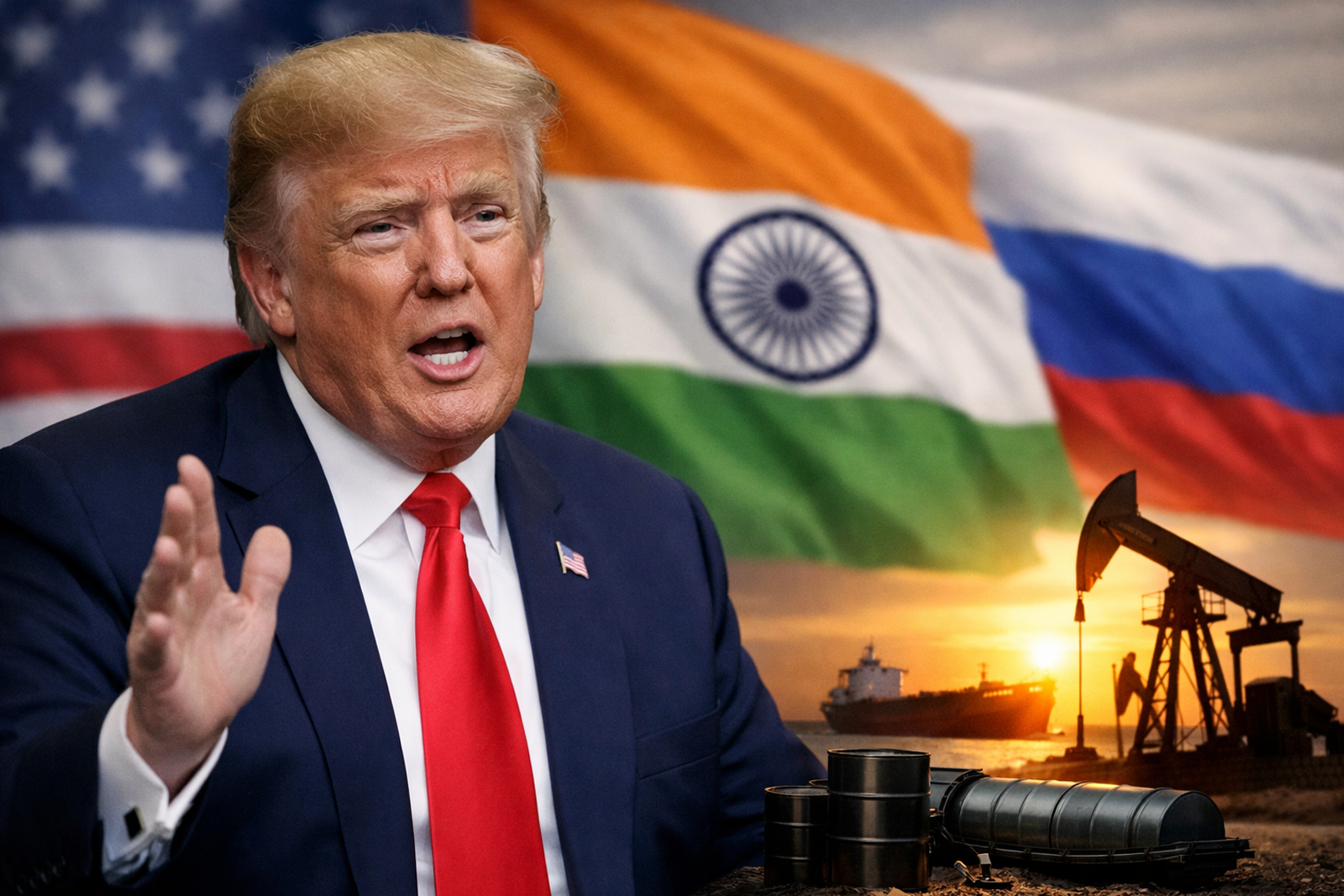
Recent remarks by Donald Trump have drawn attention to evolving energy and trade dynamics involving India and Russia. Speaking about international trade and geopolitical trends, Trump stated that India has “pulled back” from purchasing Russian oil, suggesting that global economic pressures and strategic partnerships are influencing energy decisions.
Over the past few years, India significantly increased its imports of discounted Russian crude oil, primarily to manage domestic fuel prices and support economic stability. However, changing global market conditions, diplomatic considerations, and long-term trade interests appear to be shaping new policy directions. Trump’s statement highlights how energy trade is increasingly linked to broader economic negotiations and international alliances.
The comments also included clarification on a potential trade deal framework, indicating that future agreements may depend on balanced market access and cooperation across sectors. Trade discussions between major economies often extend beyond tariffs, covering supply chains, manufacturing investments, and technology partnerships. In this context, adjustments in oil purchasing patterns can reflect strategic economic positioning rather than sudden policy shifts.
Experts note that India continues to maintain a multi-aligned foreign policy approach, balancing relationships with different global partners while focusing on national economic priorities. Energy diversification remains a key component of this strategy, ensuring stable supply while adapting to global developments.
Trump’s remarks have sparked debate among analysts regarding whether the change is temporary or part of a broader long-term trend. As international markets remain sensitive to geopolitical signals, statements from global political figures often influence investor sentiment and policy discussions.
Overall, the evolving situation underscores the strong connection between energy security, trade negotiations, and geopolitical strategy in shaping the future direction of global economic cooperation.
Trump’s Remarks on India–Russia Oil Trade and Their Impact on Global Economic Strategy
Recent statements by Donald Trump have sparked fresh discussion about the changing landscape of global energy trade and international economic relations. Trump indicated that India may have reduced its purchases of crude oil from Russia, while also clarifying his broader position on trade negotiations involving the United States. The comments highlight how energy markets, diplomacy, and trade policies are increasingly interconnected in today’s geopolitical environment.
Over the last few years, global energy flows have undergone significant changes due to economic sanctions, shifting alliances, and fluctuating market conditions. India emerged as one of the major buyers of Russian oil after price adjustments made those imports financially attractive. However, recent signals suggest that strategic balancing and long-term economic planning may be influencing new decisions.
Background: India’s Energy Strategy in a Changing Global Market
India is one of the world’s fastest-growing energy consumers, and maintaining stable fuel supplies is essential for economic growth. The country has consistently adopted a diversified import strategy to reduce risk and manage price volatility.
Key factors shaping India’s energy approach include:
-
Cost Efficiency: Discounted crude oil helps control domestic fuel prices and inflation.
-
Supply Security: Multiple supplier partnerships reduce dependence on any single region.
-
Economic Growth Needs: Expanding industries and transportation demand reliable energy sources.
-
Diplomatic Balance: India maintains relationships across global blocs to protect national interests.
Under the leadership of Narendra Modi, India has focused on pragmatic energy decisions that prioritize economic stability while preserving diplomatic flexibility.
Why Russian Oil Became Important
When global oil trade patterns shifted, Russian crude became available at competitive rates. This created an opportunity for large importers to optimize costs.
Several reasons explain the increase in purchases:
-
Price Discounts: Market adjustments made Russian oil more affordable than some alternatives.
-
Refining Compatibility: Indian refineries are capable of processing multiple crude grades.
-
High Demand Recovery: Post-pandemic economic activity increased fuel consumption.
-
Global Supply Disruptions: Uncertainty in traditional supply chains encouraged diversification.
Organizations such as OPEC also influenced pricing trends, indirectly shaping purchasing decisions worldwide.
Trump’s Trade Perspective and Economic Messaging
Trump’s comments were not limited to energy alone. They were connected to broader trade discussions and potential future negotiations. His messaging emphasized the importance of balanced trade structures and market access.
Key elements of the trade discussion include:
-
Tariff Adjustments: Trade policies often involve import duties to protect domestic industries.
-
Manufacturing Partnerships: Countries are increasingly linking trade deals to local production.
-
Strategic Supply Chains: Nations aim to reduce dependency on single-source imports.
-
Energy as a Negotiation Factor: Oil trade patterns can influence broader economic agreements.
These factors show how energy and trade diplomacy frequently overlap in modern economic policy.
Global Political Reactions and Market Signals
Statements from major political figures often influence financial markets and international policy conversations. Analysts closely monitor such remarks for signals about future agreements or policy shifts.
Possible global reactions include:
-
Investor Sentiment Changes: Energy markets react quickly to geopolitical developments.
-
Diplomatic Clarifications: Governments may respond to ensure accurate interpretation of policies.
-
Trade Negotiation Momentum: Public statements sometimes precede formal discussions.
-
Strategic Positioning: Countries adjust communication to protect economic interests.
The European Union and other global blocs continue to monitor energy flows as part of broader economic planning.
Is India Actually Reducing Russian Oil Imports?
While Trump suggested that India has “pulled back,” energy analysts note that oil trade patterns fluctuate regularly due to pricing, shipping costs, and seasonal demand. Import levels often change month-to-month without representing a permanent policy shift.
Possible reasons for fluctuations include:
-
Price Variations:Small pricing changes can shift purchase volumes.
-
Refinery Maintenance Cycles:Temporary shutdowns affect import demand.
-
Shipping Logistics:Freight availability can influence sourcing decisions.
-
Currency Movements:Exchange rate changes impact overall costs.
Therefore, adjustments may reflect short-term market optimization rather than a structural shift.
The Role of Energy in Future Trade Agreements
Energy cooperation is becoming a major component of international trade frameworks. Countries are increasingly linking oil, gas, and renewable energy investments to economic partnerships.
Future trade structures may involve:
-
Long-Term Supply Contractsto stabilize pricing.
-
Investment in Refining Infrastructureto strengthen production capacity.
-
Renewable Energy Collaborationfor sustainability goals.
-
Technology Exchange Agreementsto improve efficiency.
Energy diversification will likely remain central to global negotiations.
Strategic Balance in India’s Foreign Policy
India has consistently maintained a multi-aligned foreign policy model. Rather than aligning exclusively with one global bloc, the country engages with multiple partners based on economic and strategic priorities.
This approach helps India:
-
Maintain energy security
-
Expand trade opportunities
-
Strengthen diplomatic flexibility
-
Support long-term economic growth
Such balancing allows India to adapt quickly to global economic shifts.
Conclusion: Energy, Trade, and Geopolitics Are Increasingly Connected
Trump’s remarks have once again highlighted the strong relationship between energy markets and international trade policy. Whether India has temporarily adjusted Russian oil purchases or is exploring broader diversification strategies, the development reflects a larger global trend—economic decisions are now closely tied to geopolitical considerations.
As markets continue to respond to policy signals and diplomatic messaging, energy trade will remain a key factor shaping international partnerships. The evolving situation demonstrates how global economies are becoming more interconnected, where changes in oil flows can influence trade discussions, investment strategies, and long-term economic cooperation across nations.
In the coming months, analysts will continue tracking energy import data and trade negotiations to better understand whether current signals represent short-term adjustments or the beginning of a deeper structural shift in global economic alignment.

About The Author
Soojin Das is a dedicated journalist with a strong focus on public affairs, governance, and grassroots reporting. With a passion for uncovering stories that matter, she brings clarity, accuracy, and depth to complex issues shaping communities across India. Her reporting spans politics, social development, education, and local civic concerns, giving readers a balanced and well-researched perspective. Known for her sharp news sense and ethical approach to journalism, Anita combines on-ground reporting with data-driven analysis and compelling storytelling. She has covered major policy announcements, elections, disaster response efforts, and community-led initiatives, ensuring that audiences receive timely and trustworthy information. Anita believes journalism plays a vital role in strengthening democracy and amplifying under-represented voices. Through interviews, investigative pieces, and human-interest stories, she aims to inform, engage, and empower readers. When not in the field, she closely follows media innovation and digital storytelling trends, continually refining her craft to meet the evolving needs of modern newsrooms.
Soojin Das | Journalist
You Might Also Like
-
Rising Tensions in the Gulf After Gas Field Strike A fresh wave of geopolitical tension has gripped the Middle East after Iran issued strong wa...
-
India and Canada Signal Fresh Start as Leaders Lay Groundwork for Stronger Ties In a significant diplomatic development, Prime Minister Narendr...

Suggested Video