All Onboard Dead in Air Ambulance Crash En Route from Ranchi to Delhi
Air Ambulance Crash Near Simaria Claims Seven Lives, Probe Underway
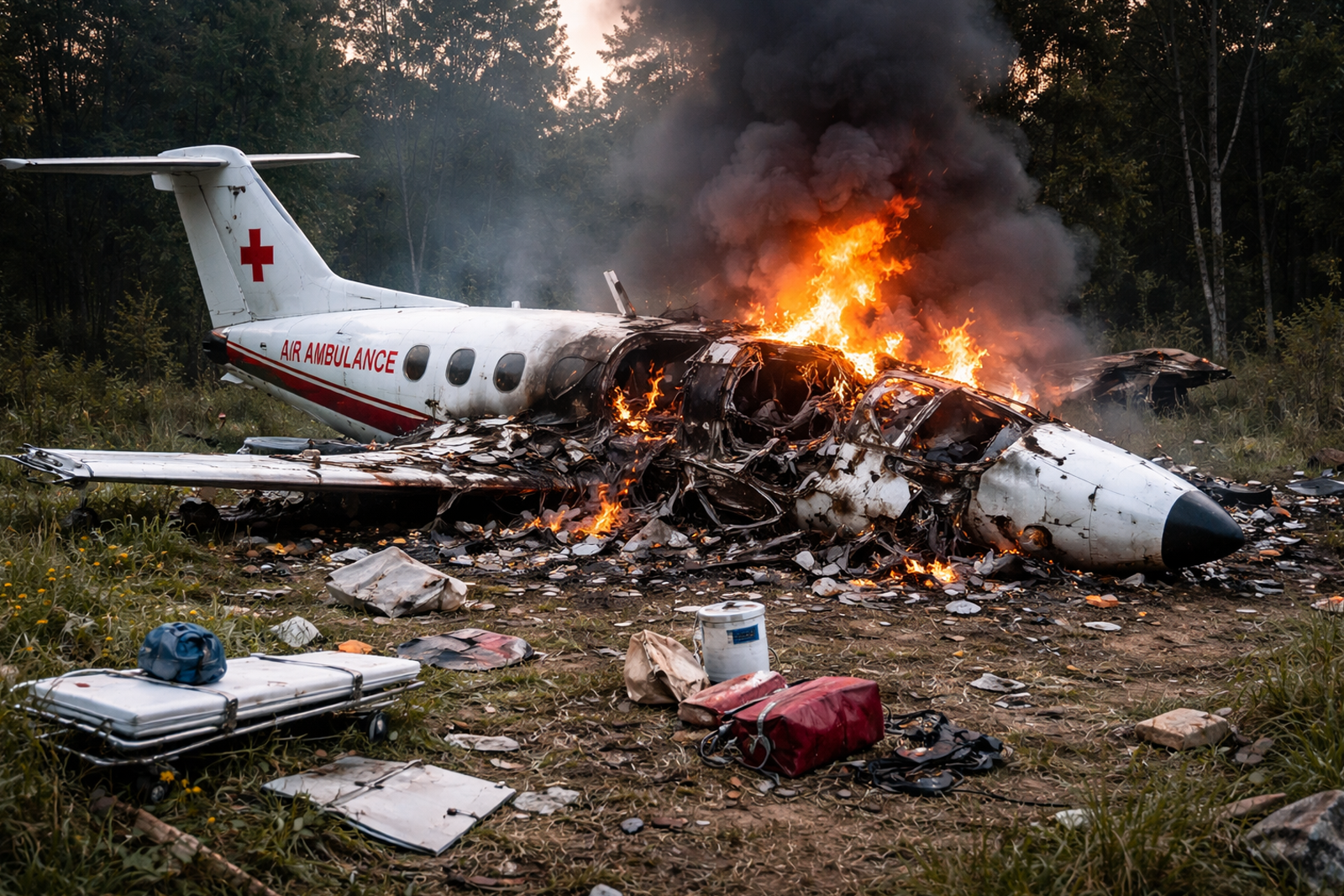
A tragic aviation accident occurred when an air ambulance travelling from Ranchi to New Delhi crashed near Simaria in Chatra district of Jharkhand, resulting in the death of all seven people onboard. The aircraft was reportedly operating as a medical evacuation flight, carrying a patient along with medical staff and crew members when the incident took place.
According to preliminary reports, the aircraft lost contact with air traffic authorities shortly before the crash. Local residents in the area reported hearing a loud explosion followed by smoke rising from a forested patch near Simaria. Emergency teams, including local police and disaster response units, rushed to the crash site and began rescue and recovery operations. However, due to the intensity of the impact and fire, no survivors were found.
Authorities stated that the flight had departed under routine medical transport conditions, and weather patterns at the time are being examined to determine whether they contributed to the accident. Aviation experts have noted that air ambulance operations often involve urgent schedules, which require careful coordination and monitoring.
Officials from the Directorate General of Civil Aviation have initiated an investigation to determine the exact cause of the crash. The probe will analyze technical data, maintenance records, and communication logs to understand whether mechanical failure, weather conditions, or operational factors played a role.
The incident has sparked concern over the safety protocols followed in emergency medical aviation services. State authorities expressed condolences to the families of the victims and assured that a detailed inquiry would be conducted. Further updates are expected once investigators complete the initial assessment of the crash site and flight data.

Air Ambulance Tragedy Near Simaria: Seven Lives Lost in Jharkhand Crash
A devastating aviation accident shocked the region after an air ambulance travelling from Ranchi to New Delhi crashed near Simaria in Chatra district of Jharkhand, claiming the lives of all seven people onboard. The aircraft was operating as a medical evacuation flight and reportedly carried a patient, medical staff, and flight crew. The tragic incident has raised serious concerns about air ambulance safety and emergency aviation protocols.
Initial reports indicate that the aircraft lost communication with air traffic control shortly before the crash. Local villagers described hearing an unusual sound from the sky followed by a loud explosion, after which smoke was seen rising from a forested area. Emergency services rushed to the location, but the aircraft had already been completely destroyed by the impact and post-crash fire.
Timeline of the Incident
Authorities have begun reconstructing the sequence of events to determine how the tragedy unfolded. Preliminary findings suggest the following timeline:
-
The air ambulance departed from Ranchi under routine emergency medical transport clearance.
-
The aircraft was scheduled to land in New Delhi for advanced medical treatment of the patient onboard.
-
Communication signals reportedly weakened minutes before the crash.
-
The aircraft went down in a remote area near Simaria, making immediate access difficult for rescue teams.
-
Local residents informed police after spotting smoke and debris scattered across the area.
Investigators are now analyzing radar data and flight communication records to establish the final moments before the crash.
Rescue and Recovery Operations
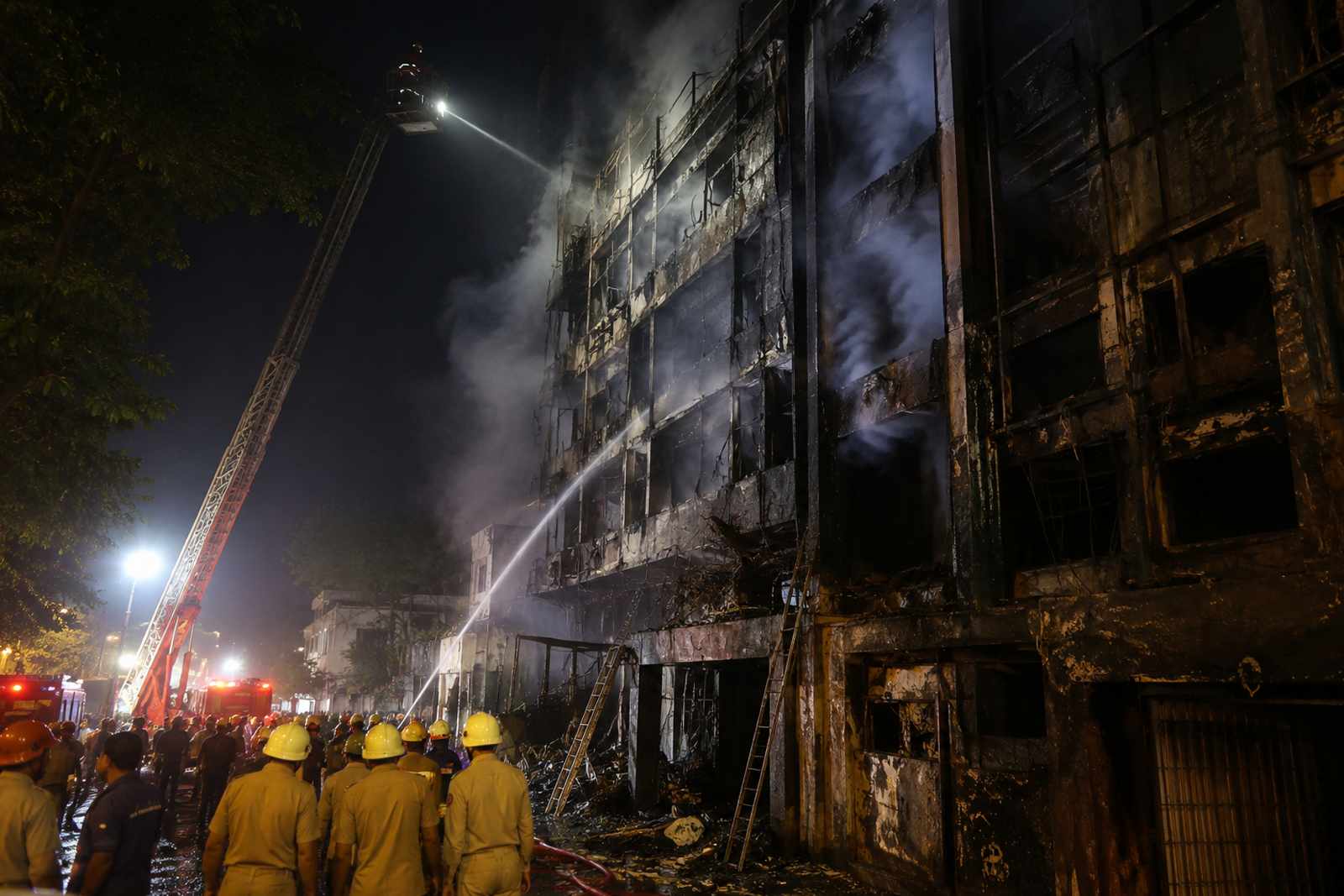
Soon after the crash was reported, local police teams and district authorities reached the accident site. Due to the terrain and fire damage, recovery operations were challenging. Personnel from the National Disaster Response Force were deployed to assist in clearing debris and securing the area.
Key developments during the rescue operation included:
-
Fire control measures to prevent further spread in the forested region.
-
Recovery of remains and aircraft fragments for forensic examination.
-
Establishment of a restricted perimeter around the crash site.
-
Coordination with aviation officials for technical inspection.
Officials confirmed that no survivors were found, and the impact appeared to be severe.
Investigation Initiated by Aviation Authorities
The Directorate General of Civil Aviation (DGCA) has launched a detailed investigation into the incident. Aviation experts will examine multiple technical and operational aspects before determining the exact cause.
The investigation will focus on:
-
Aircraft maintenance and technical records
-
Pilot experience and flight clearance details
-
Weather conditions during the flight
-
Air traffic communication logs
-
Possible mechanical or system failure
Investigators are also expected to analyze whether emergency decision-making procedures were followed during the flight’s final phase.
Possible Factors Being Examined
While the exact cause remains unknown, aviation specialists have outlined several possible factors that may have contributed to the accident:
1. Weather Conditions
Sudden atmospheric disturbances or low visibility can affect aircraft stability, especially during emergency medical operations where timing is critical.
2. Mechanical Failure
Technical malfunction in engines or navigation systems is often a key focus in crash investigations.
3. Terrain Challenges
The crash occurred in a semi-forested region, which may have complicated emergency landing possibilities.
4. Operational Pressure
Air ambulance flights frequently operate under urgent medical timelines, which can increase operational stress.
Authorities have clarified that conclusions will only be drawn after technical analysis is completed.
Importance of Air Ambulance Services
Air ambulance services play a crucial role in saving lives, particularly in cases requiring rapid medical transportation across long distances. These flights are often used for:
-
Transporting critically ill patients to specialized hospitals
-
Emergency organ transport for transplant procedures
-
Rapid evacuation from remote areas
-
Disaster and trauma response
Despite their importance, such operations demand strict safety protocols because they involve both aviation and medical risk factors.
Safety Concerns and Need for Stronger Protocols
The accident has renewed discussions around improving air ambulance safety standards. Experts believe that enhanced monitoring systems and operational guidelines can help reduce risks.
Suggested improvements include:
-
Real-time aircraft tracking systems
-
Advanced weather monitoring integration
-
Regular technical audits of emergency aircraft
-
Specialized pilot training for medical evacuation missions
-
Stronger coordination between hospitals and aviation operators
Strengthening these areas can help ensure safer emergency medical transport in the future.
Government Response and Public Reaction
State authorities expressed deep condolences to the families of the victims and assured full support during the investigation process. Officials emphasized that accountability and safety improvements would be prioritized once the inquiry findings are released.
The incident has also drawn public attention to the risks involved in emergency aviation services. Aviation professionals and healthcare experts alike have stressed the importance of balancing urgency with strict safety compliance.
Conclusion
The air ambulance crash near Simaria stands as a heartbreaking reminder of the risks associated with emergency medical aviation. As investigators continue to examine technical and operational details, the focus remains on understanding what led to the tragedy and how similar incidents can be prevented in the future. Strengthening safety systems, improving coordination, and adopting advanced aviation technology will be essential steps toward ensuring that life-saving air ambulance missions remain both efficient and secure.

Soojin DasJournalist
Soojin Das is a dedicated journalist with a strong focus on public affairs, governance, and grassroots reporting. With a passion for uncovering stories that matter, she brings clarity, accuracy, and depth to complex issues shaping communities across India. Her reporting spans politics, social development, education, and local civic concerns, giving readers a balanced and well-researched perspective.
Known for her sharp news sense and ethical approach to journalism, Anita combines on-ground reporting with data-driven analysis and compelling storytelling. She has covered major policy announcements, elections, disaster response efforts, and community-led initiatives, ensuring that audiences receive timely and trustworthy information.
Anita believes journalism plays a vital role in strengthening democracy and amplifying under-represented voices. Through interviews, investigative pieces, and human-interest stories, she aims to inform, engage, and empower readers.
When not in the field, she closely follows media innovation and digital storytelling trends, continually refining her craft to meet the evolving needs of modern newsrooms.