- Loading...
- Loading...


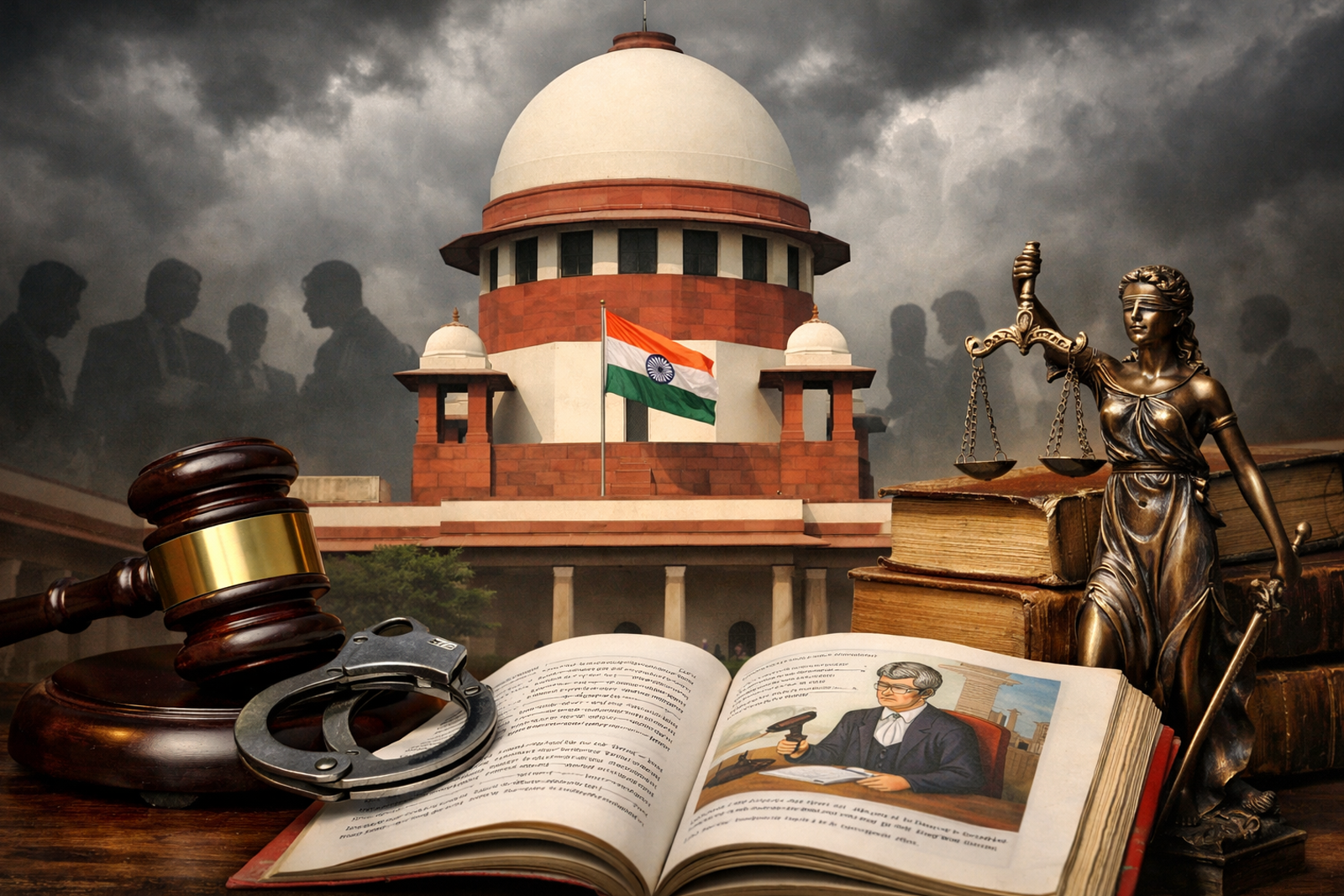
The Supreme Court of India recently expressed strong concern regarding certain portions of textbooks published by NCERT, stating that the material appears to create a misleading perception about the functioning of the judiciary. The observation came during a hearing where the court noted that educational content must present constitutional institutions in a balanced and factual manner, especially for young students who are still developing their understanding of governance and law.
Textbooks play a crucial role in shaping the mindset of students across India. The court emphasized that while academic discussion and critical analysis are important, presenting selective or exaggerated narratives can harm public trust in democratic institutions. The judiciary, being one of the pillars of democracy, relies heavily on credibility and impartiality, making responsible representation essential in school-level education.
During the proceedings, the bench remarked that the nature of the content raises concerns about a possible “deep-rooted conspiracy” to portray the judicial system as corrupt or inefficient. The court clarified that constructive criticism is acceptable in a democratic setup, but institutional integrity should not be undermined through unverified or one-sided interpretations.
The Supreme Court suggested that academic bodies and authors must ensure that textbook content reflects factual accuracy and balanced viewpoints. Experts believe that periodic review mechanisms could help maintain educational quality while preventing misinterpretation of constitutional structures.
The development has sparked wider discussions among educators and policy observers about the responsibility of curriculum authorities in presenting neutral and well-researched material. The matter also highlights the growing importance of maintaining trust in democratic institutions through responsible educational frameworks.
The Supreme Court of India has recently raised serious observations regarding certain content in textbooks prepared by NCERT, noting that the portrayal of the judiciary may create a distorted perception among students. The court indicated that educational material must reflect balance, factual accuracy, and constitutional responsibility, especially when discussing key democratic institutions.
The remarks came during judicial proceedings where the bench examined how institutional credibility can be affected by the way school textbooks interpret complex legal and governance issues. According to the court, while academic freedom and critical thinking are essential components of education, such discussions must be supported by context and neutrality.
School textbooks are often the first formal source through which students understand governance structures and constitutional values. Because of this, their impact extends beyond classrooms and contributes to shaping long-term public perception.
Key influences of textbooks include:
Foundation of Civic Knowledge: Students learn how democratic systems function, including the roles of the legislature, executive, and judiciary.
Development of Institutional Trust: Balanced content helps students understand both strengths and challenges without promoting bias.
Formation of Critical Thinking Skills: Accurate case-based explanations encourage analytical learning rather than emotional interpretation.
Long-Term Social Impact: Educational narratives often influence how future citizens interpret law, governance, and accountability.
The court emphasized that any imbalance in educational narratives could unintentionally affect trust in institutions that rely heavily on public confidence.
The judiciary plays a central role in maintaining constitutional order. It interprets laws, protects fundamental rights, and ensures that governance operates within legal boundaries. Because courts function independently, their authority largely depends on credibility and public trust.
Important reasons the judiciary’s representation must remain balanced include:
Protection of Constitutional Rights: Courts act as guardians of citizens’ rights.
Resolution of Disputes: Judicial institutions provide peaceful and lawful conflict resolution.
Checks and Balances: The judiciary ensures that other branches of governance function within legal limits.
Public Confidence: The effectiveness of judicial decisions depends on societal acceptance and respect.
The court observed that educational discussions about judicial challenges should include both achievements and systemic reforms to provide a realistic picture.
During the hearing, the bench noted that certain interpretations in the textbooks appear to project the judiciary primarily through allegations of corruption or inefficiency without adequate context. The court described this pattern as raising concerns about a possible “deep-rooted conspiracy” to weaken institutional credibility.
However, the observation does not reject academic criticism. Instead, the court clarified that:
Constructive criticism is a healthy part of democratic discourse.
Academic material should be evidence-based and balanced.
Complex institutional challenges must be explained with context.
Selective presentation may lead to misunderstanding among students.
Legal observers note that the court’s remarks underline the need for responsible academic framing rather than censorship.
Educational organizations and textbook authors carry significant responsibility when preparing curriculum content. Experts suggest that civic education must maintain neutrality while still encouraging discussion of real-world challenges.
Recommended academic practices include:
Contextual Explanation: Presenting historical and legal context behind institutional developments.
Multiple Perspectives: Including both criticisms and reform measures.
Verified Sources: Ensuring that claims are supported by credible data or documented cases.
Periodic Review: Updating content to reflect legal developments and institutional improvements.
Curriculum design must balance intellectual freedom with factual discipline to avoid oversimplification of complex governance topics.
The issue has sparked wider discussion among educators and policy analysts about strengthening review systems for school textbooks. Structured academic oversight can help maintain educational quality while preventing unintended bias.
Possible review measures include:
Expert panels including legal scholars and education specialists
Transparent revision cycles for textbooks
Feedback systems from teachers and academic institutions
Alignment with constitutional values and national academic standards
Such frameworks can ensure that textbooks remain informative, neutral, and educational rather than interpretative or opinion-driven.
The development has also triggered broader debate about how civic education should evolve in modern classrooms across India. With increasing access to digital information, students are exposed to multiple viewpoints, making balanced academic guidance more important than ever.
Education experts suggest that modern civic learning should:
Encourage analytical discussion without promoting institutional distrust
Use real case studies to explain how systems improve over time
Highlight constitutional principles such as justice, equality, and rule of law
Promote awareness of democratic responsibilities alongside rights
This approach helps students understand that institutions are dynamic and continuously shaped by reforms, judicial interpretations, and public participation.
The recent observations by the Supreme Court have brought renewed focus on the responsibility of educational institutions in presenting accurate and balanced narratives about democratic structures. While academic critique remains essential for intellectual growth, the court emphasized that institutional credibility must not be undermined through incomplete or selective representation.
The discussion surrounding textbook content highlights a larger need for careful curriculum development that supports informed citizenship. As education continues to evolve, maintaining factual integrity and balanced interpretation will remain central to strengthening democratic understanding among future generations.

In today’s world of endless choices and digital noise, marketing is no longer just about promoting products — it’s about creating meaningful connections. Successful brands focus on building relationships rather than chasing transactions. Marketing that connects transforms audiences into loyal communities by earning their trust, understanding their needs, and delivering genuine value. When businesses prioritize people over promotions, marketing becomes more than strategy — it becomes a relationship built to last.

Odisha’s small businesses are entering a new era — where mobile apps, online payments, and e-commerce aren’t luxuries, but lifelines for growth and survival.

As India enters the second phase of its digital revolution, artificial intelligence and automation are not just transforming industries—they’re redefining what it means to work, earn, and adapt.

The conference brought together officials from ten central districts, including district collectors, tehsildars, registrars, and welfare officers, either virtually or in person.

We glorified sleepless nights, burnout, and exhaustion as signs of ambition. But when did working yourself to the edge become the definition of success?

Not everyone who thrives in tech writes code. Some design the very experiences that make technology human.







Leave Comments