




“Foundation for Future Cooperation”: PM Modi on Canada PM’s India Visit
India and Canada Signal Fresh Start as Leaders Lay Groundwork for Stronger Ties
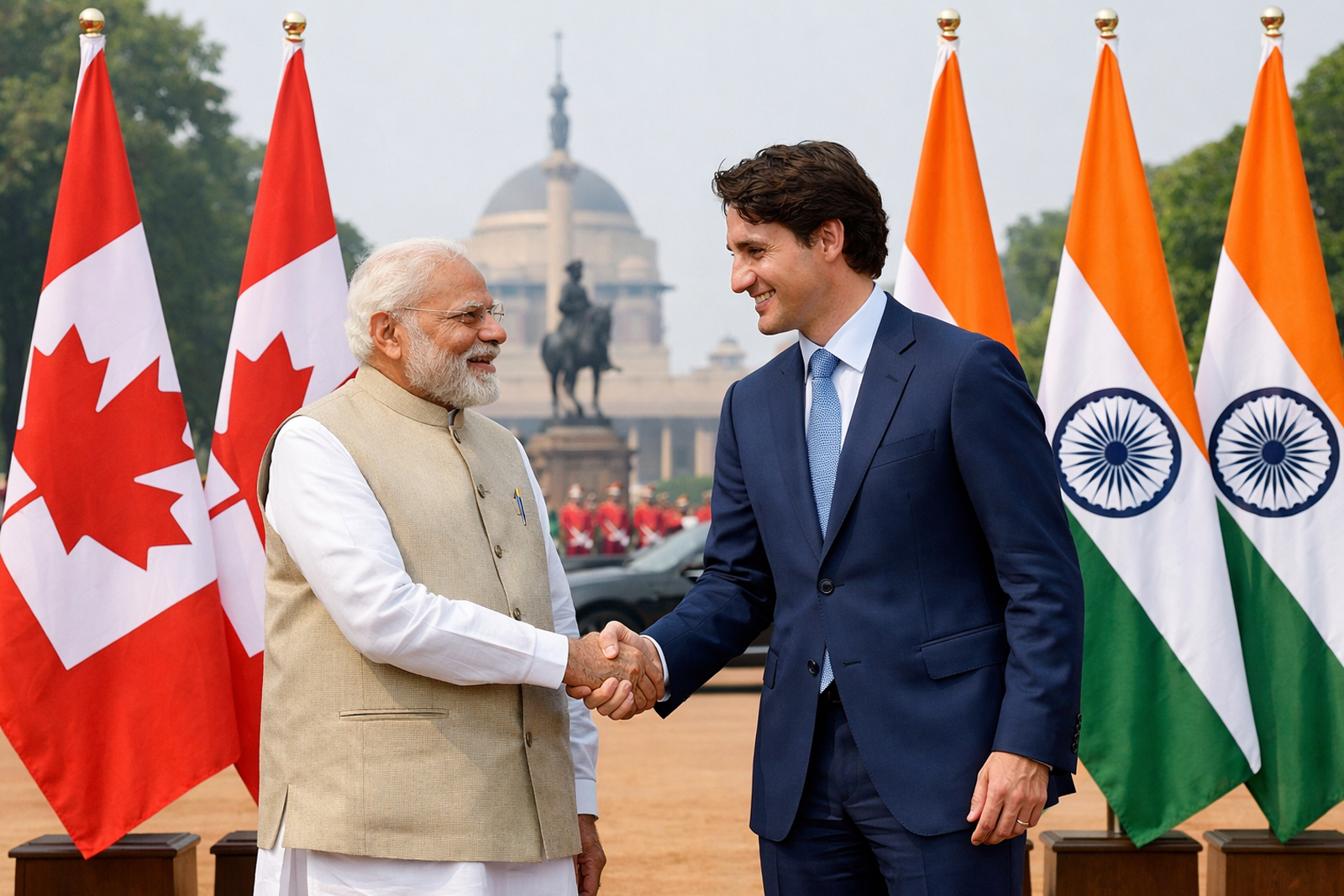
In a significant diplomatic development, Prime Minister Narendra Modi described the visit of his Canadian counterpart as a meaningful step toward rebuilding mutual trust and establishing a renewed partnership between India and Canada. The high-level engagement comes at a crucial time when both nations are seeking to stabilize relations and focus on shared priorities.
During the discussions, PM Modi emphasized the importance of open dialogue, mutual respect, and cooperation based on common democratic values. He noted that the visit has helped create a constructive environment for addressing concerns while identifying new opportunities for collaboration. The leaders reportedly discussed expanding trade and investment, enhancing cooperation in clean energy, technology, education, and strengthening people-to-people connections.
India and Canada share longstanding ties rooted in vibrant diaspora links, academic exchange, and growing economic engagement. The renewed diplomatic push signals a willingness on both sides to move forward pragmatically, focusing on areas where interests converge. Trade and supply chain resilience featured prominently in the talks, alongside discussions on global security challenges and climate action.
PM Modi highlighted that sustained engagement and institutional dialogue mechanisms would play a key role in ensuring long-term stability in bilateral relations. By committing to regular communication and strategic cooperation, both countries aim to restore confidence and unlock the untapped potential of their partnership.
The visit is being viewed as an important step toward diplomatic normalization, reflecting a shared intent to look ahead rather than dwell on past tensions. As both governments work to translate dialogue into action, the renewed momentum may pave the way for a stronger and more balanced India–Canada relationship in the years to come.
India–Canada Relations Enter a New Phase After High-Level Talks
Prime Minister Narendra Modi’s remarks describing the Canadian Prime Minister’s visit as the “foundation for a renewed partnership” signal a turning point in India–Canada relations. The visit comes after a period of diplomatic unease, and both sides appear determined to rebuild confidence through dialogue, cooperation, and practical engagement. The discussions reflected a shared recognition that strong bilateral ties are essential not only for the two nations but also for broader global stability.
Below is a detailed look at the key outcomes and broader implications of the visit:
Diplomatic Reset Through Direct Engagement
High-level diplomacy often sets the tone for long-term relations, and this visit was no exception. By engaging in face-to-face talks, both leaders demonstrated political will to reduce tensions and restore mutual trust.
Prime Minister Modi emphasized that open communication is the cornerstone of any strong partnership. The leaders agreed that differences should be addressed through established diplomatic channels, ensuring that dialogue remains constructive and respectful. This renewed engagement marks an effort to move beyond strained exchanges and toward pragmatic cooperation.
Strengthening Economic and Trade Cooperation
Economic collaboration formed a central pillar of the discussions. India and Canada have complementary strengths — India’s fast-growing market and skilled workforce align well with Canada’s technological expertise, natural resources, and investment potential.
Key economic focus areas include:
-
Expanding bilateral trade volumes
-
Encouraging Canadian investment in India’s infrastructure and clean energy sectors
-
Enhancing cooperation in agriculture and food security
-
Promoting innovation partnerships in emerging technologies
Both nations acknowledged that a stable political relationship is crucial for unlocking full trade potential. By rebuilding trust, they aim to create a more predictable environment for businesses and investors.
Focus on Clean Energy and Climate Action
Climate cooperation emerged as a shared priority. As global concerns over sustainability intensify, India and Canada see opportunities to collaborate on renewable energy, green hydrogen, and sustainable development practices.
India’s rapid expansion of renewable energy infrastructure offers avenues for Canadian firms specializing in clean technologies. Meanwhile, Canada’s experience in environmental governance and sustainable resource management can complement India’s growth ambitions. Joint initiatives in climate research and green finance may further deepen collaboration in this domain.
Boosting Education and People-to-People Ties
One of the strongest bridges between the two nations is their people-to-people connection. Canada hosts a significant Indian diaspora and remains a preferred destination for Indian students pursuing higher education.
During the talks, leaders highlighted:
-
Safeguarding the welfare of Indian students in Canada
-
Promoting academic exchanges and research partnerships
-
Encouraging skilled mobility programs
The Indian community in Canada plays a vital role in fostering economic and cultural ties. Strengthening these bonds can contribute to long-term stability in the relationship.
Cooperation in Security and Counterterrorism
Security cooperation was also an important component of the discussions. India has consistently emphasized the need for strong global efforts against terrorism and extremism. The leaders reportedly discussed mechanisms to enhance intelligence-sharing and law enforcement coordination.
PM Modi underscored that respect for sovereignty and territorial integrity must remain fundamental principles in bilateral engagement. By reinforcing security collaboration, both nations aim to address shared concerns while building confidence in sensitive areas.
Strategic Dialogue in a Changing Global Landscape
The global geopolitical environment is evolving rapidly, with supply chain disruptions, regional conflicts, and economic uncertainties reshaping international alliances. In this context, India and Canada recognize the value of diversified partnerships.
The visit provided an opportunity to align perspectives on:
-
Indo-Pacific stability
-
Multilateral cooperation
-
Global economic resilience
-
Reform of international institutions
By strengthening coordination in global forums, both countries can contribute to broader international stability while advancing national interests.
Rebuilding Confidence Through Institutional Mechanisms
Sustained diplomatic progress requires more than symbolic gestures. Both leaders emphasized the need to activate and strengthen institutional mechanisms such as joint commissions, trade working groups, and strategic dialogues.
Regular ministerial-level interactions and structured consultations are expected to prevent misunderstandings and ensure continuity in engagement. Institutionalizing dialogue creates predictability and reduces the risk of future diplomatic friction.
Political Significance of the Visit
The visit carries domestic and international political importance. For India, it demonstrates a willingness to engage constructively while safeguarding national interests. For Canada, it reflects recognition of India’s growing global influence and economic importance.
Observers see this engagement as a pragmatic step toward recalibrating ties. Rather than allowing disagreements to define the relationship, both sides appear committed to focusing on areas of shared benefit.
Economic Potential Yet to Be Fully Realized
Despite existing trade and educational exchanges, experts believe India–Canada economic ties remain underdeveloped relative to their potential. With India emerging as one of the world’s fastest-growing major economies, opportunities for Canadian businesses are expanding across sectors such as digital services, renewable energy, mining, and infrastructure.
A stable diplomatic environment could accelerate negotiations on pending trade agreements and encourage greater private-sector collaboration.
Looking Ahead: A Relationship in Transition
While challenges remain, the tone of the visit suggests cautious optimism. Prime Minister Modi’s reference to building a “foundation” indicates that this is the beginning of a longer process rather than an immediate transformation.
The coming months will be crucial in translating diplomatic goodwill into measurable outcomes. Progress in trade talks, educational cooperation, and security coordination will serve as indicators of whether this renewed momentum can be sustained.
Conclusion
The Canadian Prime Minister’s visit to India marks a significant diplomatic moment aimed at resetting bilateral relations. By emphasizing dialogue, economic partnership, climate cooperation, and people-to-people connections, both countries have signaled their intention to move forward constructively.
Prime Minister Narendra Modi’s assertion that the visit has laid the groundwork for a renewed partnership underscores a broader message: despite past tensions, India and Canada recognize the strategic value of collaboration. If supported by consistent engagement and practical policy steps, this diplomatic outreach could usher in a more stable and mutually beneficial chapter in India–Canada relations.

About The Author
Soojin Das is a dedicated journalist with a strong focus on public affairs, governance, and grassroots reporting. With a passion for uncovering stories that matter, she brings clarity, accuracy, and depth to complex issues shaping communities across India. Her reporting spans politics, social development, education, and local civic concerns, giving readers a balanced and well-researched perspective. Known for her sharp news sense and ethical approach to journalism, Anita combines on-ground reporting with data-driven analysis and compelling storytelling. She has covered major policy announcements, elections, disaster response efforts, and community-led initiatives, ensuring that audiences receive timely and trustworthy information. Anita believes journalism plays a vital role in strengthening democracy and amplifying under-represented voices. Through interviews, investigative pieces, and human-interest stories, she aims to inform, engage, and empower readers. When not in the field, she closely follows media innovation and digital storytelling trends, continually refining her craft to meet the evolving needs of modern newsrooms.
Soojin Das | Journalist
You Might Also Like
-
Trump Comments on India–Russia Oil Trade Signal Shifts in Global Economic Strategy Recent remarks by Donald Trump have drawn attention to...
-
Rising Tensions Between United States and Iran Geopolitical tensions between the United States and Iran have intensified once again, drawing gl...
Suggested Video