









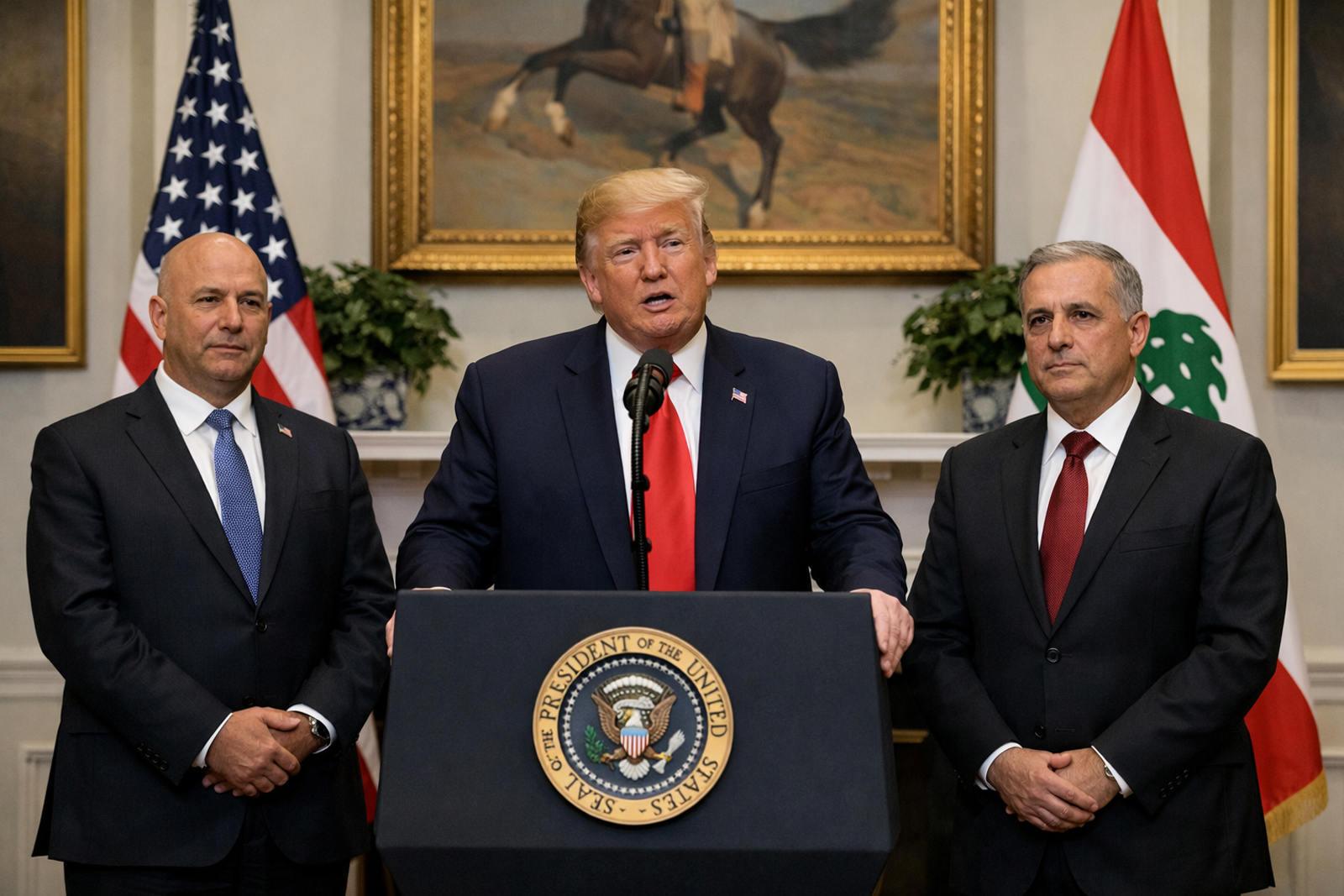
Donald Trump Announces Temporary Ceasefire Agreement Between Israel and Lebanon
Israel–Lebanon Ceasefire Agreement: A Fragile Pause in a Long-Standing Conflict
In a significant diplomatic development, Donald Trump announced that Israel and Lebanon have agreed to a temporary ceasefire, offering a momentary halt to rising hostilities along their shared border. The announcement comes amid heightened tensions that had raised fears of a broader regional escalation, drawing global attention and concern.
The ceasefire is being seen as a strategic pause rather than a permanent solution. For years, the relationship between Israel and Lebanon has been marked by intermittent clashes, largely influenced by complex political dynamics and the presence of armed groups operating in southern Lebanon. This temporary truce aims to de-escalate immediate threats and create space for diplomatic engagement.
According to initial reports, the ceasefire includes commitments from both sides to halt cross-border attacks and reduce military mobilization in sensitive zones. While the exact terms have not been fully disclosed, international observers believe that backchannel negotiations and external diplomatic pressure played a key role in securing this agreement. The involvement of global powers highlights the seriousness of the situation and the urgent need to prevent further conflict.
For civilians living near the border, the ceasefire brings a sense of relief. Communities that have faced the constant threat of airstrikes and missile fire may now experience a temporary return to normalcy. However, uncertainty remains high, as previous ceasefires in the region have often been short-lived due to underlying tensions and unresolved disputes.
Political analysts caution that sustaining peace will require more than just a temporary halt in violence. Long-term stability depends on addressing core issues, including territorial disputes, security concerns, and the influence of non-state actors. Without meaningful dialogue and concrete steps toward resolution, the ceasefire risks becoming another brief interruption in a prolonged cycle of conflict.
The international community has welcomed the announcement, urging both nations to honor their commitments and engage in constructive negotiations. As the world watches closely, this ceasefire could either pave the way for lasting peace or serve as a reminder of how fragile stability remains in one of the world’s most volatile regions.
Israel–Lebanon Ceasefire Agreement: Can a Temporary Truce Lead to Lasting Peace?
The announcement of a temporary ceasefire between Israel and Lebanon, revealed by Donald Trump, has introduced a cautious sense of optimism in a region long defined by volatility. While the agreement is limited in scope and duration, it represents a critical moment that could either ease tensions or simply delay further confrontation.
Background: A History of Tension
The relationship between Israel and Lebanon has been shaped by decades of mistrust, conflict, and geopolitical complexity. Border disputes, military engagements, and the involvement of armed factions have repeatedly destabilized the region. Southern Lebanon, in particular, has remained a flashpoint, with periodic escalations that have drawn international concern.
This ceasefire emerges after a period of heightened military activity, where both sides exchanged warnings and limited strikes. The situation had reached a level where global leaders feared a wider regional conflict, potentially involving other Middle Eastern actors.
Key Highlights of the Ceasefire
Although full details have not been made public, several important elements are believed to define the agreement:
- Immediate Halt to Hostilities: Both nations have agreed to stop cross-border attacks, including airstrikes and rocket fire.
- Reduced Military Presence: Troop movement and deployment near the border are expected to be minimized to prevent accidental escalation.
- Monitoring Mechanisms: International observers or mediators may be involved in ensuring both sides adhere to the terms.
- Short-Term Duration: The ceasefire is temporary, indicating that it serves as a pause rather than a permanent peace deal.
These points highlight that the agreement is more about preventing immediate violence than resolving deeper issues.
Role of International Diplomacy
The involvement of Donald Trump in announcing the ceasefire underscores the role of global diplomacy in the region. While it remains unclear which countries directly facilitated negotiations, major powers often act behind the scenes to prevent conflicts from spiraling out of control.
International organizations and diplomatic channels likely played a significant role in bringing both parties to the table. The ceasefire reflects a shared understanding that continued escalation would have severe humanitarian and political consequences.
Impact on Civilians
For people living along the Israel-Lebanon border, the ceasefire offers immediate, though uncertain, relief. Civilians in these areas have faced:
- Constant fear of airstrikes and missile attacks
- Displacement from homes and communities
- Disruptions to daily life, education, and local economies
The temporary truce may allow humanitarian aid to reach affected areas and give residents a chance to rebuild, even if only briefly. However, the uncertainty surrounding the duration of peace continues to weigh heavily on local populations.
Challenges to Sustaining Peace
Despite the positive tone of the announcement, several challenges threaten the longevity of the ceasefire:
- Lack of Trust:Years of conflict have created deep suspicion between both sides.
- Unresolved Core Issues:Territorial disputes and security concerns remain unaddressed.
- Influence of Armed Groups:Non-state actors operating in the region can disrupt agreements.
- Political Pressures:Internal politics in both nations may impact their willingness to maintain the truce.
Without addressing these structural issues, the ceasefire risks collapsing under pressure.
Regional and Global Implications
The ceasefire is not just a bilateral matter—it has broader implications for the Middle East and beyond. A stable border between Israel and Lebanon could:
- Reduce the risk of a wider regional war
- Improve conditions for diplomatic engagement across the region
- Strengthen international confidence in conflict resolution efforts
On the other hand, a breakdown of the ceasefire could escalate tensions and draw in additional countries, further complicating the geopolitical landscape.
What Happens Next?
Observers will closely monitor:
- Compliance with the agreement by both sides
- Any violations or provocations along the border
- Efforts to transition from a temporary truce to longer-term negotiations
Diplomatic engagement will need to intensify if the ceasefire is to evolve into something more sustainable.
Conclusion: A Window of Opportunity
The temporary ceasefire betweenIsraelandLebanonmarks a critical pause in a deeply entrenched conflict. Announced byDonald Trump, the agreement provides a narrow window for diplomacy and de-escalation.
However, history suggests that such pauses are fragile. Turning this moment into lasting peace will require commitment, compromise, and sustained international support. For now, the ceasefire stands as both a hopeful sign and a reminder of how delicate stability remains in the region.

About The Author
Shivani Nayak is an emerging journalist committed to delivering accurate, timely, and impactful stories for a fast-growing digital news platform. With a keen interest in politics, public policy, and community reporting, she focuses on issues that directly affect everyday life. Her work reflects a strong belief in responsible journalism, transparency, and fact-based reporting. She brings a modern, digital-first approach to news coverage, blending field reporting with multimedia storytelling to reach audiences across platforms. From breaking developments to in-depth explainers and human-interest features, Anita strives to present news in a clear, accessible manner while maintaining editorial integrity. Driven by curiosity and a deep sense of social responsibility, she actively engages with sources at the grassroots level, ensuring diverse voices are represented. She is particularly interested in governance, education reform, infrastructure development, and civic affairs. Through her reporting, Anita aims to build trust with readers and contribute to a culture of informed public dialogue. As part of a new portal, she looks forward to growing alongside the publication and helping shape its journalistic identity in the digital age.
Shivani Nayak | Journalist


You Might Also Like
-
Pakistan Emerges as Potential Diplomatic Hub for U.S.–Iran Talks In a notable diplomatic development, the White House has indicated that ...
-
Rising Tensions in the Gulf: U.S.–Iran Standoff Deepens The geopolitical landscape of the Middle East has entered a critical phase as ten...

Suggested Video