- Loading...
- Loading...


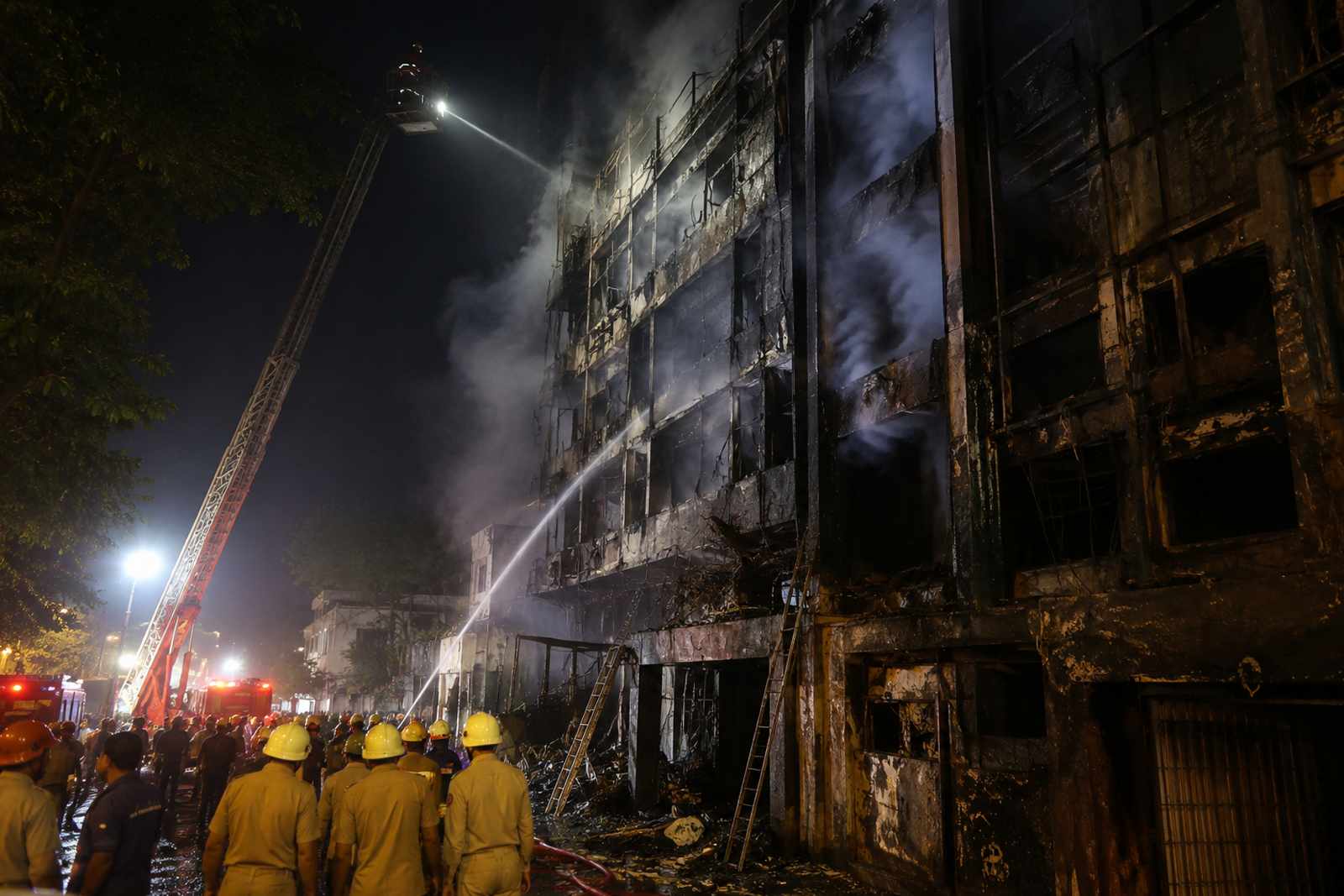
A devastating hotel fire in Delhi has claimed another life, pushing the official death toll to 22. Authorities confirmed that a Nigerian national, who had been receiving treatment for severe burns sustained during the incident, passed away in hospital. The tragedy has once again raised serious concerns about fire safety compliance and emergency response systems in densely populated urban areas.
The Nigerian citizen was among several people rescued from the burning hotel and rushed to medical facilities with critical injuries. Despite continuous medical care and efforts by doctors, the victim was unable to recover from extensive burn wounds. Officials stated that the death has increased the total number of fatalities linked to the fire to 22.
Medical teams continue to monitor other injured survivors, some of whom remain in critical condition. Health authorities have assured that all necessary treatment and support are being provided to those affected.
Delhi Police, fire department officials, and other investigative agencies are working together to determine the exact cause of the blaze. Preliminary findings suggest that the fire spread rapidly through parts of the building, making evacuation difficult for guests and staff.
Investigators are examining electrical systems, emergency exits, and fire prevention equipment to establish whether safety regulations were followed. The findings could play a crucial role in determining accountability and preventing similar incidents in the future.
The incident has reignited debate over fire safety standards in hotels and commercial establishments.
Several civic groups have urged authorities to conduct comprehensive inspections of hotels and public buildings across the city. They argue that strict enforcement of safety regulations is necessary to protect lives and reduce risks during emergencies.
Government officials have expressed condolences to the families of the victims and assured a thorough investigation. Authorities are also coordinating with diplomatic representatives regarding the death of the Nigerian national.
As Delhi mourns another loss from the tragedy, the focus remains on supporting survivors, identifying the causes of the fire, and ensuring stronger safety measures in public establishments. The incident serves as a stark reminder of the devastating consequences that can result when fire hazards are not effectively addressed.
A tragic hotel fire in Delhi has taken another life, raising the official death toll to 22. Authorities confirmed that a Nigerian national who suffered severe burn injuries during the incident has died while undergoing treatment. The development has added to the grief surrounding one of the city's deadliest fire disasters in recent years and has renewed concerns about safety standards in commercial establishments.
The incident has sparked widespread discussions about emergency preparedness, building compliance, and the responsibilities of hotel operators. As investigators continue to piece together the sequence of events, families of the victims await answers while survivors struggle to recover from both physical and emotional trauma.
The hotel fire occurred under circumstances that led to rapid spread of flames and smoke throughout parts of the building. Emergency services responded swiftly after receiving distress calls, but the intensity of the blaze created significant challenges for rescue teams.
Many guests and staff members found themselves trapped inside rooms and corridors as smoke reduced visibility and blocked escape routes. Firefighters worked tirelessly to evacuate occupants and contain the fire before it could spread further.
While several lives were saved through rescue efforts, the loss of 22 people highlights the devastating impact of the incident.
The latest victim, a Nigerian citizen, had been receiving specialized medical treatment for extensive burn injuries suffered during the fire. Hospital officials reported that despite continuous care and advanced treatment procedures, the injuries proved fatal.
The death has drawn attention not only within India but also among international communities, as foreign nationals were among those affected by the disaster.
The loss serves as a reminder that the effects of such tragedies often continue long after the flames have been extinguished.
Firefighters, police personnel, and medical teams rushed to the scene shortly after receiving alerts. Multiple fire engines were deployed to control the blaze and rescue those trapped inside.
Rescuers encountered several difficulties, including:
Despite these obstacles, emergency personnel managed to save numerous lives through coordinated rescue operations.
Ambulances transported injured individuals to nearby hospitals where emergency treatment was initiated. Medical teams worked around the clock to stabilize burn victims and those suffering from smoke inhalation.
Investigators are focusing on:
Forensic experts are expected to submit reports that will help establish how the fire originated and spread.
The tragedy has once again highlighted concerns regarding safety compliance in hotels and commercial buildings.
Experts emphasize that regular inspections can identify hazards before they become life-threatening. These audits typically examine:
Failure to maintain these systems can significantly increase risks during emergencies.
One of the most critical aspects of building safety is ensuring that emergency exits remain unobstructed and clearly marked. During a fire, every second counts, and accessible escape routes can mean the difference between life and death.
Many survivors continue to receive treatment for:
Doctors remain hopeful about the recovery of several patients, though some continue to be in critical condition.
Beyond physical injuries, survivors often face long-term psychological challenges, including:
Mental health professionals stress the importance of counseling and emotional support for those affected.
For relatives of the victims, the tragedy has created immeasurable loss. Many families are demanding accountability and transparency in the investigation.
Their primary concerns include:
Authorities have assured families that the investigation will be conducted thoroughly and fairly.
Officials have expressed condolences to the families of the deceased and pledged full cooperation in the investigation.
Authorities are reportedly reviewing:
The goal is to identify shortcomings and strengthen regulations to prevent future tragedies.
Several civic agencies are expected to conduct inspections of hotels, guest houses, and commercial establishments to ensure adherence to safety norms.
The Delhi hotel fire underscores broader challenges associated with rapid urban development.
Cities must prioritize:
Advanced monitoring systems and smart safety technologies can help detect hazards early and alert occupants before situations become critical.
In the aftermath of the disaster, various organizations and volunteers have stepped forward to assist victims and their families.
Support efforts include:
Such initiatives demonstrate the importance of community solidarity during times of crisis.
The death of a Nigerian national has pushed the Delhi hotel fire toll to 22, deepening the sorrow surrounding an already devastating tragedy. As investigations continue, attention remains focused on uncovering the causes of the incident and ensuring accountability where necessary.
The disaster serves as a powerful reminder of the importance of fire safety, emergency preparedness, and strict compliance with building regulations. While rescue workers, medical professionals, and authorities continue their efforts to support those affected, the lessons learned from this incident may help prevent similar tragedies in the future.
Ensuring safer public spaces is not merely a regulatory responsibility—it is a collective commitment to protecting lives and preserving public trust. As Delhi mourns the victims, the city also faces an opportunity to strengthen its safety systems and build a more resilient future.

In today’s world of endless choices and digital noise, marketing is no longer just about promoting products — it’s about creating meaningful connections. Successful brands focus on building relationships rather than chasing transactions. Marketing that connects transforms audiences into loyal communities by earning their trust, understanding their needs, and delivering genuine value. When businesses prioritize people over promotions, marketing becomes more than strategy — it becomes a relationship built to last.

Odisha’s small businesses are entering a new era — where mobile apps, online payments, and e-commerce aren’t luxuries, but lifelines for growth and survival.

As India enters the second phase of its digital revolution, artificial intelligence and automation are not just transforming industries—they’re redefining what it means to work, earn, and adapt.

The conference brought together officials from ten central districts, including district collectors, tehsildars, registrars, and welfare officers, either virtually or in person.

We glorified sleepless nights, burnout, and exhaustion as signs of ambition. But when did working yourself to the edge become the definition of success?

Not everyone who thrives in tech writes code. Some design the very experiences that make technology human.






Leave Comments