Trump Calls Maritime Work a ‘Rough Profession’ After Indian Sailors Killed in Hormuz Strikes
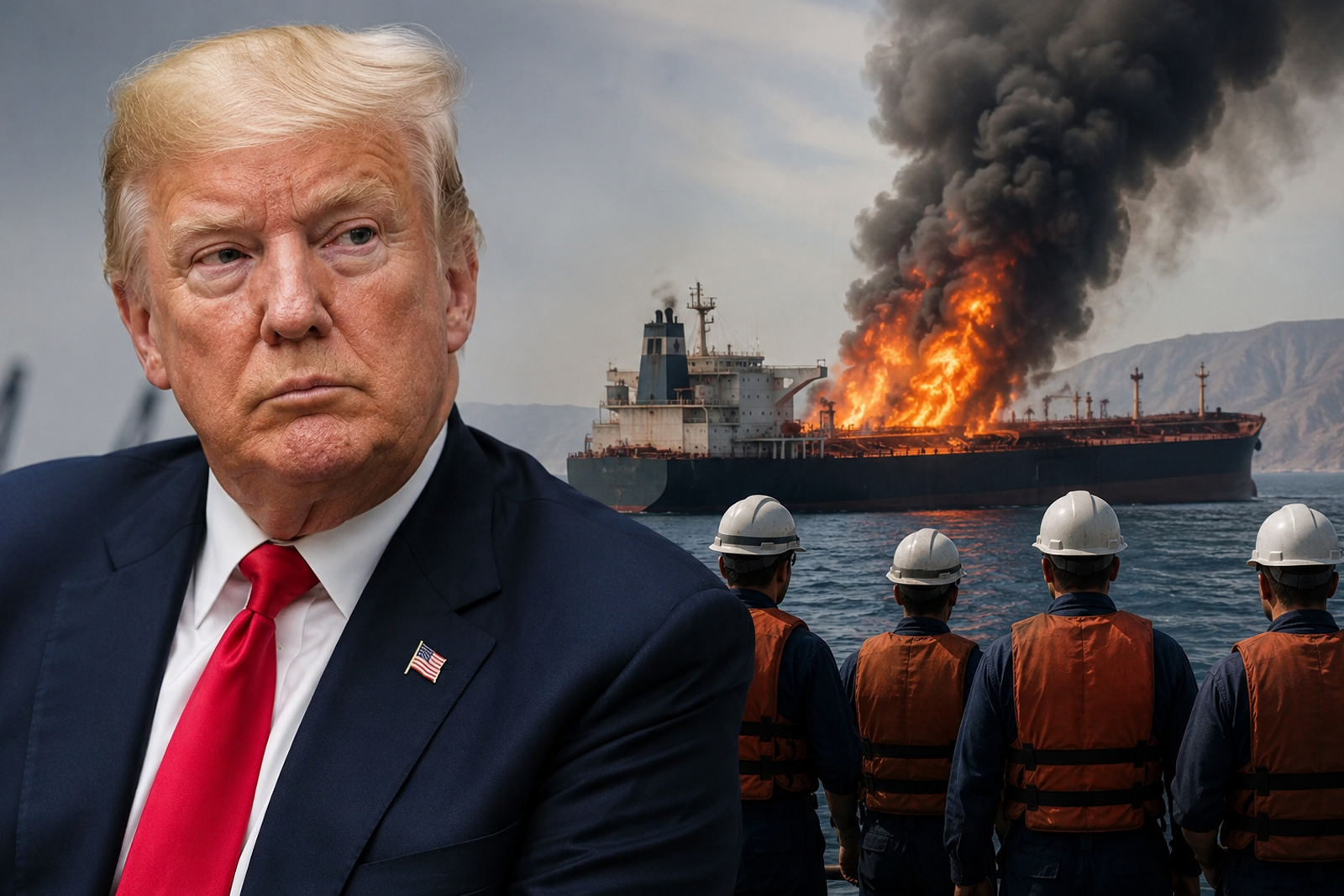
Trump’s Remarks on Indian Sailors Spark Discussion on Maritime Safety in Conflict Zones
A Tragic Loss at Sea
The deaths of Indian sailors following military strikes near the Strait of Hormuz have drawn international attention to the dangers faced by seafarers working in some of the world’s most sensitive maritime corridors. Reacting to the incident, former U.S. President Donald Trump described maritime work as a “rough profession,” emphasizing the long-standing risks associated with life at sea.
The sailors were reportedly operating in a region that has remained strategically important for global energy transportation and international trade. The incident has renewed concerns about the safety of civilian maritime personnel caught in areas affected by geopolitical tensions and military activity.
Importance of the Strait of Hormuz
The Strait of Hormuz is one of the busiest shipping routes in the world, serving as a critical passage for oil tankers and cargo vessels. Any disruption in the region can have significant consequences for global trade, energy markets, and maritime operations.
For decades, shipping companies and governments have monitored developments in the area closely because even minor escalations can affect vessel movements and crew safety. The latest tragedy highlights how quickly risks can emerge in regions where military and commercial activities intersect.
Challenges Faced by Seafarers
Merchant sailors often spend months away from home while ensuring that international trade continues uninterrupted. Despite advancements in navigation technology and maritime security, seafarers remain exposed to numerous dangers, including severe weather, piracy, mechanical failures, and conflicts in sensitive waters.
The recent deaths of Indian sailors have brought renewed focus to the need for stronger safety protocols, improved communication systems, and enhanced protection measures for civilian vessels operating in high-risk zones.
Global Response and Concerns
Governments, shipping organizations, and industry experts have expressed concern over the incident and called for greater efforts to safeguard maritime workers. Many observers believe that civilian crews should be protected from the consequences of military confrontations occurring near vital shipping lanes.
The tragedy has also prompted discussions about international cooperation to ensure safer navigation in strategic waterways. Maritime experts argue that protecting commercial shipping routes is essential not only for global trade but also for the thousands of sailors who work on these vessels every day.
Looking Ahead
As investigations and diplomatic discussions continue, the focus remains on supporting the affected families and strengthening maritime safety measures. The incident serves as a reminder that seafarers play a vital role in the global economy while often facing risks beyond their control. Ensuring their safety remains a shared responsibility for governments, shipping companies, and the international community.

Indian Sailors Killed Near Hormuz: Trump’s Remarks Renew Focus on Maritime Risks and Global Shipping Security
The deaths of Indian sailors in the Strait of Hormuz region following military strikes have once again highlighted the dangers faced by thousands of seafarers working on international shipping routes. Commenting on the tragedy, former U.S. President Donald Trump described maritime work as a “rough profession,” noting that such risks have existed throughout history. While the statement reflected the hazardous nature of life at sea, the incident itself has sparked wider discussions about maritime safety, geopolitical tensions, and the protection of civilian crews operating in conflict-prone waters.
The loss of the sailors is being mourned not only in India but also across the global maritime community, where concerns are growing about the increasing risks faced by commercial vessels navigating strategically important waterways.
A Tragic Incident in a Critical Maritime Region
The Strait of Hormuz is one of the world's most important maritime passages. Connecting the Persian Gulf to international waters, the route is used daily by oil tankers, cargo ships, and commercial vessels transporting goods across continents.
When military operations take place near this narrow waterway, the consequences can extend beyond political and military objectives. Civilian ships often find themselves operating in close proximity to potential danger zones, making their crews vulnerable to unexpected incidents.
The deaths of Indian sailors have drawn attention to the human cost of conflicts occurring in areas that serve as lifelines for global trade.
Why the Strait of Hormuz Matters
Strategic Importance
The Strait of Hormuz plays a central role in international commerce and energy transportation.
Key reasons for its importance include:
-
A major route for global oil exports.
-
Essential passage for international cargo shipments.
-
Connection between Gulf nations and global markets.
-
Critical component of global supply chains.
Any disruption in this region can affect fuel prices, shipping schedules, and economic stability across multiple countries.
Global Economic Impact
When tensions rise in the Strait of Hormuz:
-
Insurance costs for shipping companies increase.
-
Vessel operators may change routes.
-
Transportation expenses rise.
-
Energy markets become volatile.
As a result, incidents in the region often attract worldwide attention.
The Role of Indian Seafarers in Global Shipping
India is one of the leading suppliers of skilled maritime professionals to the global shipping industry.
Thousands of Indian sailors work aboard:
-
Oil tankers
-
Cargo ships
-
Container vessels
-
Offshore support ships
-
International merchant fleets
These professionals contribute significantly to the movement of goods and energy resources worldwide.
Indian seafarers are respected internationally for their technical expertise, discipline, and adaptability. The loss of any sailor is deeply felt within the maritime community because every crew member plays a crucial role in ensuring safe and efficient operations at sea.
Life at Sea: A Profession Filled with Challenges
Trump's description of maritime work as a “rough profession” reflects a reality acknowledged throughout the industry.
Common Risks Faced by Sailors
1. Extreme Weather Conditions
Seafarers regularly encounter:
-
Cyclones
-
Storms
-
Heavy rainfall
-
High waves
-
Strong winds
Despite technological advancements, nature remains unpredictable.
2. Long Periods Away from Family
Many sailors spend:
-
Several months onboard ships
-
Extended periods without returning home
-
Long stretches separated from loved ones
This lifestyle requires significant personal sacrifice.
3. Piracy and Security Threats
Certain maritime routes remain vulnerable to:
-
Pirate attacks
-
Armed robberies
-
Vessel hijackings
-
Security incidents
Crew members must remain alert while operating in these areas.
4. Geopolitical Tensions
Perhaps the most difficult challenge arises when ships pass through regions experiencing political instability or military activity.
The recent tragedy involving Indian sailors demonstrates how civilian crews can become exposed to risks beyond their control.
International Reactions to the Incident
The deaths have generated reactions from governments, industry organizations, and maritime experts.
Calls for Greater Protection
Several voices within the shipping industry have emphasized:
-
Improved maritime security measures.
-
Better coordination between governments.
-
Enhanced warning systems for commercial vessels.
-
Greater protection of civilian shipping routes.
Experts argue that safeguarding merchant sailors should remain a priority regardless of geopolitical disputes.
Humanitarian Concerns
Beyond strategic and economic considerations, attention has focused on the families affected by the tragedy.
Every maritime accident leaves behind:
-
Grieving relatives.
-
Communities seeking answers.
-
Colleagues mourning lost coworkers.
The incident serves as a reminder that behind every ship are real people whose work supports global trade.
Balancing Security and Commerce
Modern shipping depends on stability in international waters.
Key Challenges Facing Governments
Authorities must balance:
-
National security concerns.
-
Military operations.
-
Commercial shipping requirements.
-
Civilian safety.
Achieving this balance becomes increasingly difficult during periods of regional tension.
Many analysts believe stronger communication channels between military forces and maritime authorities could help reduce risks to civilian vessels operating nearby.
Lessons for the Maritime Industry
The tragedy has prompted discussions about how the shipping sector can further improve safety.
Areas for Improvement
Enhanced Risk Monitoring
Shipping companies may invest more in:
-
Real-time intelligence systems.
-
Route monitoring technologies.
-
Threat assessment tools.
Better Crew Training
Training programs can help sailors:
-
Respond to emergencies.
-
Understand regional security threats.
-
Improve crisis management skills.
International Cooperation
Global maritime organizations often stress the importance of:
-
Information sharing.
-
Joint safety initiatives.
-
Coordinated emergency response systems.
Such measures can strengthen protection for crews operating in high-risk waters.
The Human Side of Global Trade
Consumers rarely consider the people responsible for transporting goods across oceans.
Every day, merchant sailors help move:
-
Food supplies.
-
Medical equipment.
-
Consumer products.
-
Industrial materials.
-
Energy resources.
Without their efforts, international commerce would struggle to function efficiently.
The deaths of Indian sailors serve as a reminder that global trade relies on individuals willing to work in challenging and sometimes dangerous environments.
India’s Maritime Contribution
India continues to play an important role in the international shipping industry.
Strengths of Indian Maritime Professionals
Indian sailors are known for:
-
Technical competence.
-
Professional training.
-
Strong work ethic.
-
International experience.
The country’s maritime workforce supports vessels operating across major global shipping lanes.
As the industry evolves, India is expected to remain a key source of maritime talent for years to come.
Looking Ahead
The tragedy near the Strait of Hormuz has once again demonstrated how interconnected the modern world has become. Events occurring in a single maritime corridor can have consequences that reach far beyond regional borders.
While investigations and diplomatic discussions continue, attention remains focused on supporting the affected families and preventing similar incidents in the future. The maritime sector, governments, and international organizations are likely to continue exploring ways to improve safety for civilian crews operating in sensitive regions.
Conclusion
The deaths of Indian sailors near the Strait of Hormuz represent more than a maritime incident—they highlight the challenges faced daily by seafarers who keep global trade moving. Donald Trump’s remarks about the profession’s hardships have brought renewed attention to the realities of life at sea, where risks can emerge from weather, security threats, and geopolitical tensions alike.
As the world reflects on this tragedy, the focus must remain on strengthening maritime safety, protecting civilian crews, and ensuring that those who work on the front lines of international commerce receive the security and recognition they deserve. Their contribution to the global economy is immense, and their safety should remain a shared international priority.

Shivani NayakJournalist
Shivani Nayak is an emerging journalist committed to delivering accurate, timely, and impactful stories for a fast-growing digital news platform. With a keen interest in politics, public policy, and community reporting, she focuses on issues that directly affect everyday life. Her work reflects a strong belief in responsible journalism, transparency, and fact-based reporting.
She brings a modern, digital-first approach to news coverage, blending field reporting with multimedia storytelling to reach audiences across platforms. From breaking developments to in-depth explainers and human-interest features, Anita strives to present news in a clear, accessible manner while maintaining editorial integrity.
Driven by curiosity and a deep sense of social responsibility, she actively engages with sources at the grassroots level, ensuring diverse voices are represented. She is particularly interested in governance, education reform, infrastructure development, and civic affairs.
Through her reporting, Anita aims to build trust with readers and contribute to a culture of informed public dialogue. As part of a new portal, she looks forward to growing alongside the publication and helping shape its journalistic identity in the digital age.