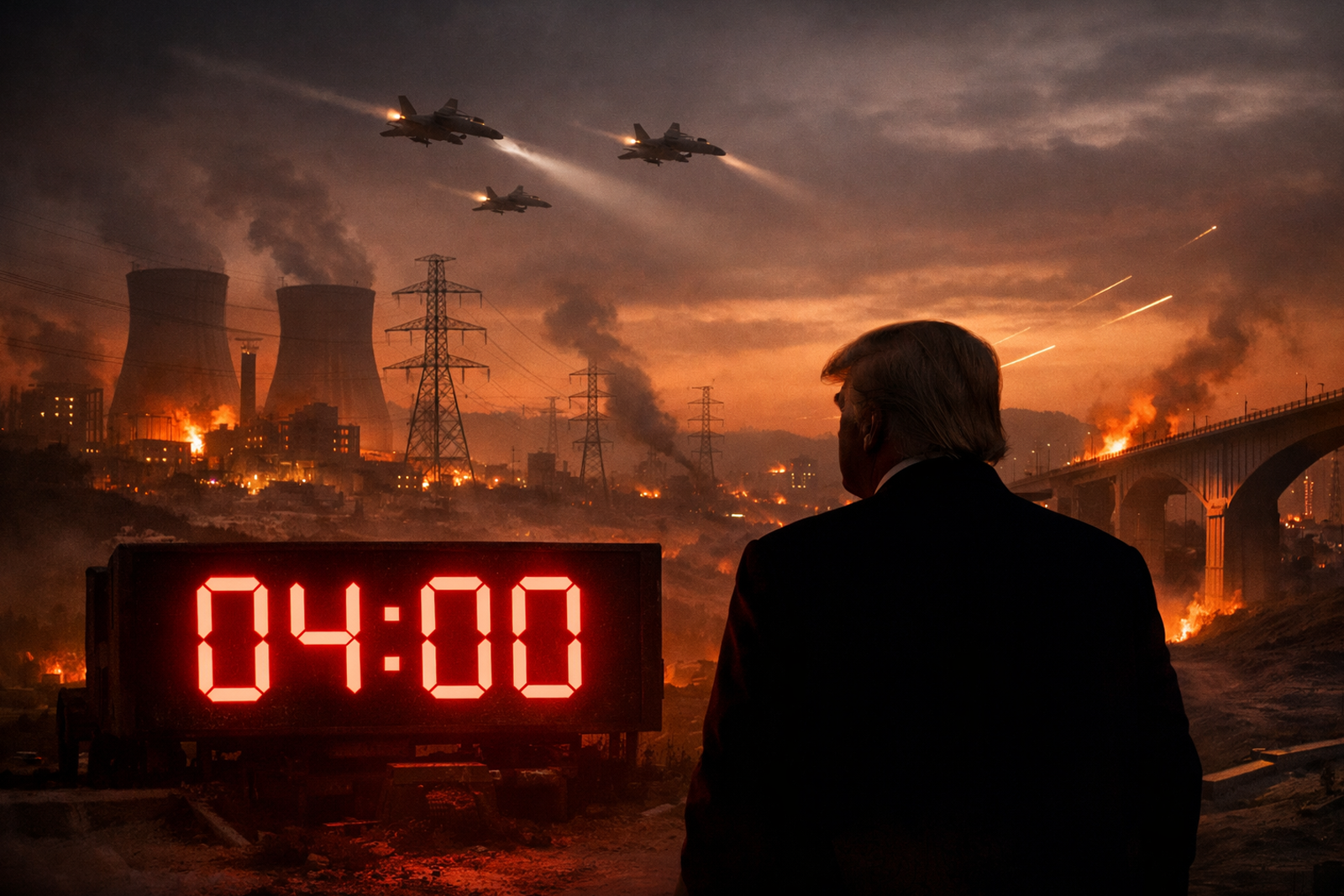
Modi-Trump Meeting Masks Growing India-US Divergence Amid Strategic Shifts
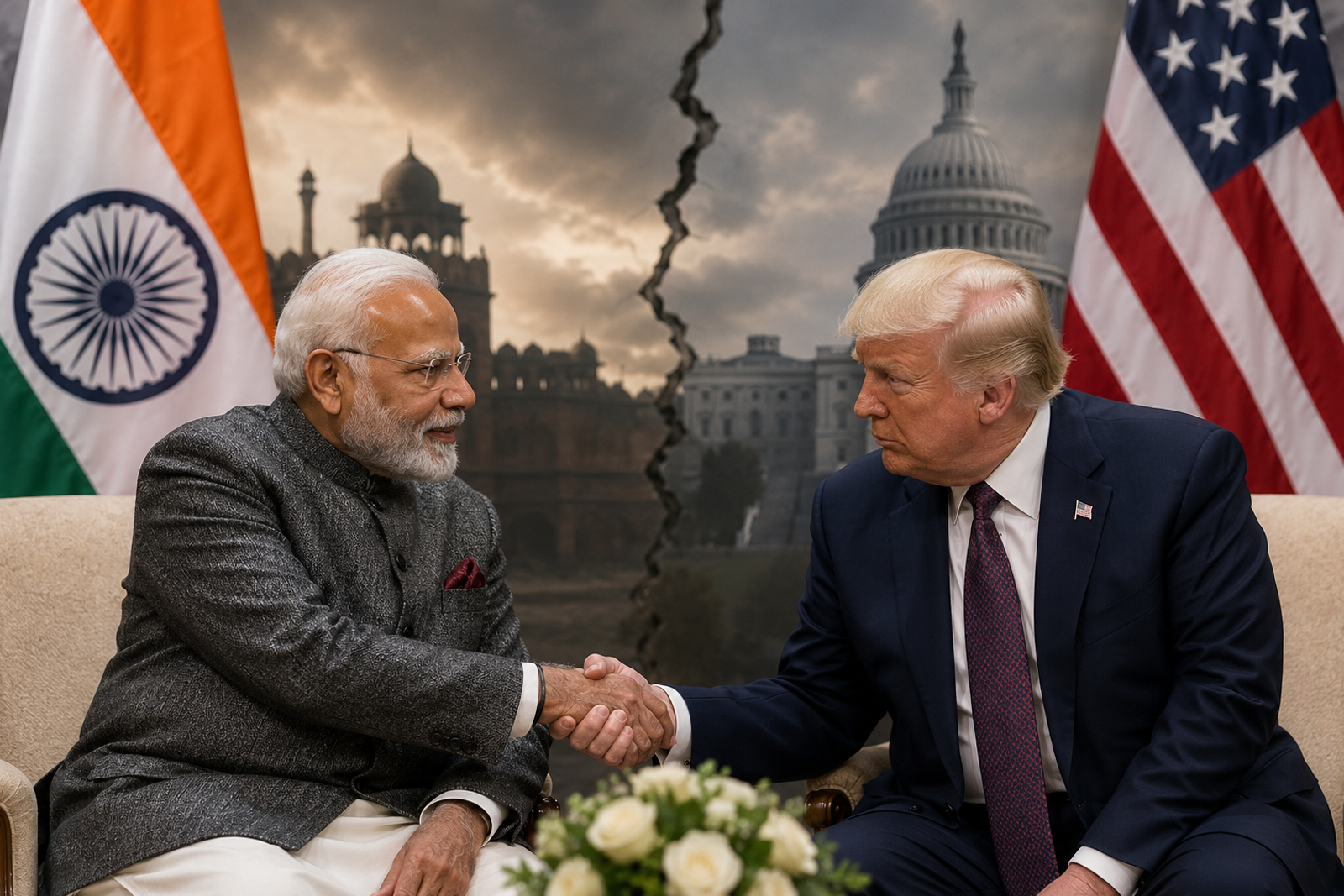
Modi-Trump Meeting Masks Growing India-US Divergence Amid Strategic Shifts
Introduction
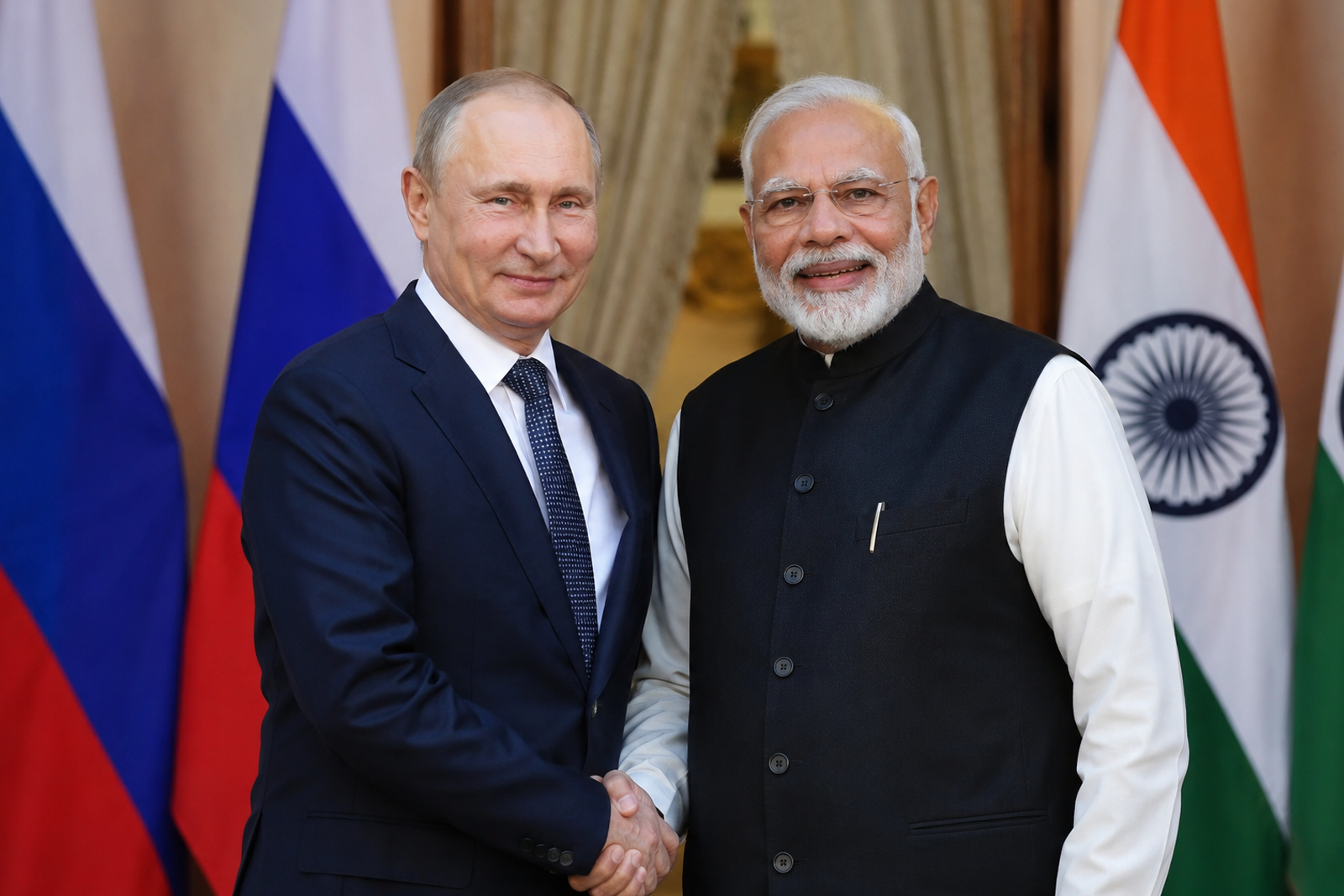
A recent meeting between Indian Prime Minister Narendra Modi and U.S. President Donald Trump projected an image of warmth and cooperation, with both leaders emphasizing the importance of the relationship between their countries. However, beneath the diplomatic smiles and positive statements lies a more complex reality. While India and the United States continue to work together on several strategic issues, differences in trade, regional priorities, and foreign policy approaches are gradually reshaping the partnership.
A Meeting Focused on Stability
The interaction between the two leaders came at a time when global uncertainty remains high. Ongoing conflicts, economic challenges, and shifting geopolitical alliances have increased the importance of strong international partnerships. Both leaders highlighted shared democratic values and the need for cooperation in areas such as security, technology, and economic development.
The meeting also reaffirmed the significance of India-US ties in maintaining stability across the Indo-Pacific region. Both nations recognize the importance of keeping communication channels open and strengthening collaboration where interests align.
Emerging Areas of Difference
Despite positive public messaging, several issues continue to create friction. Trade remains a recurring challenge, with disagreements over tariffs, market access, and investment regulations. While both countries seek stronger economic engagement, negotiations often reveal differing priorities.
Foreign policy is another area where perspectives sometimes diverge. India has increasingly pursued a strategy of strategic autonomy, maintaining relationships with multiple global powers while avoiding alignment with any single bloc. The United States, meanwhile, often seeks stronger support from partners on key international issues.
These differences do not necessarily indicate a weakening relationship, but they highlight the evolving nature of the partnership.
Strategic Interests Remain Strong
Defense partnerships have expanded significantly over the past decade, and collaboration in emerging technologies, clean energy, and critical supply chains remains a priority.
The two nations also share concerns about regional security and maritime stability. These common interests provide a strong foundation that helps sustain the relationship despite occasional policy differences.
Looking Ahead
The Modi-Trump meeting demonstrated that India and the United States remain committed to engagement and dialogue. While challenges exist, both governments understand the value of maintaining a constructive partnership. As global dynamics continue to evolve, the relationship is likely to be shaped by a balance of cooperation and competition, reflecting the interests of two major democracies navigating an increasingly complex world.

Modi-Trump Meeting Masks Growing India-US Divergence Amid Strategic Shifts
The latest interaction between Indian Prime Minister Narendra Modi and U.S. President Donald Trump once again showcased the importance both nations attach to their bilateral relationship. Publicly, the meeting reflected cordiality, mutual respect, and a commitment to continued cooperation. Yet, beyond the diplomatic optics, the evolving realities of global politics suggest that India and the United States are navigating a relationship that is becoming more complex and nuanced.
While the two countries continue to share common interests in security, technology, trade, and regional stability, emerging differences in policy priorities are becoming increasingly visible. The meeting served as a reminder that strong partnerships can coexist with strategic disagreements.
A Relationship Built on Shared Interests
India and the United States have significantly expanded their engagement over the past two decades. What was once a cautious relationship has transformed into one of the most important strategic partnerships in the world.
Key areas of cooperation include:
-
Defense and military collaboration
-
Counterterrorism efforts
-
Technology and innovation
-
Clean energy initiatives
-
Education and research partnerships
-
Supply chain resilience
-
Indo-Pacific security
These shared interests have helped both countries maintain close ties despite changes in leadership and shifting global circumstances.
The Modi-Trump meeting reaffirmed the importance of these areas and highlighted the desire to preserve momentum in bilateral cooperation.
Diplomatic Warmth Dominates the Optics
High-level meetings between global leaders often carry symbolic significance. The public exchanges between Modi and Trump were designed to project confidence and continuity in the relationship.
Diplomatic observers noted several key messages emerging from the interaction:
1. Commitment to Dialogue
Both leaders emphasized the importance of maintaining regular communication. In an era of geopolitical uncertainty, dialogue remains essential for preventing misunderstandings and strengthening cooperation.
2. Economic Engagement
Trade and investment continue to be major pillars of the bilateral relationship. The meeting underscored the need to deepen economic ties while addressing existing concerns.
3. Strategic Cooperation
The leaders reiterated their support for collaboration on regional security challenges, particularly in the Indo-Pacific region.
Although these themes dominated official statements, they only tell part of the story.
The Slow Emergence of Strategic Differences
Despite the positive atmosphere, several issues reveal a gradual divergence in how India and the United States view certain global challenges.
Strategic Autonomy vs Strategic Alignment
One of the most significant differences stems from India's longstanding commitment to strategic autonomy.
India seeks to:
-
Maintain independent foreign policy decisions
-
Engage with multiple global powers
-
Avoid becoming part of rigid geopolitical blocs
-
Protect national interests through balanced diplomacy
The United States, however, often prefers closer alignment from key partners on major international issues.
This difference does not create direct conflict but can lead to varying approaches on global events.
Trade Remains a Persistent Challenge
Economic relations between India and the United States have expanded dramatically, but trade disputes continue to surface.
Key Areas of Concern
Market Access
American businesses often seek greater access to Indian markets, while India prioritizes protecting domestic industries and employment.
Digital Regulations
As technology becomes central to economic growth, disagreements over data governance and digital market regulations have gained importance.
Agricultural Trade
Agricultural exports remain another area where both countries have occasionally struggled to find common ground.
Although trade volumes continue to rise, these unresolved issues illustrate the complexity of economic cooperation.
The Indo-Pacific: Shared Goals, Different Perspectives
Both India and the United States view the Indo-Pacific as a region of immense strategic importance.
Areas of Agreement
The two nations support:
-
Freedom of navigation
-
Maritime security
-
Regional stability
-
Open trade routes
-
Respect for international law
Areas of Difference
Despite shared objectives, their approaches can differ.
The United States often advocates a more direct response to strategic challenges, while India generally favors a measured approach that balances security concerns with diplomatic engagement.
This distinction reflects India's broader foreign policy philosophy of maintaining flexibility in its international relationships.
Technology Cooperation Continues to Expand
One of the strongest pillars of the relationship is technological collaboration.
Emerging Areas of Partnership
-
Artificial Intelligence
-
Semiconductor manufacturing
-
Space exploration
-
Quantum computing
-
Cybersecurity
-
Telecommunications infrastructure
Both governments recognize that technological leadership will play a crucial role in shaping future economic and strategic competitiveness.
As a result, cooperation in these sectors is expected to deepen regardless of political differences elsewhere.
Defense Ties Remain a Cornerstone
Defense cooperation continues to be one of the most successful aspects of India-US relations.
Recent Progress
The two countries have expanded:
-
Joint military exercises
-
Defense technology sharing
-
Intelligence cooperation
-
Maritime surveillance coordination
-
Logistics support agreements
India has also become an increasingly important defense partner for the United States in the broader Indo-Pacific framework.
These developments demonstrate that strategic cooperation remains robust even when disagreements emerge in other areas.
Global Challenges Demand Cooperation
The meeting also highlighted the need for collaboration on major international issues.
Climate and Energy Security
As two major economies, India and the United States play critical roles in global energy transitions.
Areas of cooperation include:
-
Renewable energy projects
-
Green technology development
-
Sustainable infrastructure
-
Energy diversification
Supply Chain Resilience
Both countries are exploring ways to:
-
Reduce vulnerabilities
-
Strengthen manufacturing capabilities
-
Expand strategic partnerships
-
Promote economic resilience
These initiatives provide additional incentives for maintaining a strong bilateral relationship.
Why the Relationship Is Evolving
The changing nature of India-US relations should not necessarily be viewed as a decline.
Instead, it reflects the reality that both nations have become more influential and more confident in pursuing their respective interests.
Factors Driving Change
India's Rising Global Profile
India's growing economic and geopolitical influence has increased its ability to shape international outcomes independently.
Multipolar World Order
Global politics is increasingly characterized by multiple centers of power rather than a single dominant actor.
Domestic Priorities
Both governments must balance international commitments with domestic economic and political considerations.
These factors naturally create areas where interests overlap and areas where they diverge.
The Road Ahead
Looking forward, the India-US partnership is likely to remain one of the most consequential relationships in international affairs.
Future cooperation will depend on:
-
Managing differences constructively
-
Expanding economic engagement
-
Strengthening technological partnerships
-
Enhancing security cooperation
-
Maintaining regular diplomatic dialogue
The ability of both governments to navigate disagreements while preserving shared interests will determine the long-term success of the partnership.
Conclusion
The Modi-Trump meeting delivered a clear message of continued engagement between two major democracies. Publicly, the interaction emphasized friendship, cooperation, and shared goals. Yet beneath the diplomatic symbolism lies a more sophisticated reality. India and the United States are entering a phase where cooperation remains strong, but strategic differences are becoming increasingly visible.
Rather than signaling a breakdown in relations, this evolution reflects the growing maturity of the partnership. Both countries recognize the value of working together while preserving the freedom to pursue their own national interests. As global challenges become more complex, the relationship will likely be defined not by complete agreement, but by the ability to manage differences while advancing common objectives.

Shivani NayakJournalist
Shivani Nayak is an emerging journalist committed to delivering accurate, timely, and impactful stories for a fast-growing digital news platform. With a keen interest in politics, public policy, and community reporting, she focuses on issues that directly affect everyday life. Her work reflects a strong belief in responsible journalism, transparency, and fact-based reporting.
She brings a modern, digital-first approach to news coverage, blending field reporting with multimedia storytelling to reach audiences across platforms. From breaking developments to in-depth explainers and human-interest features, Anita strives to present news in a clear, accessible manner while maintaining editorial integrity.
Driven by curiosity and a deep sense of social responsibility, she actively engages with sources at the grassroots level, ensuring diverse voices are represented. She is particularly interested in governance, education reform, infrastructure development, and civic affairs.
Through her reporting, Anita aims to build trust with readers and contribute to a culture of informed public dialogue. As part of a new portal, she looks forward to growing alongside the publication and helping shape its journalistic identity in the digital age.