- Loading...
- Loading...


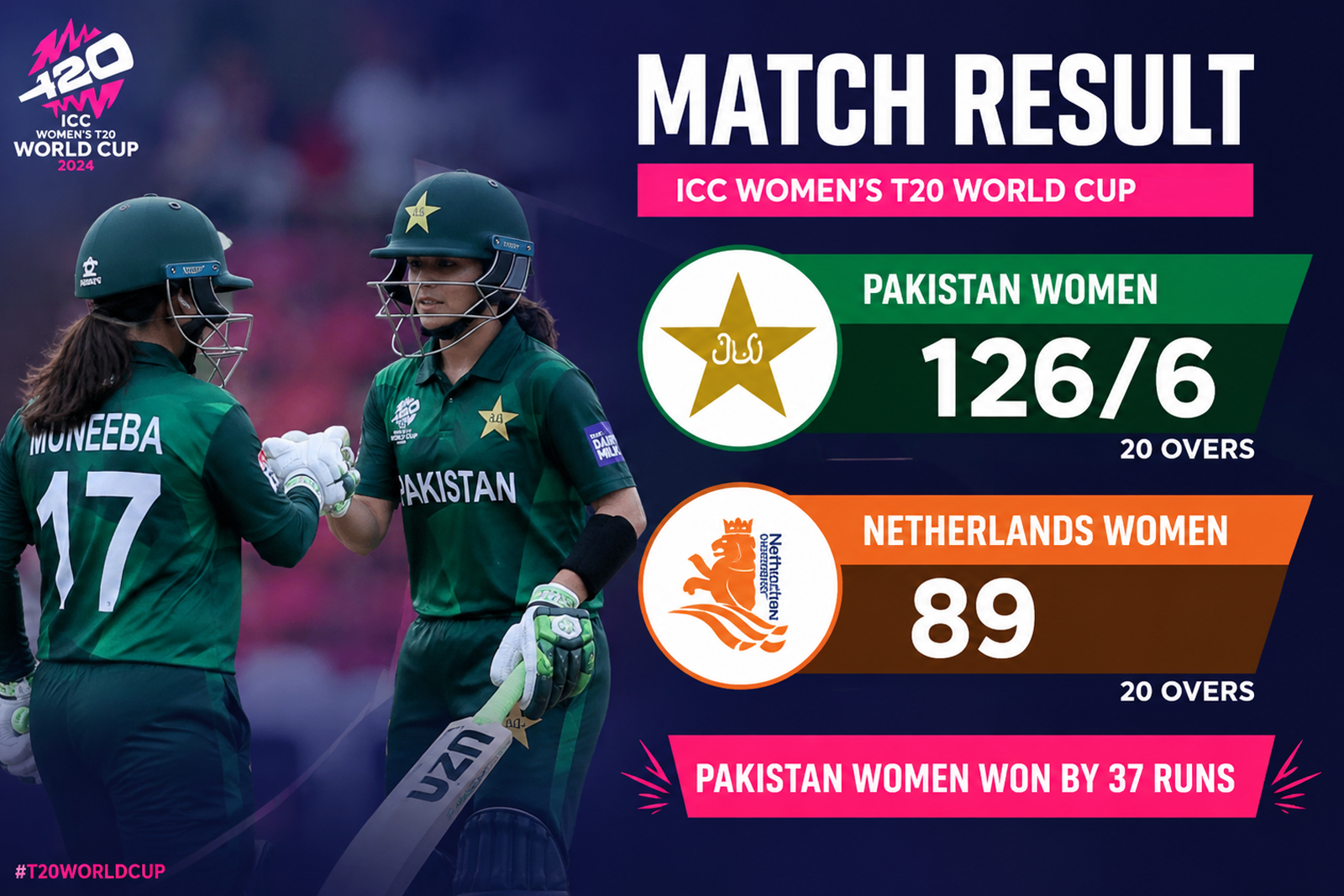
Pakistan Women ended their ICC Women's T20 World Cup campaign with a morale-boosting victory over the Netherlands, securing a comprehensive 37-run win in their final group-stage encounter. Although the result did not alter their tournament fate, the team delivered one of its most balanced performances, combining disciplined batting, sharp bowling, and energetic fielding to leave the competition with confidence.
After winning the toss and opting to bat, Pakistan's top order laid the foundation for a challenging total. The batters focused on building partnerships rather than taking unnecessary risks, ensuring the innings maintained momentum throughout. Timely boundaries and smart running between the wickets helped Pakistan post a score that put the Netherlands under immediate pressure.
The middle-order contributed valuable runs in the closing overs, accelerating the scoring rate and giving the bowlers a solid target to defend. The disciplined approach reflected Pakistan's determination to end the tournament on a positive note.
Chasing a competitive target, the Netherlands found it difficult to establish momentum against Pakistan's well-organised bowling attack. Early wickets disrupted the batting order, forcing the Dutch side into a defensive approach.
Pakistan's bowlers maintained excellent line and length, restricting boundaries while consistently building pressure. The Netherlands attempted to recover through small partnerships, but regular breakthroughs prevented any meaningful comeback.
Pakistan's bowling unit delivered a complete performance, combining pace and spin effectively throughout the innings. Tight field placements and disciplined execution ensured that scoring opportunities remained limited for the opposition.
Excellent catching and sharp fielding further strengthened Pakistan's position, with every player contributing to the team's defensive effort. The Netherlands eventually finished well short of the target, handing Pakistan a convincing 37-run victory.
While Pakistan's campaign ended in the group stage, the final victory offered several positives. The batting displayed improved composure, the bowlers executed their plans effectively, and the fielding remained consistent under pressure.
The Netherlands, meanwhile, gained valuable experience from competing against higher-ranked opposition and will use the tournament as an opportunity to continue developing their women's cricket programme.
Pakistan will now shift its focus towards upcoming international assignments, aiming to build on the confidence gained from their final World Cup performance. The convincing win provides encouragement for the squad as preparations begin for future ICC tournaments, where they will look to convert promising performances into a stronger overall campaign.
Pakistan Women concluded their ICC Women’s T20 World Cup campaign on a positive note by registering a convincing 37-run victory over the Netherlands in their final group-stage match. While the win was not enough to secure a place in the knockout stage, it highlighted the team's determination to finish the tournament with pride. The players produced a disciplined all-round performance, combining responsible batting, effective bowling, and sharp fielding to outplay the Dutch side.
The match reflected Pakistan’s ability to recover from earlier disappointments and demonstrate the qualities that make them a competitive force in international women’s cricket. For the Netherlands, the encounter provided another valuable learning opportunity as they continue building experience against established cricketing nations.
Choosing to bat first, Pakistan approached the innings with patience and planning. Rather than searching for quick boundaries from the outset, the opening batters focused on rotating the strike and preserving wickets during the powerplay.
The cautious beginning allowed the middle order to build on a stable platform. As the innings progressed, partnerships became the defining feature of Pakistan’s batting. The batters communicated well between the wickets, converted singles into doubles, and punished loose deliveries whenever opportunities arose.
Instead of relying on one standout individual, Pakistan benefited from contributions across the batting order. Every partnership added useful runs, preventing the Netherlands from gaining control.
Once the innings entered its latter stages, Pakistan's middle-order batters increased the scoring rate. Smart shot selection and calculated aggression helped the team collect crucial boundaries during the final overs.
The finishing effort ensured Pakistan posted a competitive total that placed scoreboard pressure firmly on the Netherlands. More importantly, the batters demonstrated improved composure compared to earlier matches in the tournament.
The innings reflected better game awareness, with players understanding when to consolidate and when to attack.
The Dutch chase never truly gained momentum.
Pakistan's opening bowlers struck early, removing key batters before they could settle. These breakthroughs forced the Netherlands into rebuilding mode almost immediately.
The required run rate continued to rise as Pakistan's bowlers maintained disciplined line and length. Dot balls accumulated, increasing pressure on the incoming batters.
Instead of allowing partnerships to flourish, Pakistan consistently found ways to break them at important moments.
The bowling attack emerged as Pakistan's greatest strength in the contest.
Both the pace bowlers and spinners executed their plans effectively, varying their pace and lengths to prevent the Dutch batters from playing freely.
The bowlers focused on:
This disciplined strategy ensured the Netherlands never looked comfortable during the chase.
Pakistan's fielding performance complemented the bowling effort perfectly.
Throughout the innings, the players displayed outstanding energy by:
Modern T20 cricket often rewards teams that excel in the field, and Pakistan demonstrated exactly why sharp fielding remains an essential component of success.
Despite the defeat, the Netherlands refused to surrender easily.
Several batters attempted to rebuild the innings through sensible partnerships, while the lower order continued fighting until the final overs.
Although the chase ultimately fell short, the Dutch side displayed resilience and determination against a more experienced opponent.
Matches against Full Member nations continue to provide valuable exposure for the Netherlands, helping players gain confidence and improve their skills on the international stage.
Although Pakistan exited the tournament before the knockout rounds, the final match offered several encouraging signs.
Unlike previous games, Pakistan managed to build partnerships throughout the innings rather than depending on one individual batter.
The batters displayed patience before accelerating, reducing unnecessary risks during crucial phases.
Every bowler contributed by maintaining pressure and executing plans according to the match situation.
Success came through collective contributions instead of relying solely on star performers.
Pakistan's energy in the field ensured the Netherlands found scoring difficult throughout the innings.
Pakistan's overall campaign highlighted both strengths and areas requiring improvement.
These lessons will play an important role in preparations for future ICC tournaments.
The match also reflected the increasing competitiveness of women's international cricket.
Teams like the Netherlands continue narrowing the gap against established cricketing nations through better coaching, stronger domestic structures, and greater international exposure.
Every global tournament provides Associate nations with opportunities to compete against higher-ranked opponents, accelerating their development and strengthening the women's game worldwide.
The continued expansion of women's cricket ensures more balanced competitions and creates exciting opportunities for emerging players.
Pakistan will now turn their attention to upcoming bilateral series and future ICC events.
The victory over the Netherlands provides a positive ending to an otherwise challenging tournament and offers valuable confidence for the months ahead.
The coaching staff is expected to build upon:
If Pakistan can maintain consistency across all three departments—batting, bowling, and fielding—they have the potential to challenge the world's leading teams in future competitions.
Pakistan Women concluded their ICC Women’s T20 World Cup campaign with a convincing 37-run victory over the Netherlands, delivering one of their most complete performances of the tournament. A composed batting display, disciplined bowling attack, and energetic fielding combined to produce a deserved win that ended their campaign on a high note.
While the result could not secure qualification for the knockout stage, it demonstrated Pakistan’s resilience and ability to respond positively under pressure. For the Netherlands, the match added another chapter to their growing international experience, providing valuable lessons for future global tournaments.
Pakistan will now look to carry the confidence from this victory into upcoming international assignments, aiming to transform encouraging performances into sustained success on the world stage.

In today’s world of endless choices and digital noise, marketing is no longer just about promoting products — it’s about creating meaningful connections. Successful brands focus on building relationships rather than chasing transactions. Marketing that connects transforms audiences into loyal communities by earning their trust, understanding their needs, and delivering genuine value. When businesses prioritize people over promotions, marketing becomes more than strategy — it becomes a relationship built to last.

Odisha’s small businesses are entering a new era — where mobile apps, online payments, and e-commerce aren’t luxuries, but lifelines for growth and survival.

As India enters the second phase of its digital revolution, artificial intelligence and automation are not just transforming industries—they’re redefining what it means to work, earn, and adapt.

The conference brought together officials from ten central districts, including district collectors, tehsildars, registrars, and welfare officers, either virtually or in person.

We glorified sleepless nights, burnout, and exhaustion as signs of ambition. But when did working yourself to the edge become the definition of success?

Not everyone who thrives in tech writes code. Some design the very experiences that make technology human.





Leave Comments