









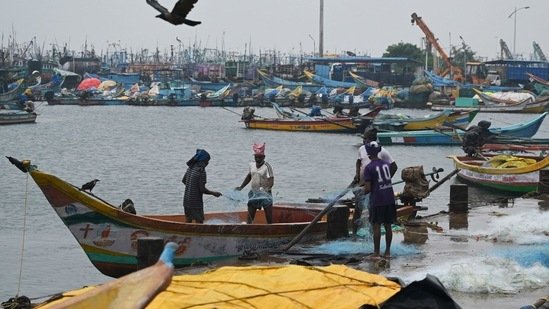
When the Sea Turns Against Its Own: Fishermen vs the Fury of Tamil Nadu’s Rains
Life at the Edge of the Sea
To live by the sea is to live with uncertainty. Along Tamil Nadu’s 1,000-km coastline, millions of fishermen and their families depend on the Bay of Bengal for their livelihood. Every morning, boats set out with hope, chasing the silver shimmer of fish that sustains their homes. But in recent years, the sea has become less predictable, the monsoons more violent, and the storms more unforgiving.
For the fishermen of Tamil Nadu, survival isn’t just about catching fish anymore—it’s about staying alive.
Monsoons and the Fisherman’s Calendar
The Rhythm of the Rains
Tamil Nadu’s fishing calendar has always danced to the rhythm of the monsoon. Between October and December, the northeast monsoon lashes the state, often bringing torrential rains, rough seas, and cyclones. Traditionally, this is a time when fishermen either stay ashore or take calculated risks with smaller expeditions.
But climate change is rewriting the script. The rains have become erratic—sometimes arriving late, sometimes too early, and often more intense than before. This unpredictability leaves fishermen torn between risking their lives at sea or losing their only source of income.
Cyclones on the Rise
Names like Gaja (2018), Nivar (2020), and Michaung (2023) are etched in the memory of Tamil Nadu’s fishing villages. Each storm brought devastation—boats reduced to splinters, nets washed away, homes flooded, and lives lost. Cyclones that once came every few years now seem almost annual, and their intensity is growing.
The Human Cost of the Rains
Stranded at Sea
Every monsoon season, headlines report boats that never return. Despite warnings from weather departments, many fishermen set sail, driven by the desperation to feed their families. GPS trackers and radios help, but storms often swallow signals, leaving families waiting on the shore with prayers and tears.
Families Left Behind
Behind every fisherman lost at sea, there is a family learning to rebuild life without its breadwinner. Widows find themselves navigating government paperwork for relief compensation that often arrives late—or not at all. Children are forced to drop out of school to work in markets or small shops, ending dreams before they can begin.
The Psychological Toll
It’s not just about physical survival. Many fishermen suffer from stress and trauma after close encounters with storms. The fear of not returning weighs heavily, yet the compulsion to provide pushes them back into the water. The sea, once a friend, has become both provider and predator.
Government Promises vs Ground Reality
Relief on Paper
Tamil Nadu’s government has long announced relief measures—financial compensation for families of the deceased, subsidies for new boats, and disaster insurance schemes. But in practice, delays, corruption, and bureaucratic red tape often blunt their impact.
Infrastructure Gaps
Cyclone shelters exist in many districts, but they’re often overcrowded or poorly maintained. Early warning systems have improved, but not all fishermen have access to the technology or the literacy to understand alerts. A text message warning of “wind speeds of 120 km/h” means little to a man who only knows the language of tides.
Climate Change: The Silent Culprit
Scientists have been warning that climate change is intensifying the monsoon. Warmer oceans fuel stronger cyclones, while rising sea levels eat away at Tamil Nadu’s coastal villages. Fishermen who once docked their boats a safe distance from the waves now find the shoreline creeping closer year after year.
For a community already living on the margins, adapting to these shifts isn’t easy. Sustainable fishing, alternative livelihoods, and disaster-resilient housing sound good in policy papers, but on the ground, they remain distant dreams.
Stories from the Shore
-
Nagapattinam: Once bustling with fishing activity, the town saw hundreds of families displaced after Cyclone Gaja. Even today, many live in temporary shelters, their lives on pause.
-
Cuddalore: Known for its cashew and fishing industries, it was one of the worst-hit districts during the 2004 tsunami and continues to face floods almost every monsoon.
-
Chennai’s Fishing Hamlets: The urban poor living in makeshift huts along Marina and Besant Nagar beaches find themselves doubly vulnerable—pushed by the sea on one side and eviction threats from city planners on the other.
Each village has its own story of resilience, but all are bound by the same struggle: to live in harmony with a sea that no longer plays by the old rules.
Coping, Adapting, Surviving
Community Networks
Despite state shortcomings, fishermen often rely on their own networks. Community funds, cooperative societies, and informal loans help families rebuild boats and buy nets. In many villages, the first responders are not government officials but fellow fishermen who risk their lives to rescue others.
Technology as a Lifeline
From WhatsApp groups sharing weather updates to GPS devices donated by NGOs, technology is slowly bridging the gap. Some startups are even experimenting with AI-powered forecasting models that translate meteorological jargon into actionable advice for fishermen.
Calls for Alternative Livelihoods
Experts argue that training coastal communities in allied industries—like aquaculture, seaweed farming, or eco-tourism—could reduce their dependence on dangerous deep-sea fishing. But such transitions require investment, awareness, and long-term planning.
The Bigger Picture
Tamil Nadu’s fishermen are not just local communities battling bad weather; they are frontline witnesses to the climate crisis. Their struggles highlight how global warming isn’t just about melting glaciers or rising CO₂—it’s about ordinary families losing boats, homes, and lives.
If the world wants to prepare for a climate future, it can start by listening to the stories from Tamil Nadu’s shores. Because what happens here is a preview of what could happen in coastal communities everywhere.

Conclusion
When the sea turns against its own, fishermen find themselves fighting not just nature but also neglect. Their resilience is extraordinary, but resilience shouldn’t be mistaken for invulnerability.
Tamil Nadu’s rains will always come. Cyclones will always threaten. But with better policies, stronger infrastructure, and genuine global climate action, the fury of the monsoon doesn’t have to spell tragedy for those who call the sea their home.
The fishermen’s struggle is not just about survival; it’s a warning—and a call for compassion and change.


You Might Also Like
-
Iran Pulls Out of Pakistan Talks as Hormuz Tensions Deepen Iran’s decision to skip the second round of diplomatic talks in Pakistan has a...
-
India Flags Concern After Oil Tanker Disruption in Strait of Hormuz India has raised strong diplomatic concerns after two oil tankers were repo...
Suggested Video